

How to Clean Solar Panels in Washington and Oregon
Cleaning solar panels in the Northwest can be as easy as waiting for it to rain. With the amount of rain Oregon and Washington receive, much of the dirt, pollen, and debris that collects on panels washes away naturally.
In most cases, your solar panels will not need regular cleaning. But if you notice an unexpected dip in energy production—or can see a noticeable layer of pollen, dust, road debris, or ash—it may be time to take a closer look.
Start by checking your system’s monitoring data. If production remains lower than expected, visually inspect the panels from the ground or another safe location whenever possible.
Safety First
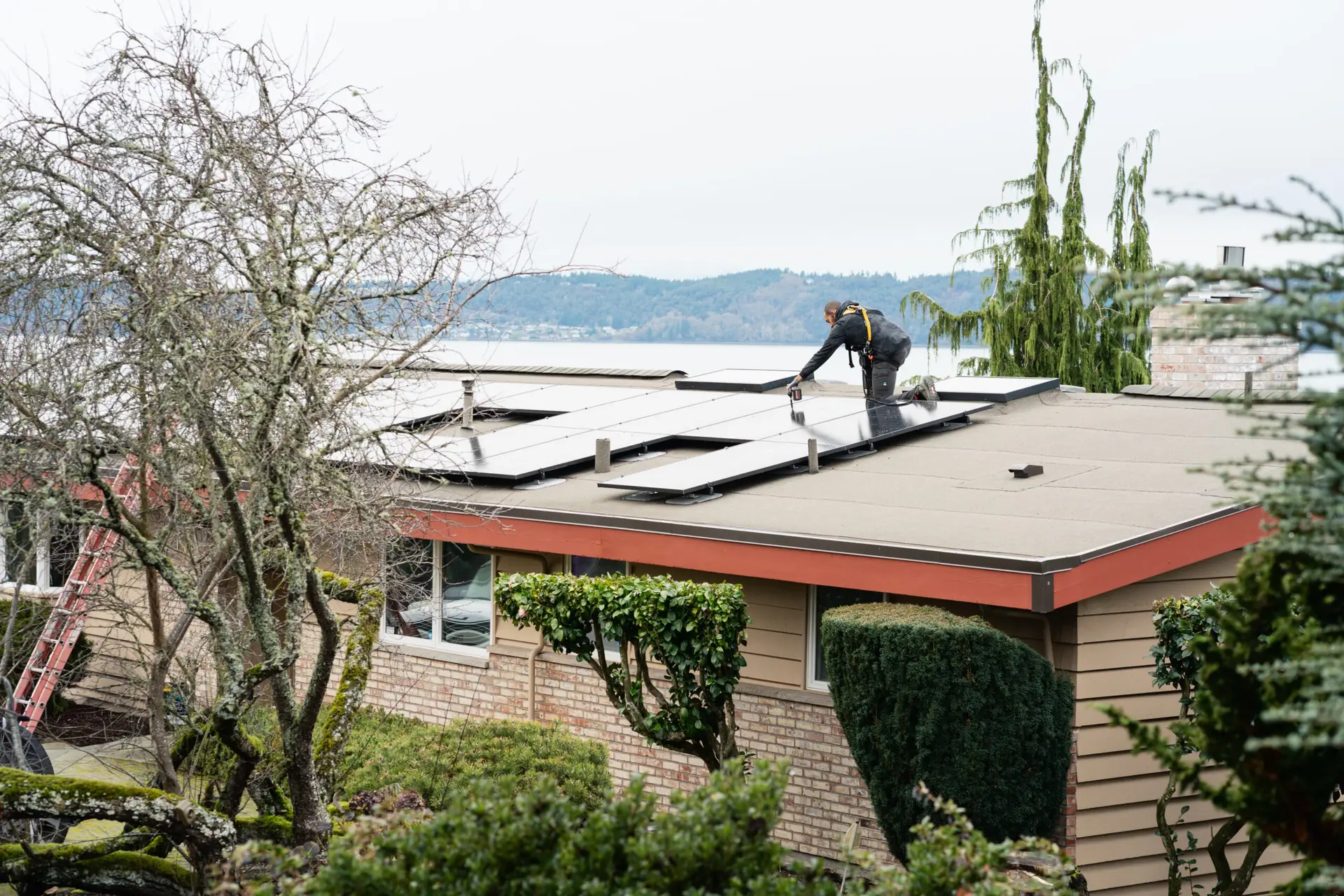
Working on a roof is dangerous, especially when the roof or solar panels are wet.
Falls are a leading cause of serious injury and death in residential construction and home maintenance. Do not climb onto your roof unless you have the proper training and fall-protection equipment.
If your roof is steep, difficult to access, or higher than you are comfortable working on, hire a professional.
How to Clean Solar Panels
If you can safely access your solar panels, follow these steps:
Choose the right time of day.
Clean the panels in the early morning or evening, when the glass is cool. Water and cleaning solution can evaporate too quickly on hot panels, making them harder to clean and potentially causing streaks.Gather your supplies.
You will need:A garden hose
A bucket of lukewarm water
A small amount of Simple Green or mild dish soap
A soft-bristle brush with a long handle or a microfiber cleaning tool
A squeegee, if needed
Rinse the panels.
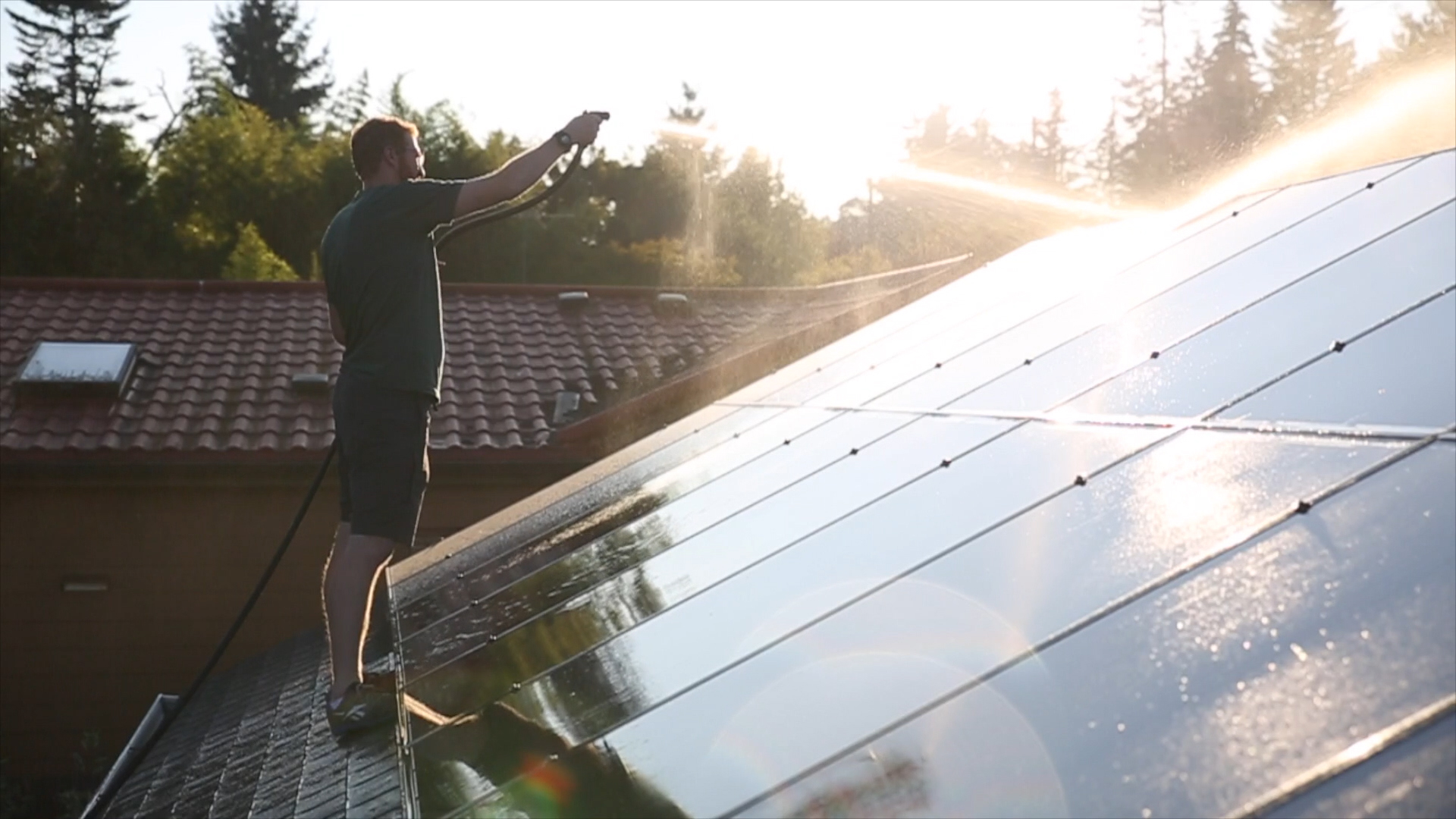
Gently spray the panels with a standard garden hose to loosen dust and debris.Wash the panels.
Dip the soft-bristle brush or microfiber tool into the cleaning solution and gently scrub the surface. Do not apply heavy pressure, which could scratch or damage the glass.Rinse thoroughly.
Use the garden hose to remove the cleaning solution and remaining debris.
Never use a pressure washer or high-pressure hose nozzle. The force could damage the panels, seals, wiring, or mounting components.
Five Solar Panel Cleaning Tips
In Washington and Oregon, rain usually handles most routine cleaning.
Check your system’s monitoring before assuming dirty panels are causing lower production.
Use simple tools: a garden hose, soft-bristle brush or microfiber cloth, and a mild cleaning solution.
Avoid cleaning panels during the hottest part of the day.
Never use a pressure washer, abrasive brush, metal tool, or harsh chemical cleaner.
When Should You Clean Solar Panels?
Dust, pollen, wildfire ash, and other debris are more likely to accumulate during late spring and summer, when rainfall is less frequent.
Consider inspecting your panels in the spring so they are ready for the highest-production months of the year. You may also want to check them after:
A long stretch of dry weather
Nearby construction
Heavy pollen
A wildfire smoke or ash event
A noticeable and unexplained drop in production
A National Renewable Energy Laboratory study found that soiling can reduce solar panel performance, although the amount varies by location and local conditions. In many areas, the loss may be relatively small. Heavier buildup can have a more noticeable effect.
How to Remove Snow From Solar Panels
Snow is not usually a major concern in the Pacific Northwest. Because solar panels are installed at an angle, snow will often melt or slide off naturally.
In many cases, the safest option is to leave it alone.
If heavy snow remains on the panels, use only a tool specifically designed for clearing snow from solar arrays, such as a roof rake with a soft, nonabrasive head. Whenever possible, work from the ground.
Do not use a standard broom, shovel, metal rake, or other abrasive tool. These can scratch the glass or damage the panels.
Can I Clean My Solar Panels Myself?
Solar panel cleaning can be a straightforward project, but only when the panels are safely accessible.
You may be able to clean them yourself if you can reach them from the ground or from a secure ladder without stepping onto the roof. If the roof is steep, wet, high, or difficult to access, hire a professional cleaner.
Always use appropriate fall protection when working at height. If your roof has a safety anchor, use a properly fitted harness and follow the equipment manufacturer’s instructions.
What Should I Use to Clean Solar Panels?
We recommend a small amount of Simple Green mixed with lukewarm water. Mild dish soap can also work.
For stubborn tree sap or oily residue, you may be able to use a small amount of isopropyl alcohol with a microfiber cloth. Check the panel manufacturer’s cleaning instructions before applying any product.
Avoid:
Abrasive sponges or brushes
Strong detergents
Solvents
Metal tools
Pressure washers
Products that leave a heavy residue
When in doubt, use plain water and a soft cleaning tool.
Check for Critters While You’re There
If you can inspect the area safely, look beneath the panels for signs of nesting animals.
Birds, squirrels, and other critters occasionally build nests beneath solar arrays. They may also damage wiring, which can lead to expensive repairs or system problems.
Do not reach underneath the panels or disturb an active nest yourself. Contact a solar service provider or wildlife-control professional.
Hiring a Professional Solar Panel Cleaner
If you are not comfortable working around your roof, hire a professional solar panel cleaning company.
A&R Solar does not provide solar panel cleaning services, but these companies may serve parts of Washington and Oregon. Confirm their current service areas, availability, insurance, and cleaning methods before scheduling work.
Washington Solar Panel Cleaners
SOLShine
WindowWorks
Evergreen Window Cleaning & Maintenance
Oregon Solar Panel Cleaners
AA Window & Gutter Cleaning
Action Window Cleaning
Outside these companies’ service areas, contact a reputable window-cleaning company or handyman. Make sure they follow the panel manufacturer’s instructions and do not use pressure washers, abrasive tools, or harsh chemicals.
Solar Panel Cleaning FAQ
What soap should I use to clean solar panels?
Use a small amount of Simple Green or mild dish soap mixed with lukewarm water. Always check the manufacturer’s cleaning instructions first.
Can cleaning damage solar panels?
Yes, if it is done incorrectly. Pressure washers, harsh chemicals, abrasive brushes, metal tools, and excessive pressure can damage the glass, seals, wiring, or other components. Damage caused by improper cleaning may not be covered by the manufacturer’s warranty.
Can I use Windex on solar panels?
Some glass cleaners may be safe for certain panels, but they are usually unnecessary and may leave residue. Plain water, Simple Green, or a small amount of mild dish soap is generally a better option. Follow the panel manufacturer’s recommendations.
How much does professional solar panel cleaning cost?
Pricing depends on the number of panels, roof height, roof pitch, access, and the amount of buildup. Ask for a written estimate and confirm that the company is insured and experienced with solar equipment.
How often should solar panels be cleaned?
Many solar arrays in Washington and Oregon may not need regular cleaning because rainfall removes much of the ordinary dirt and pollen.
Inspect your production data and the visible condition of the panels. Clean them only when buildup appears to be affecting performance or when the manufacturer recommends it.
What time of year is best for cleaning solar panels?
Late spring can be a good time to inspect and, if necessary, clean your panels before the strongest solar-production months. You may also need to clean them after an unusually dry, dusty, or smoky period.