



Washington net metering is one of the main reasons solar makes financial sense in this state.
It allows homeowners to receive full retail credit for excess electricity their system sends back to the grid.
The program remains in place today. However, several utilities have reached statutory capacity thresholds, and future changes are being studied.
Here’s what that means if you’re considering solar.
How Washington Net Metering Works
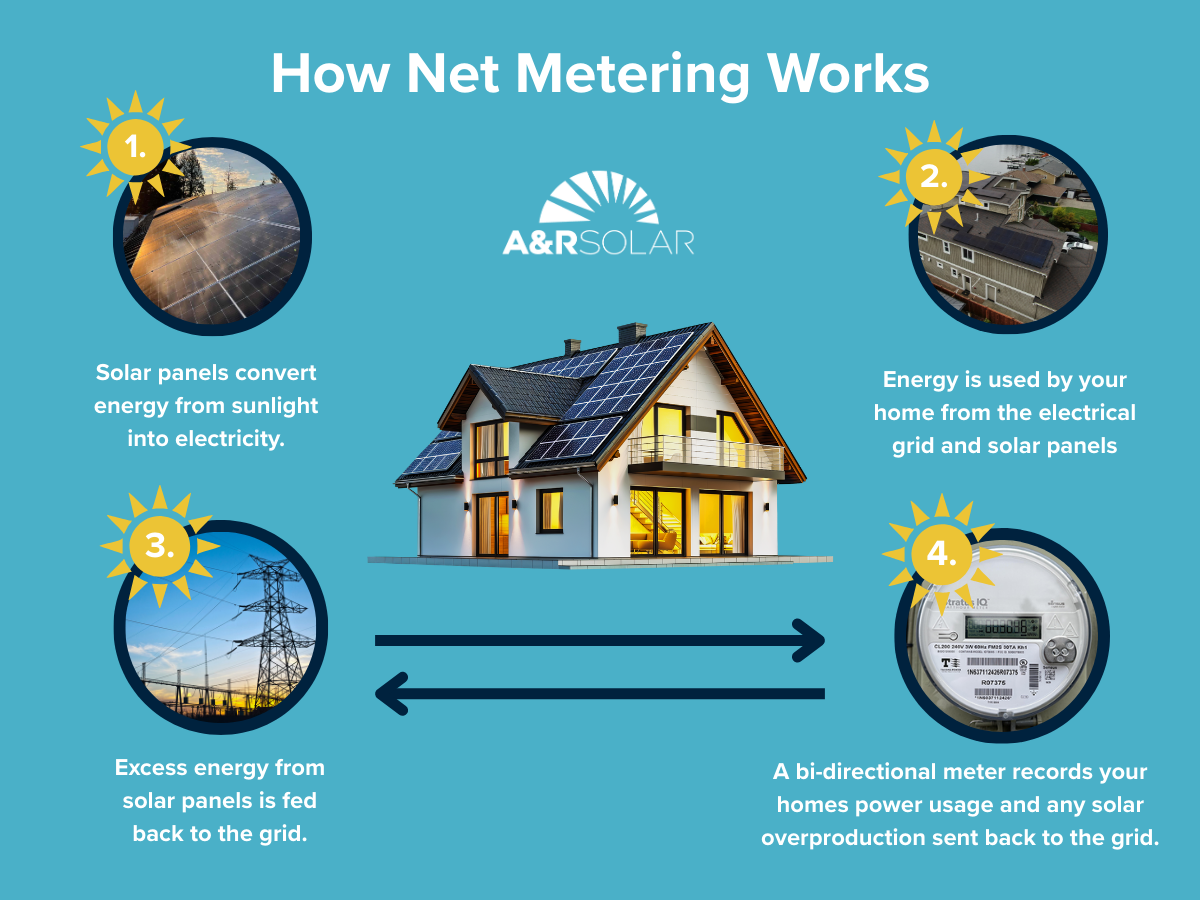
Under current Washington net metering rules, solar homeowners are credited at the full retail electricity rate (1:1) for surplus energy exported to the grid.
Those credits offset future electricity use — such as at night or during winter months when solar production is lower.
That 1:1 retail credit structure significantly improves solar payback timelines.
Where Things Stand Today
Washington law requires utilities to offer 1:1 retail-rate net metering until:
- June 30, 2029, or
- Their cumulative net-metered capacity reaches 4% of 1996 peak demand
Whichever comes first.
Some utilities have already reached that 4% threshold.
For example:
 PSE has reached 4% of its 1996 peak demand.
- PSE has exceeded its 4% threshold but continues to offer 1:1 net metering under Schedule 150 until a replacement rate schedule is adopted.
At the same time, Washington is conducting a statewide value-of-solar study to evaluate how distributed solar benefits the grid. That study will likely inform future policy decisions.
No replacement rate schedule has been announced yet, which means the window to lock in current 1:1 net metering is still open — but it won’t stay that way forever.
What Typically Happens When Net Metering Changes
Other states offer a preview of what could happen if Washington modifies its net metering structure.
When caps are reached:
- Export credits are often reduced below the retail rate
- New solar customers see longer payback periods
- Battery storage becomes more valuable
- Existing customers are typically grandfathered under prior rules
There is no official decision yet in Washington. But the direction of policy conversations nationwide has generally moved toward modified compensation structures rather than indefinite 1:1 credits.
Will Existing Solar Customers Lose Net Metering?
Historically, when states revise net metering policies, they grandfather customers who installed under previous rules.
While future policy is never guaranteed, that has been the common approach across the country.
For homeowners evaluating solar now, the relevant question is not whether net metering exists today — it does — but how long the current structure will remain available for new customers.
Why Does Washington Have Net Metering Caps?
Net metering caps were originally designed to limit the amount of distributed solar that utilities were required to compensate at full retail rates.
As solar adoption increases, policymakers revisit whether the structure still reflects the true value solar provides to the grid.
That’s the purpose of the statewide value-of-solar study currently underway.
Why Timing Matters for Solar Decisions
 Solar still works without full 1:1 net metering.
But the economics change.
If export credits are reduced:
- Payback periods typically extend
Battery systems become more strategic
- System sizing decisions become more important
Today, Washington net metering rules are known and clearly defined.
Future rules are being studied but have not yet been determined.
If you’re considering solar, this is a period of clarity.
Lock in 1:1 Washington net metering while current rules are still in place.
Get a custom solar proposal and see exactly how today’s policy affects your home.
Related Reading
→ Washington Electricity Rates Are Rising: What It Means for Solar in 2026