

If your electric bill has climbed over the last few years, you’re not imagining it.
Washington electricity rates have increased across the state, and every major utility serving western Washington has raised residential prices since 2023. More increases are already approved for 2026.
And this isn’t a temporary spike. No major Washington utility is forecasting flat residential rates. The forces driving these increases — aging infrastructure, clean energy mandates, wildfire mitigation, and rising construction costs — aren’t going away.
Here’s what’s changed, what’s coming, and what it means for your household budget.
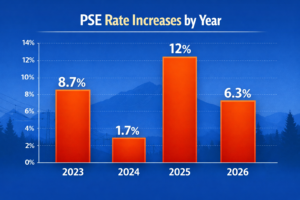
PSE residential customers have experienced multiple rate increases since 2023, with large increases approved for 2025 and 2026. By early 2026, many customers are paying more than 30% above what they paid just a few years ago.
Drivers include:
 Grid upgrades
- Wildfire mitigation
- Major wind and hydro investments
- Rising labor and material costs
- Clean energy mandates
Seattle City Light residential rate increases
Seattle City Light customers have seen steady increases since 2023, with another increase approved for 2026.
Key factors: Aging infrastructure Extreme weather costs Rising construction and material prices
Seattle City Light is also rolling out optional Time-of-Use rates starting in 2026.
The details:
Rate increases are part of a long-term strategic plan
City Light’s 2025–2030 Strategic Plan approved by the Seattle City Council calls for annual rate adjustments, with about a 5.4% increase in 2025 and 2026 that started showing up on bills on January 1, 2026. These increases are designed to ensure the utility collects enough revenue to cover costs and invest in future service needs.
Legacy cost factors, drought & supply fluctuations
Although Seattle City Light primarily uses low-cost hydroelectric power, hydro generation can vary year to year. In dry conditions or during extreme weather, the utility may need to buy supplemental power at higher market rates or work to rebuild financial reserves, which has historically contributed to rate adjustment
Rising costs for operations, labor, and services
The utility says part of the rate adjustment reflects increased costs for delivering electricity — including labor, metering, billing, customer service, and other operational functions. Basic service charges have been raised to more accurately match these delivery costs.
Supporting reliability, climate goals, and infrastructure
Rate revenues support long-term investments in: Grid and infrastructure improvements (like substations and transmission reliability) Meeting growing electricity demand as Seattle and the region electrify Climate and clean-energy transition goals
City Light frames the increases as necessary to maintain safe, reliable, and environmentally responsible service.
Increasing electricity demand and future needs
Demand for electricity in the region continues to grow — driven by population growth, electrification of heating and transportation, and new technologies — which pressures the grid and requires strategic planning and investment.Tacoma Power rates remain lower than many regional utilities, but increases are still stacking year over year.
Drivers include:
- BPA wholesale power costs
- Transformer and construction price increases
- System maintenance and upgrades
Snohomish PUD rate increases have been driven largely by:
- Extreme weather events
- Emergency power purchases
- Base charge restructuring
- Rising wholesale power costs
Jefferson County rates increased 9% in July 2025, with additional increases of approximately 7% planned for 2026, 2027, and 2028.
Why? The increases fund an approximately $70 million, 4-year plan for critical infrastructure, substation improvements, and addressing rising wholesale power costs from the Bonneville Power Administration.
Will Washington electricity rates keep rising?
Yes. No major utility is forecasting flat residential rates. Seattle City Light projects continued annual increases through 2030. PSE needs to double its renewable energy capacity this decade to meet state clean energy mandates.
These aren’t one-time adjustments — they’re structural.
That’s why more homeowners are looking beyond short-term bills and thinking about long-term cost control.
One policy that matters just as much as rates is net metering. That’s covered here: Washington Net Metering: What Homeowners Should Know.
What does this mean for your household?
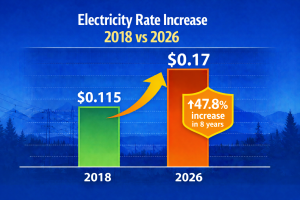
For a homeowner using 1,000 kWh per month — typical for a western Washington household — rates have gone from roughly $115/month to $170/month.
That’s about $660 more per year you’re paying now compared to 2018. And if rates continue increasing at the pace utilities are projecting, that gap only widens.
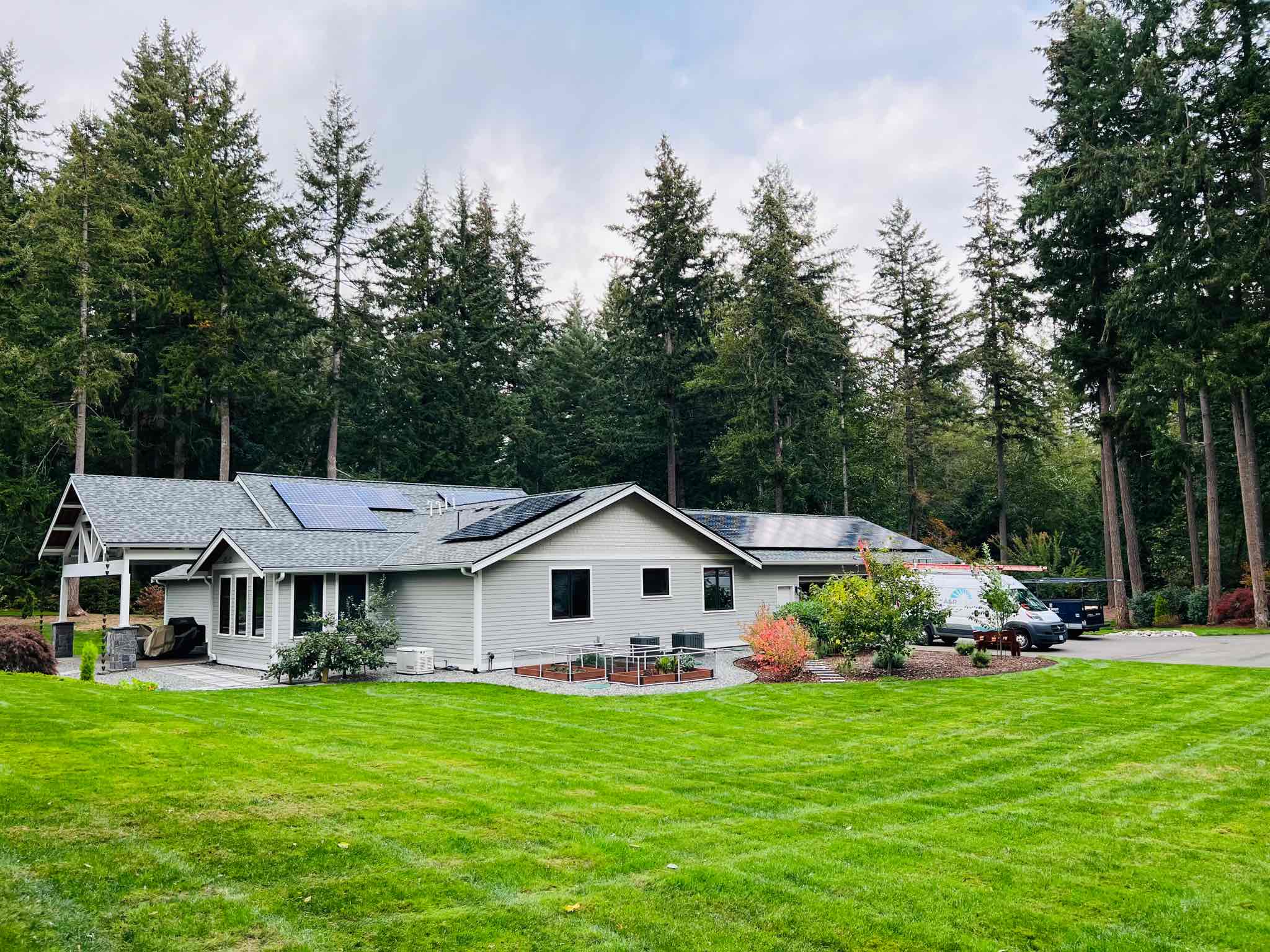
Here’s what that’s looked like for one A&R Solar customer:
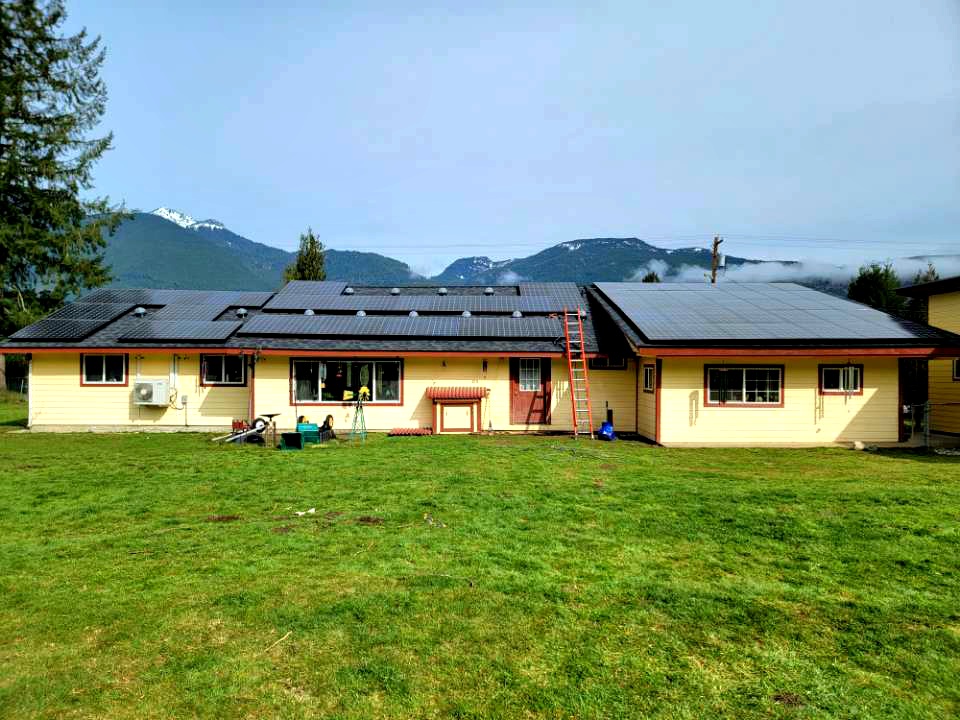
Here’s what rising rates look like for an A&R Solar customer:
 “After 8 years, we have paid off about 65% of the cost to put solar on the roof while only having electricity bills about 4 months out of the year.”
“We forecast to hit break even around year 15 but with the rates rising faster than expected, we’ll do it in year 12. The solar panels should have at least another 10 if not 20 years after that of power generation.”
“If we can do that in rainy Seattle with trees that block about 40% of our day, you can probably do solar, too, and it is probably more cost effective for you.”
“Thanks to A&R Solar for their excellent installation and their helpfulness throughout the years. So unusual these days to have customer service long after the sale, but you folks do a stellar job of it.”
Valorie O.
A&R Solar customer.
That $0.115 to $0.17 jump? That’s nearly a 48% increase in eight years — and it’s still climbing.
“Why are Washington electricity rates increasing?” Washington electricity rate increases are driven by aging infrastructure replacement, clean energy mandates (CETA), wildfire prevention measures, extreme weather costs, and rising labor and material prices across all major utilities.
PSE residential customers are paying significantly more in early 2026 than they did in 2023, with approved increases of 12% in 2025 and an additional ~12% in 2026 when all approved rate filings are included.
“Which Washington utility has the highest rate increases?”
PSE has the highest cumulative electricity rate increases at more than 30% from 2023–2026, followed by Seattle City Light at 25-28%, Tacoma Power at 20%, and Snohomish PUD at 15%.”Will Washington electricity rates keep rising?” Yes. No major Washington utility is forecasting flat residential electricity rates. Seattle City Light projects 7-10% annual increases through 2030, and PSE needs to double its renewable energy capacity by 2030 to meet CETA requirements.”What’s driving Seattle City Light rate increases?”
Seattle City Light rate increases are driven by aging infrastructure modernization, extreme weather impacts (unfavorable conditions in 2023 depleted $70+ million from emergency reserves, triggering a surcharge in 2024), supply chain cost increases, and clean energy investments.
“How do Washington electricity rates compare to other states?”
Washington electricity rates remain below the national average but are rising faster than many other regions due to aggressive clean energy mandates and infrastructure modernization requirements.