

TL;DR:
- Off-grid solar systems generate, store, and supply electricity independently, eliminating reliance on utility grids and bills. They require careful sizing of panels, batteries, and equipment to maintain power during cloudy days and seasonal changes. While upfront costs are high, long-term savings, resilience, and energy independence make off-grid solar a valuable option for remote and resilience-focused homeowners.
Most people assume solar panels still need the utility grid to function. That assumption is wrong, and it matters. What is off-grid solar? It’s a fully independent power system that generates, stores, and delivers electricity without any connection to the utility network. No power lines. No monthly bills. No blackouts when the grid goes down. For homeowners in remote locations or those who simply want to stop depending on utility companies, off-grid solar power solutions offer a genuinely different path toward energy independence and long-term sustainability.
Table of Contents
- Key takeaways
- What is off-grid solar and how it works
- Benefits and challenges of going off-grid
- Off-grid vs. grid-tied vs. hybrid systems
- Planning and installing your off-grid system
- My take on what off-grid solar actually demands
- Ready to explore off-grid solar with A&R Solar?
- FAQ
Key takeaways
| Point | Details |
|---|---|
| True energy independence | Off-grid solar systems operate with zero utility connection, meaning no grid reliance or monthly electricity bills. |
| Battery storage is critical | Batteries must be sized for 2 to 3 days of autonomy to keep your home powered through cloudy periods. |
| Higher upfront costs, real savings | Whole-home off-grid systems typically cost $20,000 to $40,000 installed, but can save up to $1,800 annually. |
| System sizing makes or breaks success | Matching panel capacity and battery storage to your actual energy load and local climate is the most important planning step. |
| Off-grid suits specific situations best | Remote properties, unreliable grids, and homeowners prioritizing resilience get the most value from going fully off-grid. |
What is off-grid solar and how it works
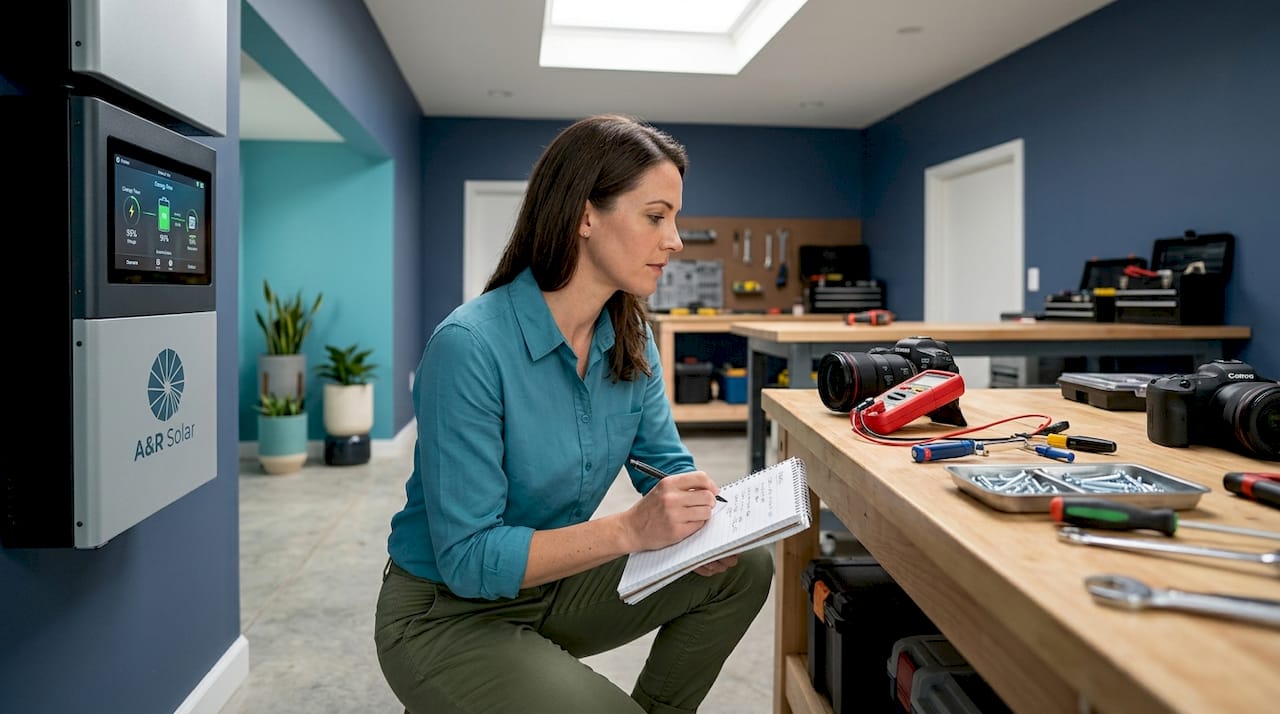
Off-grid solar is a self-contained power system. It has no electrical connection to your utility provider. Every watt your home uses comes from the sun and from what your batteries have stored. Understanding how off-grid solar works starts with knowing its four core components and how they interact throughout the day.
Solar panels capture sunlight and convert it into direct current (DC) electricity. This raw power flows into a charge controller, which manages how electricity enters the battery bank to prevent overcharging and extend battery life. From there, stored energy sits in the battery bank until your home needs it. When you flip a switch or run an appliance, an inverter converts the DC power from your batteries into the alternating current (AC) power that standard home appliances use.
Here is a breakdown of each component and what to know about it:
- Solar panels: Sized in kilowatts, panels are your primary generation source. More panels mean more daily generation capacity, but they only produce when the sun shines.
- Charge controller: The MPPT (Maximum Power Point Tracking) type is the current standard. MPPT controllers improve efficiency by 15% to 30% compared to older PWM controllers by continuously finding the optimal operating point.
- Battery bank: This is the backbone of your off-grid system. Your batteries must store enough energy to cover at least two to three days of household consumption to handle cloudy periods without running out of power.
- Inverter: Modern off-grid inverters achieve efficiency ratings between 90% and 97%. Many advanced models include built-in MPPT controllers, which simplifies the system and reduces installation costs.
The daily energy flow works in a logical sequence. Panels generate power from sunrise to sunset. The charge controller directs that power into the battery bank. Your home draws from the batteries around the clock, whether the sun is shining or not. On high-production days, excess energy builds up stored reserves. On cloudy days, your home runs down those reserves. Proper system design keeps those reserves from ever hitting zero.
Pro Tip: Before purchasing any equipment, map out your daily energy consumption in kilowatt-hours. Add up every appliance and how long you run it. That number drives every sizing decision in your system.
Understanding solar battery storage and how it integrates with your panels is one of the most important steps you can take before committing to an off-grid design.
Benefits and challenges of going off-grid
Off-grid solar carries real advantages, but it also comes with trade-offs that are worth understanding before you commit. Here is a straightforward look at both sides.
Key benefits of off-grid solar include:
- No utility bills. Once your system is paid off, electricity is essentially free. A standard 5 kW system can offset $75 to $150 monthly in traditional energy costs, adding up to $1,800 in annual savings.
- Resilience during outages. Grid-tied solar systems automatically shut down during utility outages for safety reasons. Off-grid systems maintain power during grid failures, which is a critical distinction for homeowners in blackout-prone areas or regions prone to severe weather.
- Full energy independence. You are shielded from rate increases, grid instability, and utility infrastructure problems. As grids age and extreme weather events grow more frequent, immunity to grid instability is increasingly valuable.
- Environmental impact. Running your home entirely on solar eliminates your reliance on fossil fuel-generated electricity from the grid.
“Many homeowners appreciate off-grid solar for shielding against peak utility rates and ensuring continuous power during outages.” — Homeowner using a battery backup system
The challenges are equally real. The biggest one is upfront cost. A whole-home off-grid system with 10 to 20 kWh of battery storage typically requires a $20,000 to $40,000 installed investment. That is significantly more than a comparably sized grid-tied system. You also take on full responsibility for system maintenance, and you need to be thoughtful about energy consumption, particularly during extended cloudy stretches.
Off-grid solar is especially well-suited to remote properties where utility connections are expensive or unavailable, to homeowners in areas with aging infrastructure, and to anyone who wants complete control over their energy supply.
Off-grid vs. grid-tied vs. hybrid systems
Not all solar setups are created equal. Before deciding what is right for your property, it helps to understand how the three main configurations differ.
On-grid (grid-tied) solar connects your panels directly to the utility grid. You generate solar power during the day, offset your bill, and draw from the grid at night or on cloudy days. These systems are simpler and less expensive, but they provide no power during a grid outage.
Hybrid solar adds battery storage to a grid-tied system. You get backup power during outages and can store excess solar energy for evening use, but you remain connected to the utility grid as a safety net.
Off-grid solar severs the utility connection entirely. It requires the most equipment and planning, but it delivers true independence.
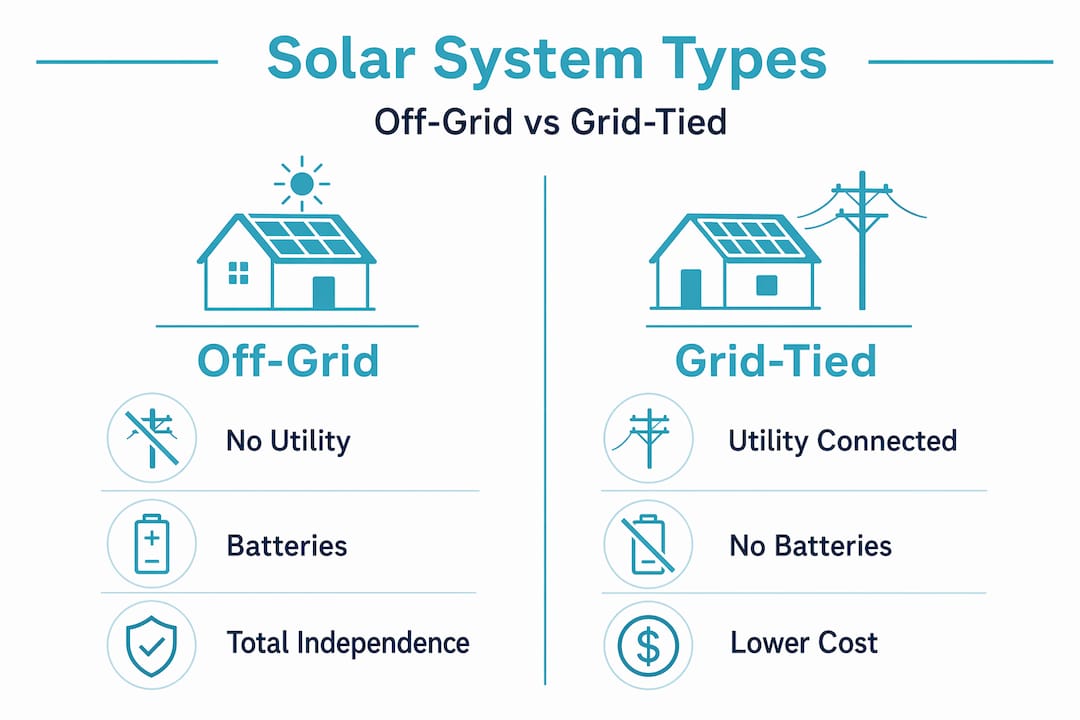
| Feature | Off-grid | Hybrid | On-grid |
|---|---|---|---|
| Utility connection | None | Yes | Yes |
| Powers during outages | Yes | Yes (limited) | No |
| Battery storage required | Yes | Optional | No |
| Upfront cost | Highest | Moderate | Lowest |
| Monthly utility bill | None | Reduced | Reduced |
| Best for | Remote/resilience-focused | Suburban backup | Urban/suburban |
Pro Tip: If you are connected to the grid but simply want backup power and lower bills, a hybrid system may deliver the best balance of cost and reliability. Full off-grid makes the most financial sense when a utility connection would cost $15,000 or more to install, which is common on rural properties.
Homeowners in Washington and Oregon weighing these options can explore home battery backup specifics tailored to Northwest conditions, including local weather patterns that affect sizing decisions.
Planning and installing your off-grid system
Getting an off-grid solar system right requires careful planning before any equipment is purchased. Skipping this step is the most common and costly mistake new off-grid adopters make.
- Audit your energy use first. Calculate your daily kilowatt-hour consumption. Then look for ways to reduce it. Load reduction is the most cost-effective action in off-grid design because every watt-hour you eliminate lowers the required size of your panels, batteries, and inverter.
- Size for your worst-case scenario. In cloudy climates like western Washington and Oregon, winter sun hours drive sizing decisions. You may need 1,200 to 1,500 watts of panel capacity to reliably generate 3 kWh per day in winter, compared to 800 to 1,000 watts in sunnier regions.
- Choose quality components. Panels, inverters, and batteries from reputable manufacturers come with longer warranties and more predictable performance. The inverter and battery bank are especially critical since they handle daily wear and long-term cycling.
- Work with certified professionals. Off-grid installations involve permits, electrical code compliance, and precise system configuration. A qualified installer will size the system correctly and handle local permitting requirements, which vary by county across Washington and Oregon.
- Plan for maintenance. Battery banks require periodic inspection. Panels need cleaning, particularly after pollen season or heavy dust. Keeping a maintenance schedule from day one prevents small issues from becoming expensive failures.
You can review real residential solar outcomes to understand how homeowners in the Pacific Northwest have approached system sizing and what financial results they have achieved.
My take on what off-grid solar actually demands
I’ve talked with a lot of homeowners who come into off-grid solar thinking it’s primarily a technology decision. They research panel brands and battery chemistry for weeks, then get surprised when the lifestyle adjustments feel more significant than expected. In my experience, the tech is actually the easy part. The harder part is accepting that your energy supply is finite every single day, and that your habits directly affect whether you sleep comfortably in January or run your generator at 2 a.m.
What I’ve found is that the homeowners who thrive with off-grid systems are the ones who treat energy the way they treat water from a well. They’re conscious of it, not anxious about it. They use efficient appliances, they check the weather forecast before running the dryer, and they genuinely enjoy knowing where their power comes from.
The misconception I run into most often is that off-grid solar is either for survivalists or for people with unlimited budgets. Neither is true. It’s a serious investment that requires serious planning, but for the right property and the right homeowner, the long-term case is solid. Zero utility bills, resilience against grid outages, and the ability to add capacity over time as your needs grow are real, tangible benefits.
What I’d tell anyone considering this: get your energy audit done first, consult with a local installer who knows your regional climate, and go in with realistic expectations about the upfront cost. The rewards are real, but they come to people who plan well.
— Shyerome
Ready to explore off-grid solar with A&R Solar?
A&R Solar has spent over two decades helping homeowners across Washington and Oregon design energy systems that actually fit their lives. Off-grid solar is not a one-size-fits-all solution, and A&R Solar’s team takes the time to assess your property, your energy needs, and your local climate before recommending any system.
From custom off-grid panel configurations to residential battery backup systems built for Pacific Northwest conditions, A&R Solar handles permitting, installation, and long-term system support. As an employee-owned, B Corporation-certified company, they are accountable to their customers in ways that larger national installers simply are not. Browse completed residential projects to see the range of systems A&R Solar has built for homeowners like you, and reach out for a consultation when you are ready to take the next step.
FAQ
What is the difference between off-grid and grid-tied solar?
Grid-tied solar stays connected to the utility network and shuts down during outages. Off-grid solar operates completely independently using battery storage, providing power even when the utility grid goes down.
How much does an off-grid solar system cost?
A whole-home off-grid system with 10 to 20 kWh of battery storage typically costs between $20,000 and $40,000 installed, depending on system size, equipment quality, and local labor rates.
How many days can an off-grid system run without sun?
A properly sized off-grid battery bank is designed to carry your home through two to three days of minimal sunlight, covering typical cloudy periods without requiring a backup generator.
Is off-grid solar worth it for homeowners?
Off-grid solar is worth it for remote properties where grid connection is costly, for homeowners in outage-prone areas, and for those committed to full energy independence. The upfront investment is higher, but ongoing electricity costs drop to near zero.
Can I add more capacity to an off-grid system later?
Yes. Most off-grid systems are designed to allow additional panels or battery modules to be added over time, making it possible to expand capacity as your energy needs change or as costs for components decline.