

TL;DR:
- Choosing a licensed, experienced contractor with strong utility relationships and transparent permit management is essential for Pacific Northwest solar projects.
- Prioritizing post-installation support and understanding timelines, especially for battery systems, ensures long-term project success.
Picking the right solar electric contractor in the Pacific Northwest is harder than most homeowners expect. Washington and Oregon have specific electrical code requirements, complex utility interconnection processes, and permit timelines that vary widely by jurisdiction. An inexperienced contractor can add months to your project — or worse, leave you with a system that fails inspection. This article covers the criteria that actually matter, profiles the types of contractors worth hiring, and gives you a direct comparison so you can make a confident decision.
Table of Contents
- Key takeaways
- 1. What to look for in a solar electric contractor
- 2. Contractor profiles: what to expect from leading service types
- 3. Side-by-side contractor comparison
- 4. Which contractor type fits your situation
- My honest take on picking the right solar contractor
- How A&R Solar serves Pacific Northwest homeowners
- FAQ
Key takeaways
| Point | Details |
|---|---|
| Licensing is non-negotiable | Washington requires licensed contractors to pull electrical permits for all solar PV installations. |
| Documentation errors cause major delays | Over 90% of interconnection applications contain errors that push timelines back 60 to 90 days. |
| Battery systems take longer to approve | Adding battery storage extends PTO timelines from 2 to 4 weeks up to 8 to 12 weeks. |
| Parallel filing saves months | Top contractors file interconnection applications at the same time as building permits to avoid waiting. |
| Post-installation support matters | Ongoing maintenance and monitoring are what separate a one-time vendor from a long-term partner. |
1. What to look for in a solar electric contractor
Before you request a single quote, know what you’re actually evaluating. The lowest bid rarely reflects the full cost of a poorly managed project.
Licensing and certification in Washington and Oregon
Washington State requires electrical permits and inspections for every solar PV installation, with mandatory compliance under NEC Articles 690 and 705. A licensed contractor is legally obligated to obtain and manage the electrical permit on your behalf. If a contractor suggests you pull your own permit to save money, that is a serious warning sign.
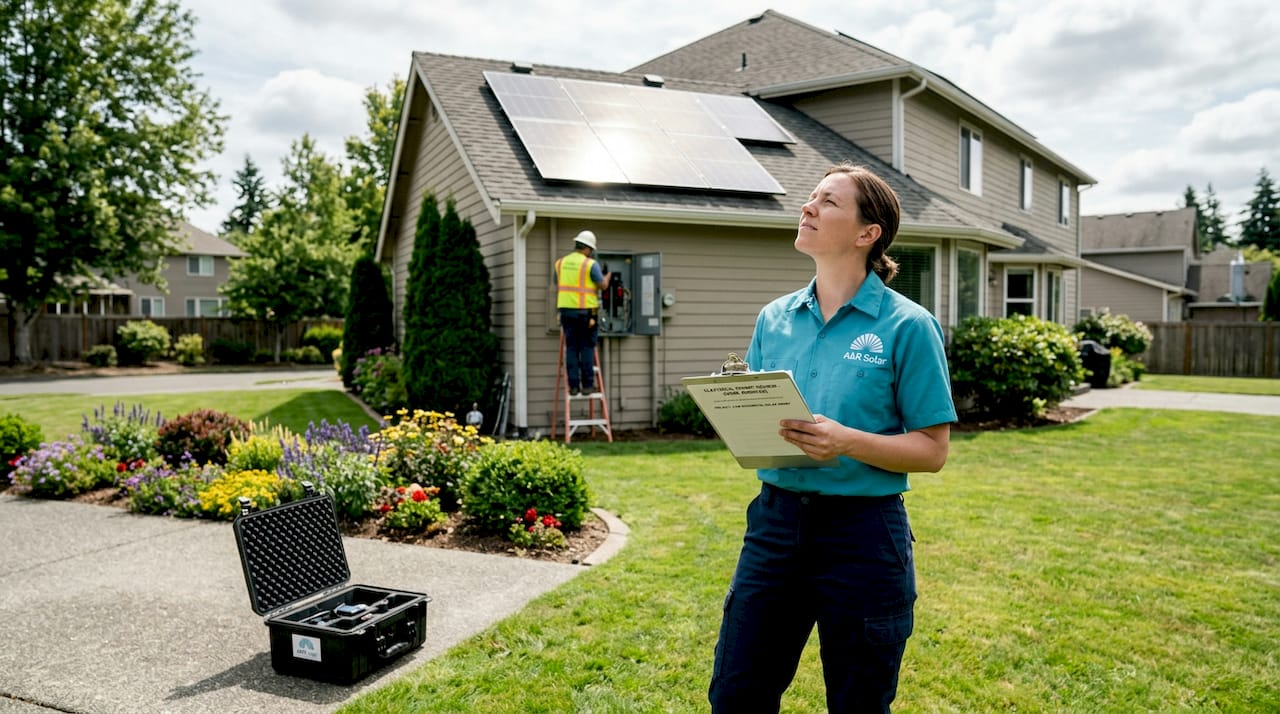
Oregon has its own licensing structure. Verify that any contractor you consider holds an active state electrical contractor license and carries proper liability insurance and workers’ compensation coverage.
Experience with utility interconnection
Interconnection is where most projects stall. Utilities in Washington follow IEEE 1547 and UL 1741 standards for safe grid connection. Systems under 25 kW qualify for a streamlined Level 1 review, but larger or battery-integrated systems face more complex study requirements. Ask any contractor you’re vetting how many interconnection applications they’ve filed with your specific utility and what their first-submission acceptance rate looks like.
Permit management and timeline transparency
Permit processing times across U.S. regions range from 25 to 60-plus days, depending on jurisdiction. Contractors familiar with digital permitting platforms like SolarAPP+ can cut approval time by an average of 12 days where those tools are available. Ask your contractor directly whether they use digital permitting and how they handle jurisdictions that don’t.
Battery storage expertise
If you want a home battery backup system alongside your solar panels, your contractor needs specialized experience. Battery-paired systems require significantly more review time, pushing PTO timelines from a standard 2 to 4 weeks out to 8 to 12 weeks. A contractor who hasn’t navigated this process before will likely extend your timeline further.
Customer support and post-installation service
Solar panels typically carry 25-year performance warranties, but the contractor warranty on workmanship is separate. Confirm what post-installation support looks like before you sign anything. You want a contractor who will be reachable in year 5, not just during the sales process.
- Ask for a clear breakdown of what the workmanship warranty covers
- Confirm whether annual maintenance check-ins are offered
- Clarify who handles monitoring alerts if system output drops unexpectedly
Pro Tip: Washington homeowners benefit from a sales tax exemption on solar systems under 100 kW through 2029, plus a property tax exemption on added home value. A knowledgeable contractor should inform you of these benefits unprompted.
2. Contractor profiles: what to expect from leading service types
Not every contractor approaches solar the same way. Here’s how the major contractor profiles break down for Pacific Northwest homeowners.
The permit and interconnection specialist
Some renewable energy contractors have built their entire operations around fast, accurate permit and interconnection filing. They maintain direct relationships with utility interconnection departments at Puget Sound Energy, Pacific Power, and Seattle City Light. Their strength is speed and documentation accuracy.
Over 90% of interconnection applications contain errors that cause delay cycles. A contractor with a rigorous pre-submission review process is not just faster. They’re protecting you from revision loops that can push your go-live date back by two to three months. This profile suits homeowners who want to get online quickly and aren’t adding a battery system in phase one.
The battery-integrated system expert
A photovoltaic system expert who specializes in battery storage brings a different skill set. These contractors understand the additional permitting layers, the more complex utility approval requirements, and the specific installation standards for systems like those covered in how solar battery storage works. If energy independence and backup power during Pacific Northwest outages are your priorities, this is the contractor profile you need.
The tradeoff is timeline. Battery storage systems add complexity and regularly extend projects to 8 to 12 weeks or more for PTO approval. Set realistic expectations with any contractor in this category and ask for their track record on battery project completions.
The full-service regional contractor
These solar energy services providers cover Washington and Oregon, handle installation through maintenance, and often have the most established customer service infrastructure. Their customer satisfaction ratings tend to be high because they’ve built systems for ongoing client relationships rather than single transactions.
- Broad service coverage across both states
- Dedicated maintenance and monitoring plans
- Strong warranty support with local field technicians available
The potential downside is that full-service contractors can be higher-priced and may carry longer scheduling backlogs. For homeowners who value reliability and ongoing support over lowest upfront cost, this profile is often the right fit.
The value-focused installer
Some contractors compete on price transparency and efficiency. They offer straightforward quotes, financing options, and clean residential installs without upselling unnecessary system complexity. These contractors work best for homeowners with standard roof configurations, uncomplicated utility situations, and a clear budget.
Confirm that any value-focused contractor still maintains proper licensing, carries insurance, and has a clear process for permit management. Competitive pricing is only an advantage if the contractor can execute without documentation errors.
3. Side-by-side contractor comparison
Use this table to quickly assess how different contractor types stack up on the criteria that matter most for Pacific Northwest homeowners.
| Feature | Permit specialist | Battery system expert | Full-service regional | Value-focused installer |
|---|---|---|---|---|
| WA/OR licensing | Yes | Yes | Yes | Verify independently |
| Battery storage capability | Limited | Full | Full | Limited |
| Standard PTO timeline | 2 to 4 weeks | 8 to 12 weeks | 2 to 8 weeks | 2 to 4 weeks |
| Maintenance plans offered | No | Yes | Yes | Rarely |
| Financing options | Sometimes | Yes | Yes | Usually |
| Post-installation monitoring | Varies | Yes | Yes | Varies |
Pro Tip: When reviewing quotes, ask every contractor whether they file interconnection applications in parallel with permits. Filing concurrently instead of waiting for permit approval can save 60 to 90 days on your project timeline.
4. Which contractor type fits your situation
There is no single best contractor for every Pacific Northwest homeowner. Your priorities, location, and project scope determine the right match.
You want the fastest possible path to permission to operate (PTO): Work with a permit and interconnection specialist. Their documentation accuracy and existing utility relationships are the most direct factors in reducing your timeline. Review their interconnection application track record and specifically ask how they handle solar panel installation prep work before submitting to the utility.
You want backup power and long-term energy independence: A battery-integrated system expert is your priority. Accept the longer timeline as part of the process. The 8 to 12 week PTO window for battery systems is standard, not a sign of contractor inefficiency. What matters is that the contractor has done this before and can show you completed projects.
You want a long-term partner who handles everything: A full-service regional contractor with established maintenance programs, clear warranty terms, and dedicated post-installation support is worth the additional cost. Review their after-installation services carefully. Ask for references from customers who are at least three years past their installation date.
You have a standard setup and a clear budget: A value-focused installer can deliver solid results. Use the questions to ask your contractor as a vetting checklist. Confirm licensing, documentation practices, and what happens if something fails after installation.
Regional considerations also apply. Urban areas like Seattle and Portland typically have access to more contractors and faster digital permitting. Rural areas in eastern Washington or southern Oregon may have fewer options, making contractor reliability and willingness to travel even more important factors.
My honest take on picking the right solar contractor
I’ve seen homeowners make this decision based almost entirely on price, and it rarely ends well. The gap between the cheapest and most expensive quote is usually explained by how much expertise and process rigor you’re actually getting.
The single biggest mistake I see is not asking about interconnection filing timing. Most homeowners have never heard of concurrent filing, but it’s the difference between a 3-month project and a 5-month project. When I talk to contractors, I ask them directly: “Do you file with the utility before or after permit approval?” Their answer tells me more about their experience level than any certification they list.
What I’ve also found is that post-installation support is undersold at the time of contract and deeply missed later. Your system will eventually need a firmware update, an inverter replacement, or a monitoring alert investigated. The contractors with the best long-term reputations are the ones who built support infrastructure before they needed it.
I’d also encourage you to look at the best practices for solar installations that experienced regional contractors follow. The difference in documentation accuracy between a seasoned photovoltaic system expert and a newer entrant is not minor. Given that over 90% of applications have errors on first submission, you want someone who has already worked through those failure modes.
Vet thoroughly. Check licenses on the state contractor lookup database. Ask for references. Then ask those references specifically about what happened when something went wrong.
— Shyerome
How A&R Solar serves Pacific Northwest homeowners
A&R Solar has spent two decades building the local expertise that Pacific Northwest homeowners actually need when going solar. From managing electrical permits across Washington and Oregon jurisdictions to filing utility interconnection applications concurrently with building permits, they handle the process steps that protect your project timeline.
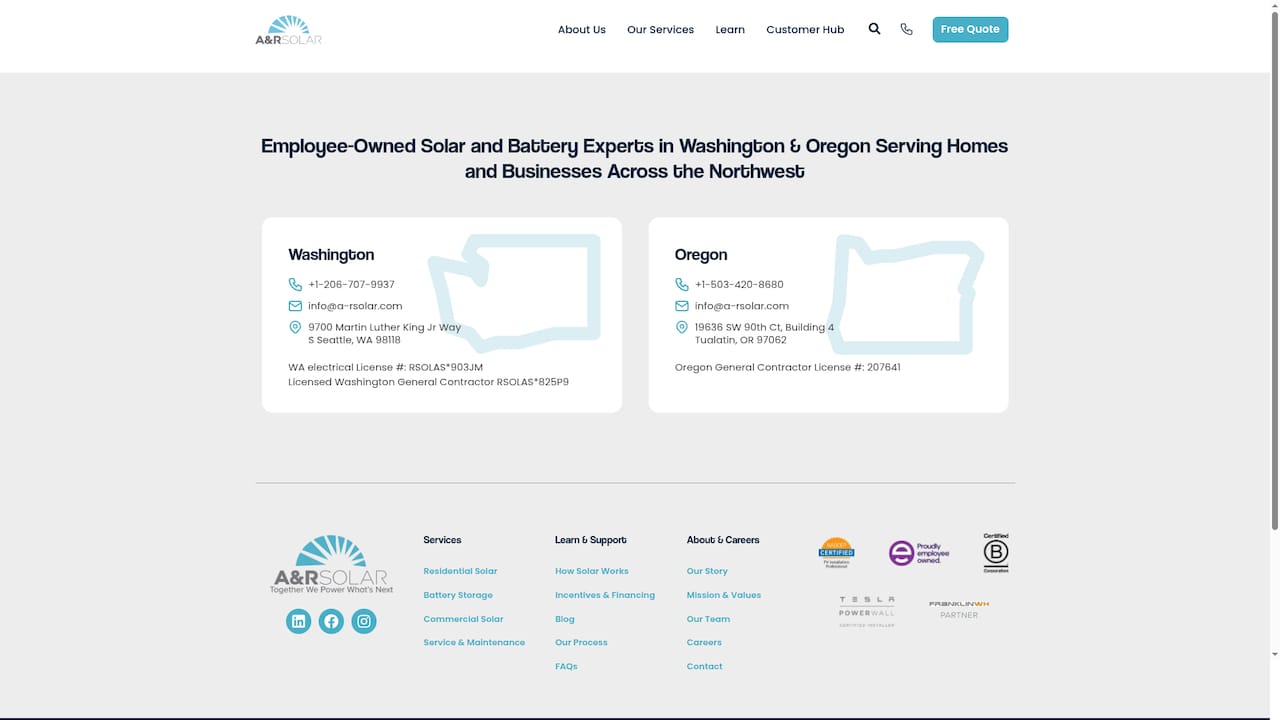
Their services cover the full project scope: solar panel installation, home battery backup systems, maintenance, and monitoring. As an employee-owned, B Corp certified company with deep regional utility relationships, A&R Solar brings accountability that national installers rarely match. Browse their residential project case studies to see completed work across homes similar to yours. Then reach out to start a conversation about your specific property and energy goals.
FAQ
What licenses does a solar contractor need in Washington?
Licensed contractors in Washington must hold a state electrical contractor license and are required to pull electrical permits on behalf of homeowners for all solar PV installations. Building permits may also be required depending on local jurisdiction.
How long does solar permitting take in the Pacific Northwest?
Permit timelines vary by jurisdiction, but most residential projects take 25 to 60 days for permit approval. Contractors using digital platforms like SolarAPP+ can reduce this by an average of 12 days in participating jurisdictions.
Why do battery storage systems take longer to get approved?
Battery-paired solar systems require additional utility review due to their complexity, extending PTO timelines from the standard 2 to 4 weeks up to 8 to 12 weeks or more. This is normal and applies across most utilities in Washington and Oregon.
What questions should I ask before hiring a solar contractor?
Ask about their licensing status, their interconnection application track record with your specific utility, whether they file permits and interconnection applications concurrently, what post-installation support looks like, and how they handle warranty claims after installation.
Does adding solar affect my property taxes in Washington?
Washington State provides a property tax exemption on the added home value from solar installations, so your assessment does not increase because of the system. A sales tax exemption also applies for systems under 100 kW through 2029.