

TL;DR:
- Ongoing solar system optimization enhances energy production and financial returns by adjusting design, equipment, and operations. Key factors include proper site assessment, shading control, MPPT technology, and regular system reviews. Local utility policies and shading conditions in the Pacific Northwest require tailored, expert-supported optimization strategies.
Most homeowners assume that once solar panels are installed, the system runs at peak performance on its own. That assumption quietly costs money every year. Solar system optimization is the ongoing process of tuning your system’s design, equipment, and operation to squeeze the most value from every kilowatt-hour your panels produce. For homeowners in Washington and Oregon, where cloudy skies, utility policy changes, and roof shading are everyday realities, optimization can be the difference between a system that merely functions and one that consistently delivers strong returns.
Table of Contents
- What is solar system optimization?
- Key factors in optimizing your home solar system
- Site-specific and billing considerations for the Pacific Northwest
- Advanced optimization: MPPT and overcoming partial shading
- The truth about solar optimization most guides miss
- Get expert support for your optimized solar system
- Frequently asked questions
Key Takeaways
| Point | Details |
|---|---|
| Solar optimization defined | Optimization means tuning your system through design, controls, and ongoing review to maximize energy production and savings. |
| Site-specific solutions matter | Roof tilt, shading, and local utility rules fundamentally affect how much electricity your system can generate. |
| Local billing is a game changer | In Washington and Oregon, net metering rules shape optimal system size and how you value energy production. |
| MPPT and advanced tech boost yield | Modern control methods like MPPT help extract maximum power even in challenging conditions such as partial shading. |
| Optimization is ongoing | Regular review and professional maintenance ensure your solar investment stays valuable for years. |
What is solar system optimization?
Solar system optimization means improving a PV system’s real-world energy production and value by tuning design, components, electrical control, and operations. That definition covers a lot of ground, and intentionally so. Optimization isn’t a single adjustment you make at installation. It’s a continuous process that evolves with your home’s energy needs, local utility rules, and advancing technology.
For homeowners, the practical meaning is straightforward: you want your system to generate as much useful electricity as possible, match that output to what your household actually consumes, and take full advantage of the billing structure your utility offers. Getting all three right at the same time is where real savings happen.
Here’s what optimization actually involves:
- System design: Panel placement, tilt angle, and array sizing relative to your annual energy consumption
- Equipment selection: Choosing inverters, optimizers, and monitoring tools suited to your specific roof and climate
- Electrical control: Using smart controllers to capture maximum power at any given moment
- Ongoing operations: Regular inspections, cleaning, monitoring, and software updates to maintain performance
One concept worth understanding early is MPPT, or Maximum Power Point Tracking. Your solar panels don’t produce a fixed amount of power. Output shifts constantly based on sunlight intensity, temperature, and shading. MPPT is a control method built into modern inverters that continuously adjusts electrical settings to extract the highest possible power from your panels at any given moment. Think of it as your system’s automatic tuner, always searching for the best output.
“Optimization is not a one-time project. It’s the ongoing alignment of your system’s output with your home’s needs and your utility’s billing rules.”
For homeowners new to solar, reviewing solar basics for the Northwest is a practical first step. And if you’re wondering whether solar even performs well under Pacific Northwest skies, the answer is yes, and solar performance in the Northwest explains exactly why.
Pro Tip: Start with your utility bills from the past 12 months. Your optimization goal is to size and operate your system so annual production closely matches annual consumption, neither significantly over nor under.
Key factors in optimizing your home solar system
Orientation, tilt, and shading control how much energy your system captures year-round. These aren’t details to revisit later. They’re foundational decisions that shape every other optimization choice you make.

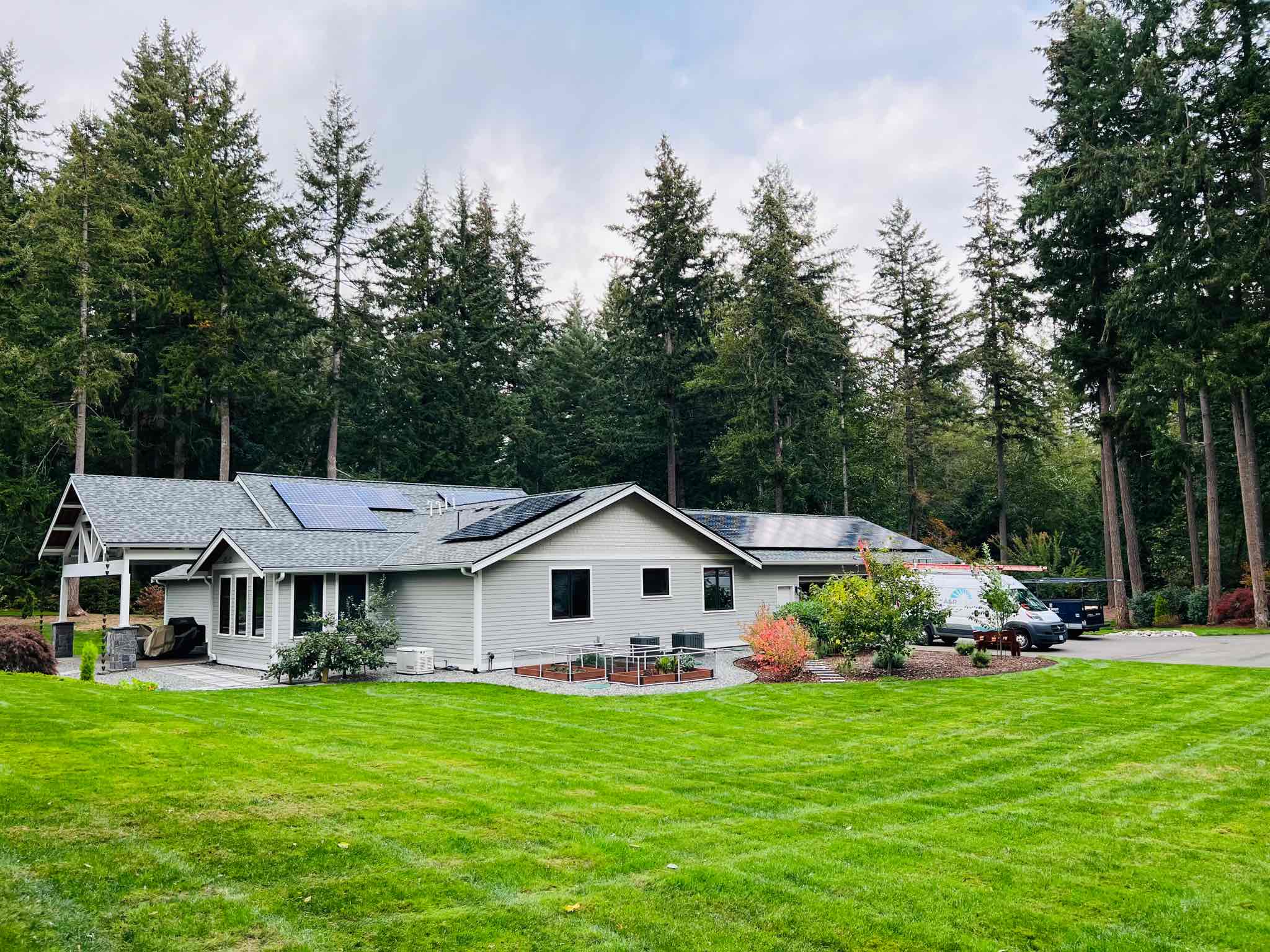
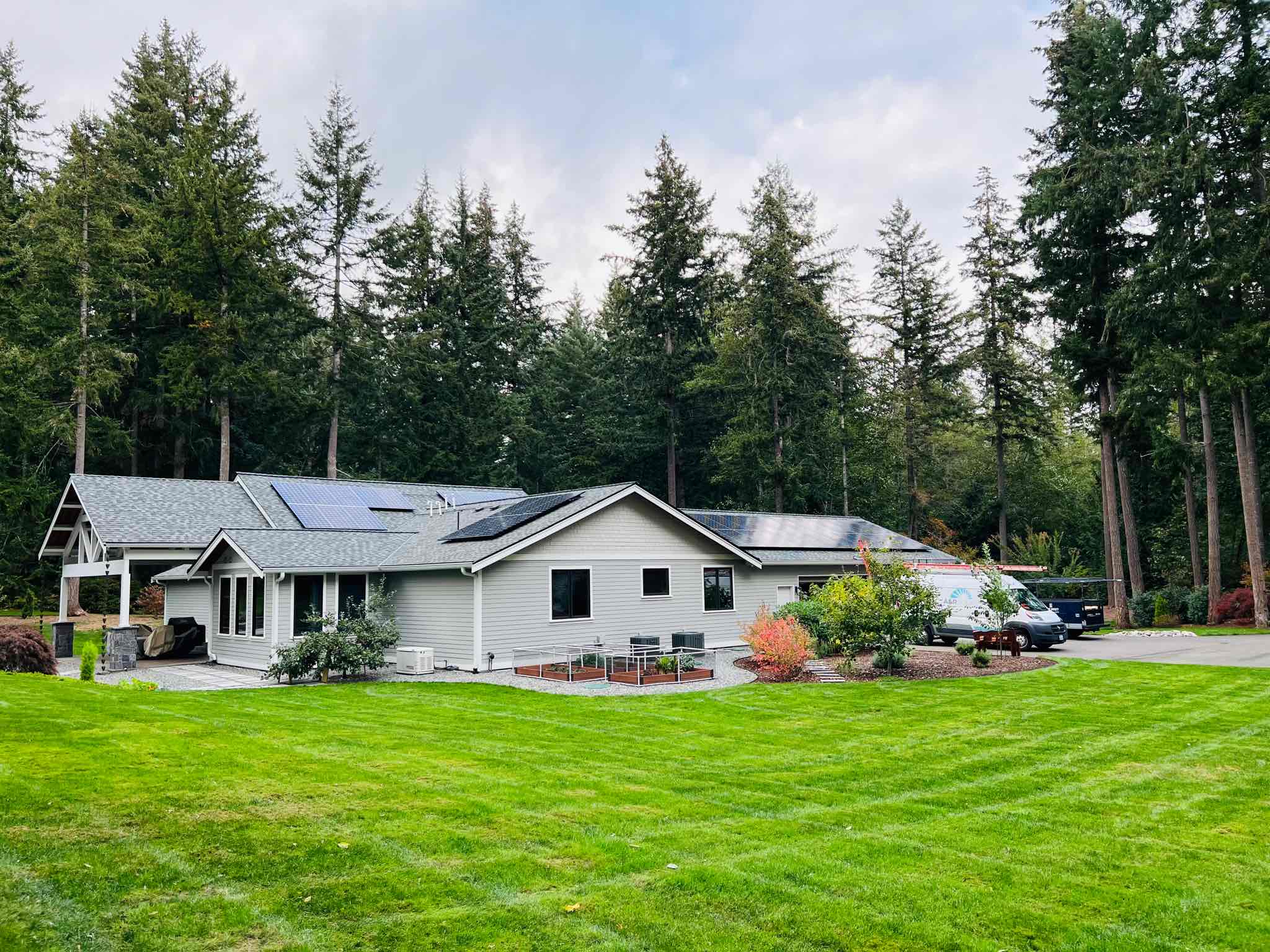
Array layout optimization, including orientation, tilt, and inter-row spacing, forms the core framework of solar optimization, with the goal of maximizing annual energy yield while balancing shading, maintenance access, and design constraints. For homeowners in the Pacific Northwest, that means accounting for lower sun angles in winter, frequent overcast conditions, and the very real possibility that a neighbor’s tree or your own roofline creates partial shading across part of your array.
Here are the primary factors that determine optimization outcomes:
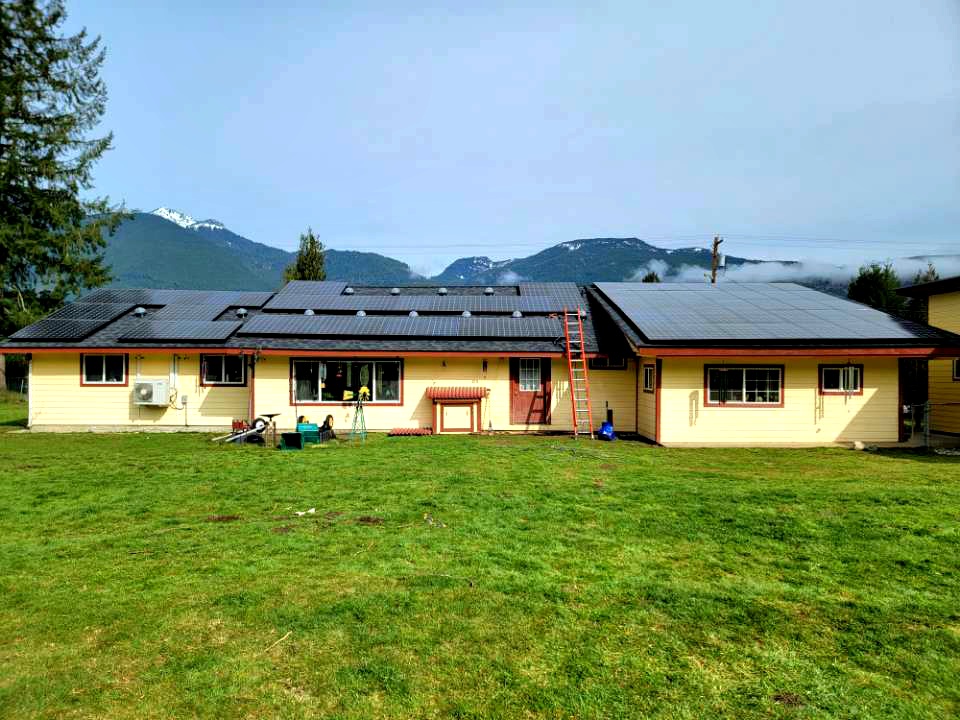
- Roof orientation: South-facing arrays capture the most annual sunlight in the Northern Hemisphere. Southwest and southeast orientations can still perform well if tilt is adjusted accordingly.
- Tilt angle: For the Pacific Northwest, tilt angles between 30 and 40 degrees tend to balance summer and winter production effectively.
- Shading analysis: Even a small shadow falling on one or two panels can reduce output across a string of panels if conventional wiring is used.
- Inter-row spacing: For ground-mounted systems, the distance between rows of panels affects how much self-shading occurs during low-angle winter sun.
- Maintenance access: Arrays that are difficult to reach are less likely to get cleaned and inspected, which gradually erodes performance.
The table below compares common configurations for Pacific Northwest rooftops and ground-mounted systems:
| Configuration | Best for | Key advantage | Main limitation |
|---|---|---|---|
| South-facing roof, 35° tilt | Standard sloped roof | Maximum annual yield | Requires favorable roof geometry |
| Southwest roof, 30° tilt | Afternoon peak users | Better afternoon production | Slightly lower annual total |
| East-west split array | Complex rooflines | Reduces inter-row shading | Moderate installation complexity |
| Ground-mount, adjustable tilt | Open land | Full angle control | Higher upfront cost |
| Flat roof with racking | Commercial or flat residential | Flexible orientation | Wind load and ballasting required |
If you’re considering adding panels to an existing installation, expanding a solar array requires careful planning so new panels integrate with your existing inverter and production profile. And if you’re still at the panel selection stage, understanding the options in choosing solar panels helps you match equipment to your site conditions.
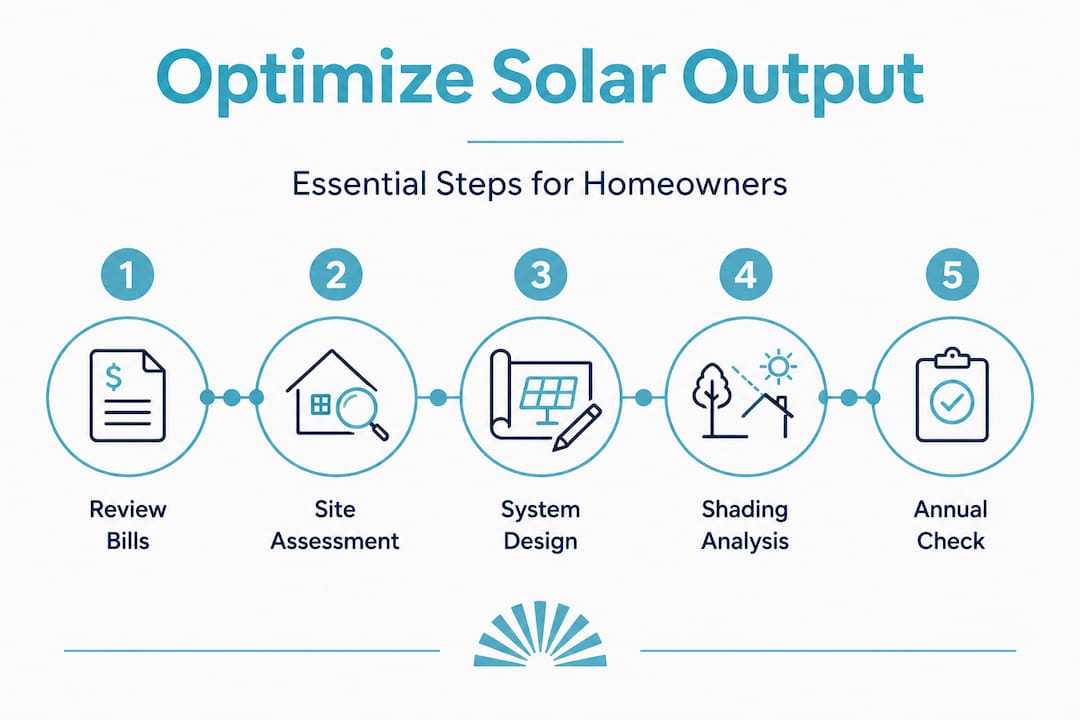
A precise annual production estimate, using tools like PVWatts or a professional shading analysis, gives you a realistic target before and after any optimization change. Without that baseline, it’s nearly impossible to know whether a change actually improved performance.
Site-specific and billing considerations for the Pacific Northwest
Local climate, roof layout, and utility billing rules in Washington and Oregon shape what optimization actually looks like for your household. Optimization without accounting for these local factors is incomplete.
Optimization is strongly site-and-billing dependent: roof tilt, orientation, and especially shading patterns control performance, and the value of generated solar depends on utility net metering and bill credits, as well as how the system is sized relative to annual use. In plain terms, the financial return from your solar system depends just as much on how your utility credits your excess power as it does on how many kilowatt-hours your panels produce.
Here’s a numbered breakdown of how site and billing factors interact for Pacific Northwest homeowners:
- Size to annual consumption, not peak output. A system sized to your annual kilowatt-hour use gets the most value from net metering, because most utilities credit excess power at a lower rate or with expiration limits.
- Account for winter underproduction. Western Washington and Oregon see significantly less sun from November through February. A properly optimized system factors this in so you’re not carrying a large deficit from utility power in winter.
- Use shading analysis to inform panel placement. Tree growth, new construction, and even rooftop equipment like HVAC units create shading that wasn’t present at installation.
- Review utility policy changes annually. Net metering rules in both states have evolved and continue to change. A system optimized under one set of billing rules may need adjustment as policy shifts.
- Track production against your estimate. If your system’s annual output falls more than 10 to 15 percent below its projected figure, that’s a signal to investigate and correct the cause.
| Factor | Washington | Oregon |
|---|---|---|
| Net metering availability | Yes, most utilities | Yes, most utilities |
| Excess credit handling | Annual true-up, varies by utility | Annual true-up, varies by utility |
| Incentives | Sales tax exemption, utility rebates | Oregon residential energy tax credit |
| Average peak sun hours | 3.5 to 4.5 per day | 4.0 to 5.0 per day (east of Cascades higher) |
Understanding Washington net metering explained gives you the policy foundation to size and operate your system for maximum credit. Homeowners with installations in both states or planning a move will also benefit from reviewing net metering programs in WA and OR side by side.
Pro Tip: Pull your utility’s interconnection agreement and net metering tariff and compare them to your current system size. If you’ve added an EV or a heat pump since installation, your consumption has likely grown and your system may now be undersized.
Advanced optimization: MPPT and overcoming partial shading
Modern solar systems use MPPT controllers to maintain peak output as conditions change throughout the day. But standard MPPT has a documented limitation: partial shading.
Under partial shading conditions, the solar array’s power curve can develop multiple peaks, and conventional MPPT algorithms may lock onto a local maximum rather than the true global maximum, reducing energy harvest. Optimization-based and heuristic MPPT approaches improve tracking efficiency and convergence speed, capturing more energy even when part of the array is shaded.
For Pacific Northwest homeowners, partial shading is not an edge case. It’s a daily reality for a significant portion of residential installations. Trees are tall and dense in this region, rooflines are complex, and the sun stays low in the sky for months at a time.
Here’s what advanced optimization offers in practice:
- Module-level power electronics (MLPEs): Devices like microinverters and DC power optimizers allow each panel to operate independently. A shaded panel no longer drags down the entire string.
- Global MPPT algorithms: More sophisticated inverters use algorithms that scan the full power curve rather than stopping at the first peak, finding true maximum output even when shading creates multiple peaks.
- Real-time monitoring: Systems with panel-level monitoring let you see exactly which panels are underperforming and why, so problems get identified and fixed faster.
- Rapid shutdown compliance: Newer safety-driven requirements in the National Electrical Code also push installations toward module-level electronics, aligning safety upgrades with performance upgrades.
Performance callout: Homes with even moderate shading and conventional string inverters can see annual production losses of 10 to 25 percent compared to systems using module-level electronics under the same conditions.
These aren’t hypothetical gains. For a 10 kW system producing roughly 10,000 kWh per year, recovering 15 percent through advanced MPPT and module-level electronics represents 1,500 kWh annually. At typical Pacific Northwest utility rates, that’s real money back in your pocket every year.
The investment in upgrading from a conventional string inverter to a system with module-level power electronics varies, but it often pays back within three to five years through recovered production, especially for shaded sites.
The truth about solar optimization most guides miss
Most optimization guides treat the topic as a checklist: set your tilt angle, pick the right inverter, and you’re done. That framing misses the most important reality. Optimization is a relationship with your system, not a one-time project.
Over two decades working with homeowners across Washington and Oregon, we’ve seen systems that started strong and gradually underperformed because nobody revisited the original assumptions. A tree that added 10 feet of height. A utility rate structure that changed. An inverter that aged past its peak efficiency range. None of these changes trigger an obvious alarm. They’re slow, quiet losses.
The homeowners who get the most from their solar investment are the ones who treat annual system reviews the same way they treat home maintenance: as a normal, expected part of ownership. That means pulling production data, comparing it to the original estimate, checking for error codes, and having a qualified technician look at the system every few years.
There’s also a boundary worth knowing. Some optimization work is genuinely within a homeowner’s reach: monitoring your production data weekly, keeping panels clear of debris, and flagging unusual drops for service. But electrical work, inverter adjustments, and shading analysis require professional tools and training. The cost of a service call is almost always less than the cost of ongoing production loss from an unresolved problem.
One resource worth bookmarking is solar system maintenance tips, which outlines exactly what to look for as your system ages. The five-year mark is when many systems see their first meaningful performance shifts, and knowing what to check makes early intervention much easier.
Utility rule changes are perhaps the most underappreciated optimization variable. Net metering structures in both Washington and Oregon have evolved, and more changes are expected as clean energy mandates push utilities to adjust compensation rates. A system sized and optimized for 2019 billing rules may not be performing optimally under 2026 policy. Annual review of your interconnection agreement and utility tariff is practical, not paranoid.
Get expert support for your optimized solar system
Optimization delivers its best results when expert knowledge meets your specific system, roof, and utility situation.
A&R Solar has spent over 20 years helping Washington and Oregon homeowners get more from their solar installations. Whether you need a performance review, an equipment upgrade, or a shading analysis, our employee-owned team brings regional expertise and honest assessment to every service call. We don’t recommend upgrades that won’t pay back on your specific system. If your production data shows a problem, we find the cause and fix it with the right solution, not the most expensive one.
For homeowners in Washington, solar service in Washington connects you with local technicians who know regional utility rules and climate conditions. Oregon homeowners can access professional solar repair and service in Oregon through the same trusted team. For ongoing care plans and what’s included, visit solar maintenance for homeowners to see your options.
Frequently asked questions
Is solar system optimization worth it for older installations?
Yes, optimization can uncover hidden performance losses and adapt your system to new utility rules, improving return even for older setups. Annual evaluation and adjustment is key to maintaining performance as utility policies and site conditions change over time.
How much impact does shading have on a home solar system?
Shading is one of the biggest factors affecting residential solar output, and it can reduce annual yield by 10 to 25 percent or more on affected strings. Shading significantly reduces output across conventional string systems, making array layout optimization and advanced tracking especially valuable in tree-heavy Pacific Northwest neighborhoods.
What is MPPT and can homeowners benefit from it?
MPPT, or Maximum Power Point Tracking, uses smart controllers built into inverters to continuously find and capture the highest possible power output from your panels. Optimization-based MPPT techniques outperform conventional tracking under partial shading, which makes them particularly valuable for most Pacific Northwest rooftops.
How do Washington and Oregon net metering rules affect optimization?
Both states’ net metering rules directly shape how a system should be sized and operated for maximum credit and cost savings. Optimization for homeowners is framed around annual usage and utility billing rules, so changes to net metering policy can shift the ideal system size and operating strategy even for existing installations.