

TL;DR:
- Washington homeowners can benefit from net metering and sales tax exemptions.
- Despite its cloudy climate, solar panels generate meaningful energy, with payback around 9 to 16 years.
- Timing and policy changes impact savings; acting now maximizes incentives and investment returns.
Many Washington homeowners assume the state’s famously cloudy skies make solar a poor investment. That assumption is costing them money. Washington’s net metering allows homeowners to receive full-value bill credits for solar energy they produce, which means even modest sun exposure translates into real savings. Pair that with a strong sales tax exemption and utility rebates and programs such as net metering, and going solar in Washington is more financially rewarding than most people expect.
Table of Contents
- How does solar work for Washington homeowners?
- Available incentives and financial benefits
- Solar payback periods and real-world economics
- Policy and program changes: What’s on the horizon?
- Maintenance needs and considerations for Washington’s climate
- Why homeowners should think strategically about timing and technology
- Ready to go solar? Get expert support for your Washington home
- Frequently asked questions
Key Takeaways
| Point | Details |
|---|---|
| Full-value net metering | Washington’s utility net metering currently credits you at full retail rates for the solar energy you generate. |
| Valuable incentives available | You can claim a state sales tax exemption through 2029, greatly lowering your project costs. |
| Typical payback in 9–16 years | Most homeowners in Washington recoup their solar investment within 9 to 16 years, depending on system size and incentives. |
| Stay ahead of policy changes | Acting soon may lock in best credits before net metering or incentive policies shift. |
| Plan for local maintenance needs | Seasonal cleaning and regular monitoring help your panels perform reliably in Washington’s unique climate. |
How does solar work for Washington homeowners?
Washington’s climate is wetter and cloudier than California or Arizona, but modern solar panels are designed to generate power from diffuse light, not just direct sunlight. A well-sized system in Seattle or Olympia still produces meaningful energy across the year, especially during the long summer days that offset the shorter winter output.
The key mechanism that makes solar financially viable here is net metering. Net metering provides 1:1 bill credits for excess solar generation at full retail value until statutory caps are reached. When your panels produce more power than your home uses, the surplus flows back to the grid and your utility credits your account at the same rate you would have paid to buy that electricity. That is a significant advantage.
Here is how Washington’s net metering program is structured:
| Feature | Details |
|---|---|
| Credit rate | Full retail rate (1:1) |
| System size cap | 100 kW for residential |
| Utility threshold | 4% of utility’s 1996 peak load |
| Credit rollover | Monthly, with annual true-up |
| Applies to | Investor-owned and most public utilities |
A few important eligibility points:
- Your system must be 100 kW or smaller to qualify
- Credits accumulate monthly and settle annually
- Once a utility hits its statutory cap, new customers may receive different compensation terms
- Washington solar incentives can further reduce your upfront costs alongside net metering benefits
Pro Tip: Ask your utility how close it is to its net metering cap before you finalize your installation timeline. If the cap is near, locking in sooner preserves your access to full retail credits. You can also review the Washington net metering overview for utility-specific details.
Available incentives and financial benefits
Washington homeowners have access to two major incentives that significantly reduce the cost of going solar. Understanding how they work together is essential for accurate financial planning.
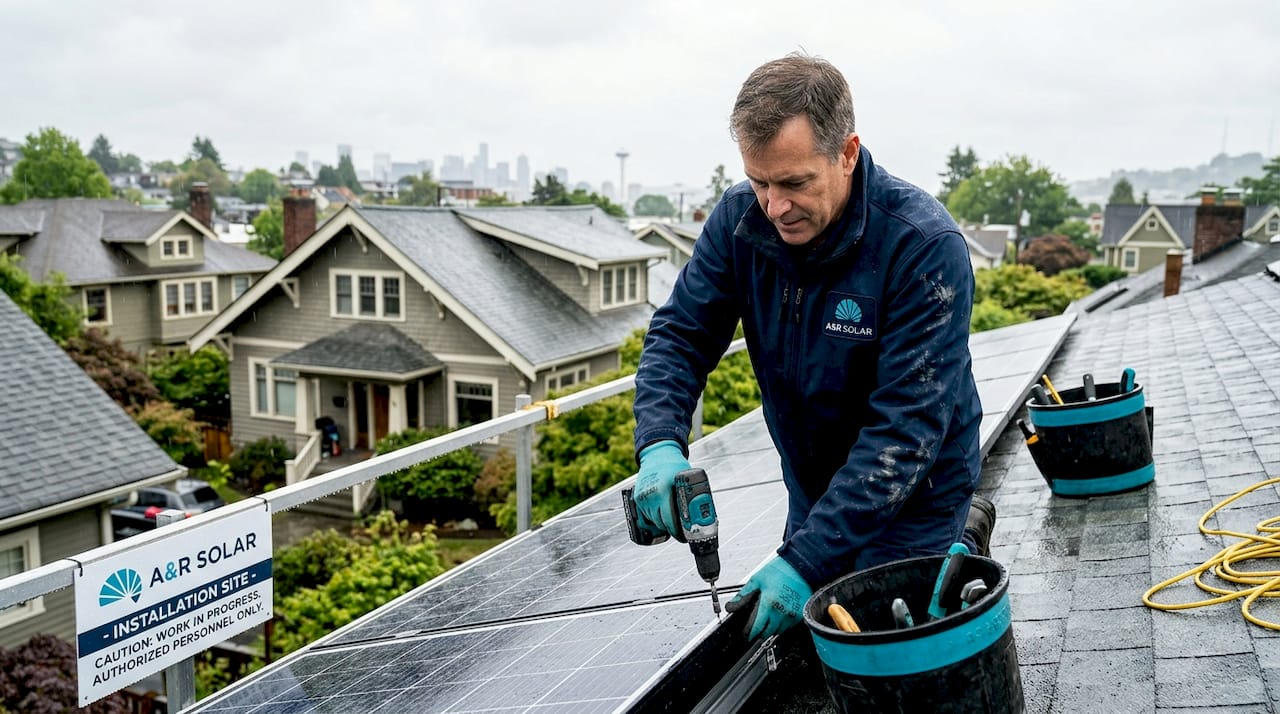
Washington sales tax exemption: Qualifying solar equipment is exempt from state sales tax through December 2029. On a $20,000 system, that exemption saves roughly $2,000 at Washington’s average sales tax rate. Details on eligible equipment are available through the sales tax exemption page.
RESIP program: The Renewable Energy System Incentive Program is not accepting new applications. If you have seen it mentioned online, be aware it is fully subscribed and not available to new projects
Here is how the remaining incentives combine on a sample system:
Key points to keep in mind:
- The sales tax exemption applies at the point of purchase, so you see that savings immediately
- Combining both incentives brings the state and utility incentives into a meaningful range
Statistic to know: Washington homeowners typically see a 9 to 16 year payback period depending on system size, utility rates, and how much of their production they self-consume versus export.
Solar payback periods and real-world economics
With incentives applied, the question becomes: how long until you break even? The answer depends on your electricity usage, your utility’s rates, and how much of your solar production you use directly versus export.
Sample scenario: 5 kW residential system
- Gross system cost: $18,000 to $22,000 installed
- After ITC and sales tax exemption: Approximately $12,000 to $14,000
- Annual bill savings: $900 to $1,400 depending on usage and rate
At $1,200 per year in savings on a $13,000 net cost, payback lands around 10 to 11 years. That is consistent with published estimates for Washington, which place the range at roughly 9 to 16 years.
Factors that shorten payback:
- Higher electricity rates at your utility
- Strong self-consumption (using your solar power directly rather than exporting it)
- Roof orientation and minimal shading
- Adding battery storage to capture excess generation
Buying vs. leasing: Purchasing your system outright or through a loan gives you full access to the ITC and sales tax exemption. Leasing transfers those benefits to the leasing company, which reduces your upfront cost but also limits your long-term savings. Review the specifics of solar leasing in Washington before committing to either path.
“Homeowners who lock in net metering at today’s rates and use current incentives are positioning themselves for the strongest possible return. Waiting for better technology or lower prices often means missing the financial window that exists right now.”
You can also compare net metering programs across Washington and Oregon utilities to find the most favorable terms for your location. For guidance on battery payback, independent resources can help you model combined solar and storage scenarios.
Pro Tip: Run your payback estimate using your actual utility bill, not a national average. Washington rates vary significantly between PSE, Seattle City Light, and rural PUDs, and that difference can shift your payback by several years.
Policy and program changes: What’s on the horizon?
Financial planning for solar does not stop at today’s incentives. Washington’s net metering policy is actively under review, and the outcome will affect how future solar installations are compensated.
Here is what is currently happening:
- Utilities are required to offer net metering until they reach 4% of their 1996 peak load
- Once that threshold is hit, new solar customers may receive a different, potentially lower compensation rate
- Washington is actively reassessing distributed solar compensation through the Value of Distributed Solar and Storage (VOSS) study
- The VOSS study will inform how the legislature structures compensation after current NEM caps are reached
- Larger utilities like Puget Sound Energy are approaching their thresholds faster than smaller utilities
What this means practically: homeowners who install now and get grandfathered into current net metering terms may retain 1:1 credit rates even if future customers receive lower compensation. That is a meaningful financial advantage.
“Some homeowners are choosing to wait, expecting policy to improve. Others are installing now specifically because current terms are the most favorable they may see for years. The evidence leans toward acting sooner.”
Staying informed about NEM policy changes is important as the VOSS study progresses and legislative sessions address distributed energy compensation.
Maintenance needs and considerations for Washington’s climate
Solar panels are low maintenance, but Washington’s specific climate creates a few considerations worth planning for. Moss, pollen, and extended overcast periods can affect both system output and panel condition over time.
Cleaning frequency: Panel cleaning is recommended 1 to 2 times per year in Washington, with more frequent cleaning needed in areas with heavy tree cover, moss growth, or high pollen seasons. Western Washington’s moisture creates conditions where moss can establish on panels if cleaning is deferred.
Key maintenance considerations:
- Roof safety: Cleaning panels yourself risks roof damage and voids some warranties. Professional cleaning is the safer option for most homeowners.
- Monitoring: Setting up solar monitoring lets you track daily production and catch underperformance early, often before it becomes a costly problem.
- Shading changes: Trees grow. A system that was unshaded at installation may develop shading issues over time, reducing output.
- Inverter lifespan: String inverters typically last 10 to 15 years. Budget for a replacement within your system’s 25 to 30 year lifespan.
For a broader look at what ongoing care involves, maintenance and cleaning tips from independent sources provide useful benchmarks.
Pro Tip: Before signing an installation contract, ask your installer what maintenance services they offer and whether a service plan is available. Knowing your support options upfront prevents gaps in coverage later.
Why homeowners should think strategically about timing and technology
Most solar conversations focus on cost per watt and payback period. Those numbers matter, but they do not capture the full picture. The homeowners who get the best outcomes from solar in Washington are the ones who think ahead about policy, storage, and energy independence, not just bill savings.
Key ROI mechanics include the remaining duration of 1:1 net metering, roof orientation, shading conditions, and whether you plan for outages or storage as export rules may change. These factors interact in ways that a simple payback calculation does not fully reflect.
Adding battery storage is increasingly relevant as net metering terms evolve. If export compensation rates drop, a battery allows you to store excess generation and use it yourself rather than sending it to the grid at a lower rate. That preserves the financial value of your system even as policy shifts.
There is also a common assumption that waiting leads to better deals. In some cases it does, as panel costs have dropped significantly over the past decade. But waiting also means missing the current 30% ITC, the sales tax exemption, and grandfathered net metering terms. The math on acting now is often stronger than the math on waiting, particularly for homeowners in utilities approaching their NEM caps.
“Homeowners who act strategically now maximize both savings and resiliency.”
Understanding how battery storage boosts savings in a changing policy environment is worth reviewing before you finalize your system design.
Ready to go solar? Get expert support for your Washington home
Making the right decision on solar requires more than reading about incentives. It requires a system design matched to your home, your utility, and your energy goals.
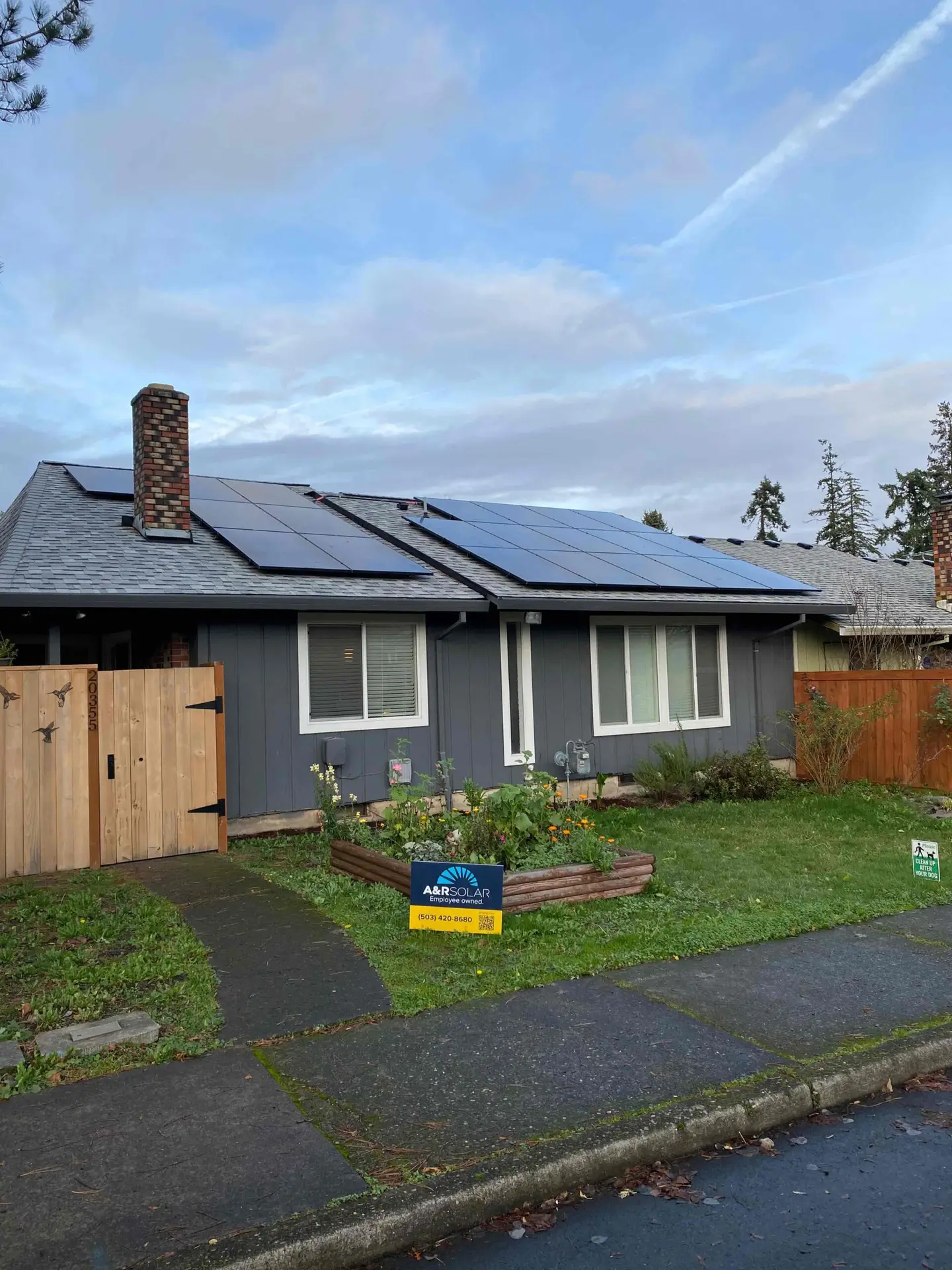
A&R Solar has been helping Washington homeowners navigate installations, permits, and incentives for two decades. As a local, employee-owned, B Corporation certified company, we handle everything from initial design through ongoing maintenance. You can view completed Washington solar installations to see real-world examples of residential projects across the state. If your existing system needs attention, our team provides professional solar repair and service. Ready to review what incentives apply to your specific situation? Start by exploring what you qualify for through our incentives page.
Frequently asked questions
How does net metering work in Washington and will it continue?
Net metering gives Washington solar homeowners full retail bill credits for excess power sent to the grid, but this benefit may change as utilities hit statutory caps, with a state VOSS study now underway to reassess future compensation.
What main incentives are available for solar in Washington as of 2026?
You can claim a state sales tax exemption on qualifying solar equipment through 2029; the RESIP program is closed to new applicants.
What is the average payback period for a solar system in Washington State?
Homeowners typically see payback over 9 to 16 years, depending on system size, utility rates, and how incentives are applied.
Does Washington’s climate make solar less reliable or require extra maintenance?
Panels in Western Washington need cleaning 1 to 2 times per year, especially where moss or pollen is heavy, and professional cleaning protects both your roof and your warranty.
Can I still benefit from solar if RESIP and some programs are closed?
Yes. The sales tax exemption remains available and together can reduce your system cost by 5 to 10%, making solar financially viable in Washington even without RESIP.