



TL;DR:
- Net metering policies and credit rates vary significantly between Washington and Oregon utilities.
- Washington utilities generally apply a fixed April 30 annual reconciliation date, affecting credit rollover.
- Oregon’s utility-specific credit schemes can impact solar investment payback by hundreds of dollars each year.
Choosing the wrong net metering program can quietly cost you hundreds of dollars every year, and most homeowners only discover this after they’ve already installed their solar system. If you live in Washington or Oregon, your utility provider determines how much credit you actually earn for the excess electricity your panels send to the grid. The difference between programs is not trivial. Some utilities credit you at the full retail rate, while others pay a fraction of that. This article breaks down the specific programs offered by Washington and Oregon utilities, compares the key terms that affect your payback period, and gives you a clear path to maximizing your solar investment.
Table of Contents
- How net metering works in Washington and Oregon
- Washington utility net metering programs: Key examples
- Oregon utility net metering programs: Utility-specific differences
- Comparing Washington and Oregon net metering: What matters most
- What most guides miss about net metering program choice
- Next steps for exploring net metering and solar savings
- Frequently asked questions
Key Takeaways
| Point | Details |
|---|---|
| Check your utility | Savings and program rules vary by which utility serves your home in Washington or Oregon. |
| Compare credit rates | Oregon utilities differ—PGE uses avoided-cost, while Pacific Power offers one-to-one retail credit. |
| Know the reset date | In Washington, excess credits expire each April 30, so plan system use accordingly. |
| Policy beats price | Annual rules and flexibility can impact your long-term solar returns more than just the cents-per-kWh rate. |
How net metering works in Washington and Oregon
Net metering is straightforward at its core. When your solar panels produce more electricity than your home uses at a given moment, that surplus flows back to the grid. Your utility then credits your account for that energy. When your panels aren’t producing enough, such as at night or on cloudy winter days, you draw from the grid and those credits offset what you owe. The result is a lower monthly bill and, in many cases, a bill that approaches zero during peak production months.
However, the specific rules that govern how credits are calculated, how long they last, and what happens to unused credits at the end of the year vary significantly depending on your utility.
Here are the key terms you need to understand before comparing programs:
- Retail rate credit: You receive credit equal to the full price you’d normally pay for electricity. This is the most favorable structure for solar owners.
- Avoided cost credit: The utility credits you only at the rate it would cost them to generate or purchase that power elsewhere. This is typically far below the retail rate.
- Annual reconciliation: Once per year, any unused net metering credits are either paid out, carried forward, or forfeited, depending on your utility’s rules.
- System size limits: Utilities may cap the system size eligible for net metering, often tied to your annual consumption.
Washington’s net metering is governed by a regulated framework that establishes baseline requirements for utilities. The Washington Utilities and Transportation Commission confirms that the three investor-owned utilities required to offer net metering are Avista, Pacific Power, and Puget Sound Energy. Oregon operates differently, with utility-level rules that can produce meaningfully different outcomes depending on which provider serves your home.
Pro Tip: Utility programs can and do change. Verify the current rules with your specific utility at least once a year, especially before making any decisions about expanding your system or adding battery storage.
Understanding these basics positions you to make a more informed comparison between specific utility programs in both states. The Washington solar incentives available in your area can also influence which program delivers the best total financial outcome.
Washington utility net metering programs: Key examples
Washington state law requires its investor-owned utilities to offer net metering to residential solar customers. This mandate creates a consistent baseline, but each utility still has its own service territory and some specific program details worth knowing.
The three participating utilities and their general coverage areas include:
- Avista Utilities: Serves eastern Washington, including Spokane and surrounding communities.
- Pacific Power: Covers parts of southwest Washington, including Walla Walla and Yakima.
- Puget Sound Energy (PSE): The largest utility in the state, serving the greater Seattle metro area, the Eastside, and communities across western Washington.
All three are required to offer net metering to eligible residential customers, which removes one barrier to entry that homeowners in some other states face.
Key statistic: Washington utilities follow an annual balance date of April 30 each year. Any unused net metering credits in your account are reconciled on that date, following a legislative change noted by the Washington UTC.
This April 30 date has real consequences for how you plan your solar system. Washington’s solar production peaks in the summer months, meaning most households accumulate significant credits between May and September. Those credits then carry forward to offset fall and winter bills. If your system overproduces relative to your annual usage, any remaining credits at April 30 may be compensated at a reduced rate or forfeited, depending on your utility’s specific reconciliation terms.
Here is a quick comparison of the three Washington utilities:
| Utility | Primary service area | Net metering required | Annual balance date |
|---|---|---|---|
| Avista | Eastern WA (Spokane) | Yes | April 30 |
| Pacific Power | SW WA (Yakima, Walla Walla) | Yes | April 30 |
| Puget Sound Energy | Western WA (Seattle metro) | Yes | April 30 |
Pro Tip: Size your solar system to match your annual consumption as closely as possible. Oversizing in Washington means surplus credits that may not be fully compensated after the April 30 balance date. Work with your installer to review 12 months of utility bills before finalizing system size. You can explore more about balance date and reconciliation specifics that apply to your utility.
Washington’s consistent mandate is a real advantage. You are not at risk of your utility simply declining to offer the program. That said, the April 30 reconciliation date means strategic planning still matters for maximizing the credits you earn.
Oregon utility net metering programs: Utility-specific differences
Oregon is where the program differences become most financially significant. Unlike Washington’s relatively uniform structure, Oregon’s utilities have historically operated with different export credit rates. Understanding those differences can affect both the payback period of your system and the optimal system size.
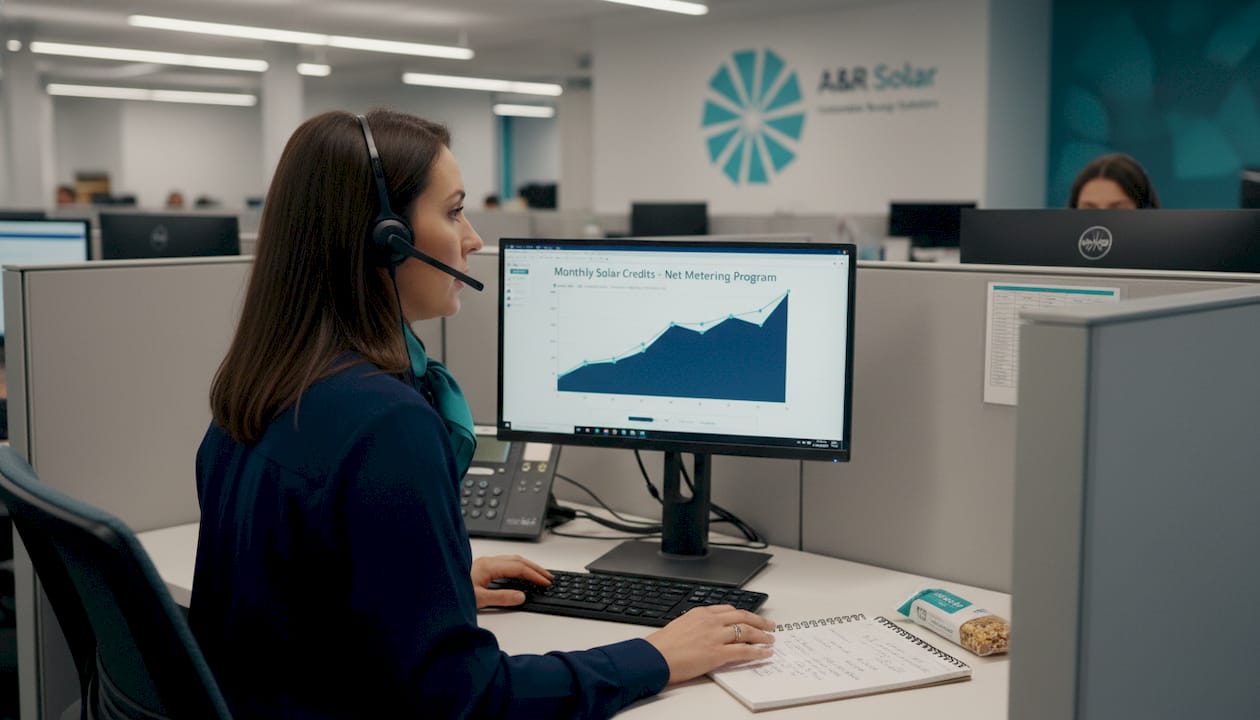
The two largest investor-owned utilities serving Oregon residential customers are Portland General Electric and Pacific Power.
Portland General Electric (PGE):
PGE serves the Portland metro area, including communities in Multnomah, Clackamas, and parts of Washington County. PGE’s net metering structure uses what is known as an avoided-cost rate for excess generation. In practical terms, PGE credits excess solar at roughly 4 to 5 cents per kWh, while the retail rate you’d pay for electricity from the grid is closer to 12 cents per kWh. That is a difference of nearly 60 percent on every excess kilowatt-hour.
Pacific Power (in Oregon):
Pacific Power serves southern and eastern Oregon. Its net metering approach is effectively one-to-one, meaning you receive credit at or close to the full retail rate for the electricity you send to the grid. This structure is considerably more favorable for homeowners who produce more than they consume during peak months.
Here is a side-by-side comparison:
| Feature | Portland General Electric | Pacific Power (OR) |
|---|---|---|
| Export credit rate | Avoided cost (~4-5 cents/kWh) | Near retail (~one-to-one) |
| Retail rate (approx.) | ~12 cents/kWh | Comparable retail rate |
| Oversizing impact | Significantly reduced returns | Minimal impact |
| Best system sizing strategy | Match annual usage closely | Flexibility for larger systems |
This difference is not minor. If your system produces 3,000 kWh of excess electricity in a year, a PGE customer earns roughly $120 to $150 in export credits. A Pacific Power customer in Oregon could earn closer to $360 for the same 3,000 kWh. Over a 25-year system lifespan, that gap adds up to thousands of dollars.
The practical takeaway for Oregon homeowners served by PGE is this: size your system to match your consumption rather than maximizing production. Generating more than you use annually will not translate to proportional financial returns under an avoided-cost structure. Pacific Power customers have more flexibility to install a larger system without losing significant credit value.
You can explore additional Oregon solar incentives that may further offset installation costs regardless of which utility serves your home.
Pro Tip: Before finalizing your solar proposal, ask your installer to show you a production estimate broken down monthly alongside your actual monthly consumption. This lets you see exactly how much excess production you’d be generating and what it would be worth under your utility’s specific export rate.
Comparing Washington and Oregon net metering: What matters most
Now that the individual programs are clear, comparing across state lines reveals both similarities and important structural differences that should inform your decision-making.
Key similarities:
Both states have regulated net metering frameworks that require the largest investor-owned utilities to participate. Both states use monthly credits that carry forward, and both conduct annual reconciliation. In each state, system size limits are generally tied to your annual usage, preventing significant oversizing from being financially rewarded.
Key differences:
Washington utilities share a common April 30 annual balance date. Oregon utilities operate with different export credit valuations. The distinction between avoided-cost and retail-rate crediting in Oregon has a direct dollar-for-dollar impact that Washington homeowners generally do not face in the same way.
“The financial return from net metering is not just about the credit rate. It is about how the entire policy structure interacts with your specific consumption patterns, system size, and production timing.”
Here is a quick-reference decision list to use before committing to a solar system or system size:
- Confirm which utility serves your home and whether they are required to offer net metering.
- Ask your utility directly what rate you receive for exported electricity.
- Request a 12-month production estimate from your installer and compare it to your 12-month consumption data.
- Calculate the dollar value of projected excess production under your utility’s export rate.
- Factor in the annual reconciliation or balance date and what happens to unused credits.
- Ask about any upcoming utility rate changes or program modifications that could affect future returns.
- Consider battery storage if your utility’s export rate is low, since storing excess production for self-use avoids the credit rate gap entirely.
Even a one or two cent difference in export credit rates matters over time. If you’re also factoring in the broader picture of utility rates in Washington and Oregon rising over time, the long-term value of solar savings becomes even more significant. Retail rates have trended upward across both states, which means every kilowatt-hour your system offsets directly is worth more each year. Understanding how to choose the right solar panels for your home’s energy needs feeds directly into this calculation.
What most guides miss about net metering program choice
Most comparisons of net metering programs focus almost entirely on the credit rate per kilowatt-hour. That is the most visible number, and it is important. But in our experience working with homeowners across Washington and Oregon, the credit rate is rarely what causes the most unexpected outcomes. It is the policy details surrounding the rate that catch people off guard.
Annual reconciliation timing is one example. A homeowner might see strong credits accumulate from May through September, assume those credits are banked indefinitely, and then be surprised when April 30 arrives in Washington and unused credits are reconciled at a reduced rate. The credit rate on paper looked good. The reconciliation structure was the real variable.
Future program flexibility is another factor that rarely appears in rate comparisons. Net metering rules in both states are subject to legislative and regulatory changes. If your utility’s program structure shifts after you install your system, your financial projections could change materially. Homeowners who have battery storage have an inherent buffer here. When the value of exported electricity drops, a battery lets you store and self-consume that energy rather than sending it to the grid at a lower rate. That kind of adaptability is worth factoring in from the start.
Program portability is also worth asking about. If you plan to install an EV charger, add a second building, or significantly increase your energy use in the next few years, your current net metering calculation may no longer reflect your real situation. A program that looks ideal for your current consumption may not serve you as well under future conditions.
We also see homeowners underestimate the value of working with an installer who is deeply familiar with local utility programs. The difference between a generic solar proposal and one that is optimized for your specific utility’s rules is real. Reviewing future rate forecast trends alongside your net metering structure gives you a much more accurate picture of long-term returns than the credit rate alone.
The honest guidance is this: compare the full policy, not just the rate. Ask hard questions about reconciliation, export credit structure, program stability, and future adaptability. That is where the real value lies.
Next steps for exploring net metering and solar savings
Understanding net metering programs is the foundation of a sound solar investment, and the right guidance can make that process significantly clearer and more productive for your household.

At A&R Solar, we work with homeowners across Washington and Oregon every day, helping them navigate the specific rules of their utility and build systems that are sized and configured to maximize real-world savings. Reviewing local solar project examples from our portfolio gives you a concrete sense of what homeowners in your area have achieved. You can also explore real case studies that detail actual system performance and financial outcomes under specific utility programs. If you’re ready to discuss your home’s specific situation, our team offers solar service in Washington and Oregon, with the utility-specific knowledge to help you make a confident, well-informed decision.
Frequently asked questions
Which Washington utilities offer net metering to homeowners?
Avista, Pacific Power, and Puget Sound Energy are all required to offer net metering to eligible homeowners within their respective service areas in Washington state.
What is the net metering credit rate for Portland General Electric?
PGE generally credits excess solar generation at an avoided cost rate of roughly 4 to 5 cents per kWh, which is significantly below the retail rate of approximately 12 cents per kWh.
When do net metering credits reset in Washington?
Washington net metering credits are reconciled each year on April 30, following a legislative change that moved the annual balance date to that specific date.
Why does utility selection matter for Oregon solar owners?
Because each utility sets its own export credit structure, the financial return on your solar investment can vary by hundreds of dollars annually depending on whether your utility uses an avoided-cost or retail-rate credit approach.