

Beware of Solar Door Knockers: Verify the Story Before You Sign
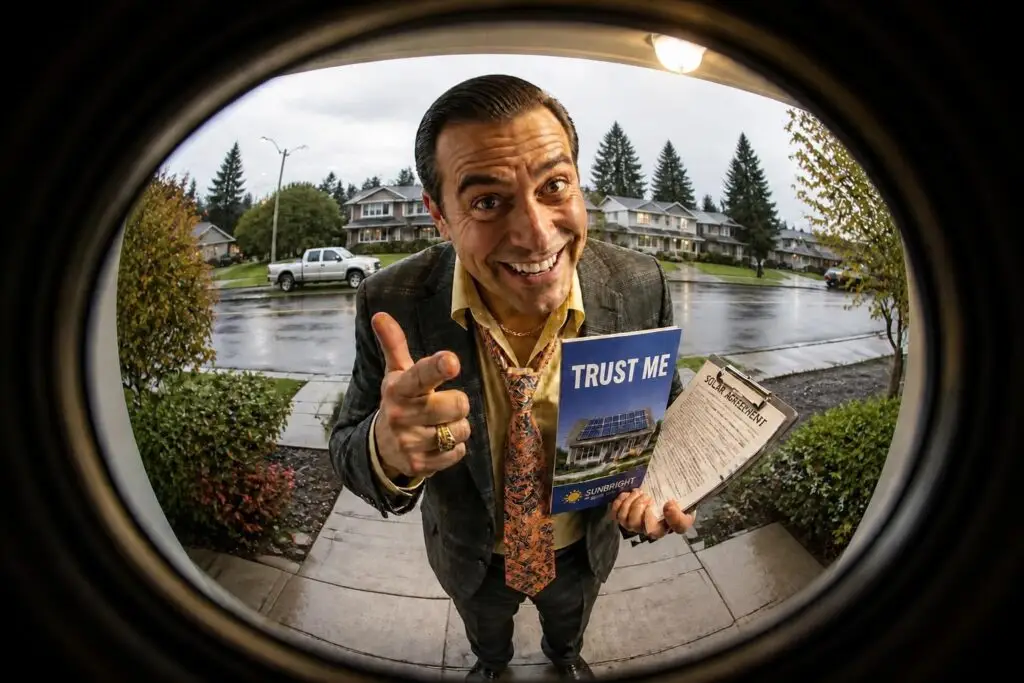
TL;DR: We’re hearing reports of door-to-door salespeople telling homeowners that A&R Solar — and other local solar companies — have gone out of business, then using that claim to sell solar service, warranty coverage, repairs and related home services.
A&R Solar has not gone out of business.
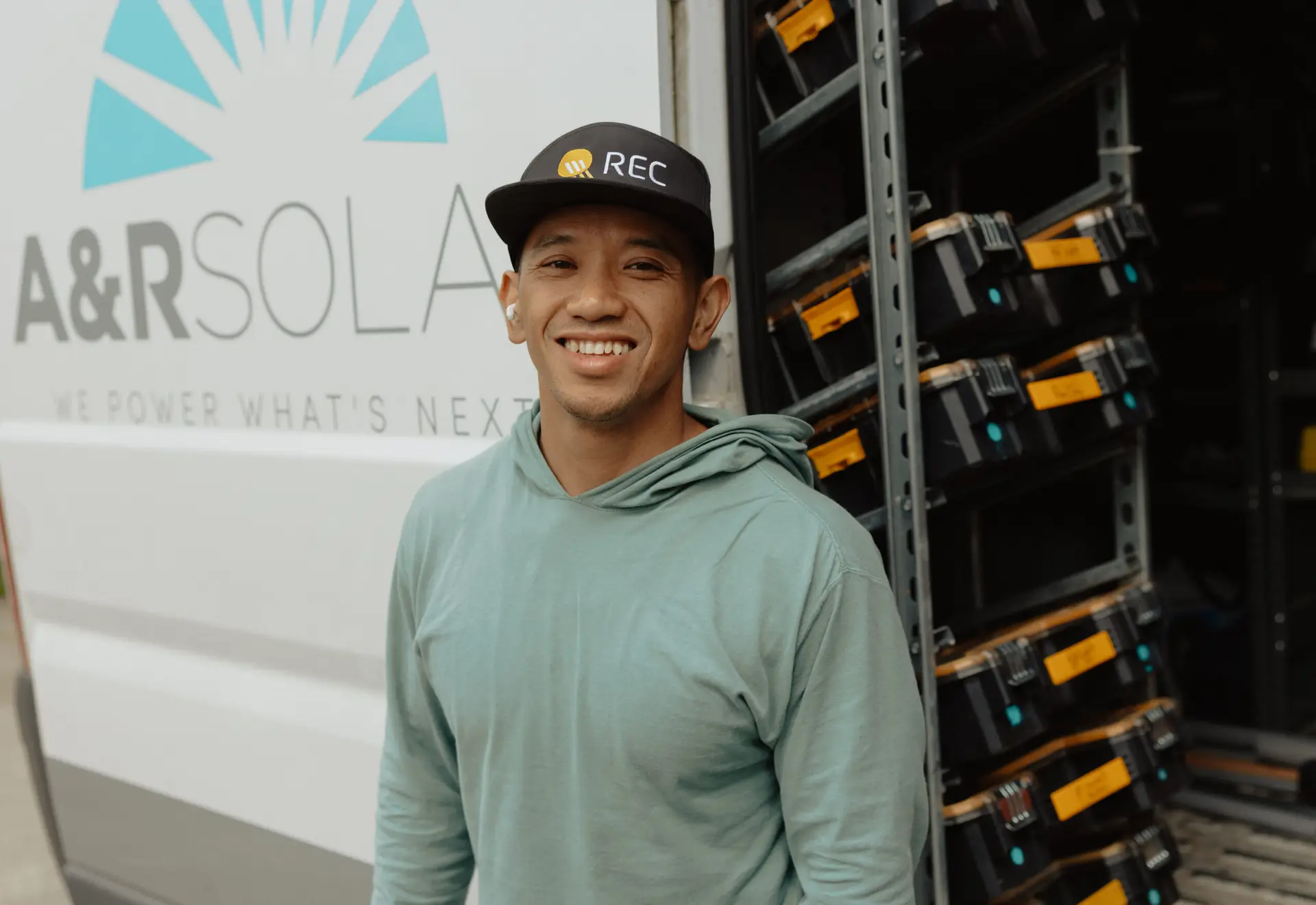
We’re still installing solar and batteries. We’re still servicing systems. And we’ve been here since 2007.
If someone knocks on your door with alarming news about your solar company, verify it before you sign anything.
We’re hearing a new pitch: “Your solar company is gone.”
At least one company currently recruiting door-to-door salespeople in Washington says it has a database of more than 35,000 solar homes installed by companies that are gone.
Its recruiting post says salespeople receive mapped territories of pre-identified solar homes and can sell services including:
- Solar electrical inspections
- “Warranty takeovers”
- Solar repairs
- Roof maintenance
- Preventive care
- Roof replacement
The company says it was founded by people who came out of Washington’s solar industry and saw a business opportunity as installers disappeared.
Read the recruiting post on LinkedIn
There is a real need for service when a solar installer closes.
But we’re also hearing reports that homeowners are being told their installer is out of business when that isn’t true.
If the sales pitch starts with:
Your installer is gone.
Your warranty may be gone.
You need coverage now.
Slow down.
Verify the problem before you buy the solution.
Why homeowners should ask questions
The Northwest solar industry has seen companies close and leave customers with unfinished projects, service issues and warranty questions.
That has created a real market for companies that service so-called “orphaned” solar systems.
There’s nothing inherently wrong with that.
What matters is whether the person at your door is giving you accurate information and whether the product they’re selling is something you actually need.
Before signing anything, ask:
- Is my installer actually out of business?
- What exactly are you selling?
- Is this a one-time service or an ongoing contract?
- What coverage do I already have?
- Who performs the actual solar work?
- What isn’t covered?
- What will this cost over the full term?
If the person selling the solution is also the person telling you there’s a problem, it’s worth checking the problem yourself.
If your installer really did close
An installer going out of business does not automatically mean your solar system stops working or that every warranty disappears.
Solar equipment often carries manufacturer warranties separate from an installer’s workmanship or labor warranty.
You may need another qualified solar service provider to:
- Diagnose a system issue
- Replace failed equipment
- Help with manufacturer warranty claims
- Perform electrical repairs
- Remove and reinstall panels for roof work
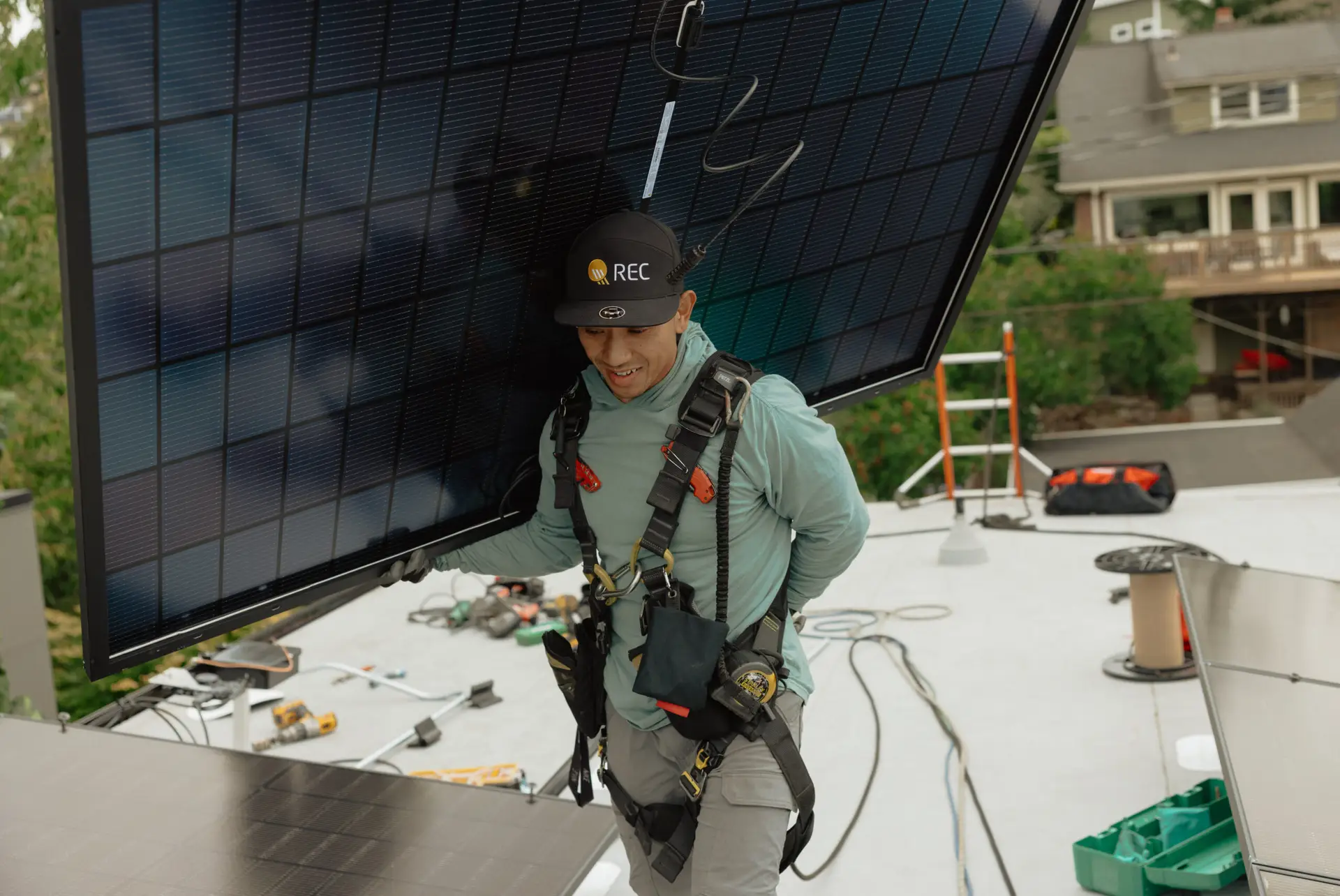
A&R Solar’s in-house Service Department works on many systems we didn’t originally install.
You may need service.
You do not necessarily need a long-term service contract.
Other door-knocking red flags
Watch for claims like:
- “I’m from your utility company.”
- “A new law requires you to do this.”
- “Let me see your electric bill.”
- “You have to decide today.”
- “Your warranty is about to disappear.”
If someone uses urgency, authority or fear to push you toward a contract, check the claim independently before you act.
Use the utility’s official contact information. Look up the company. Review your existing warranties. Ask who will actually perform the work and what the full contract costs.
Real service problems happen.
Pressure tactics don’t make them more real.
If someone tells you A&R Solar went out of business…
They’re wrong.
A&R Solar has been here since 2007, and we’re still installing and servicing solar and battery systems across Washington and Oregon.
If someone tells you otherwise, call us directly before you sign anything.
Verify the story. Then decide what you actually need.