

TL;DR:
- Home batteries store electricity to provide backup power and reduce energy costs, especially with solar pairing. They typically cost between $10,000 and $25,000 for partial backup, with larger systems exceeding $50,000, depending on capacity and features. Optimally sized at 20% of household daily demand, these systems maximize savings through load shifting and can be programmed for peak rate management.
Home batteries are electrochemical energy storage systems that store electricity for later use, giving homeowners backup power during outages and a direct path to lower electricity bills. The role of home batteries has expanded significantly as grid electricity costs rise and solar adoption grows across the Pacific Northwest and beyond. A residential battery storage system, the industry’s standard term for these installations, works alongside your solar panels or the utility grid to capture cheap energy and deploy it when rates are highest. This article covers how these systems work, what they cost, how to size them correctly, and how to get the most out of your investment.
How do home batteries work?
A residential battery storage system converts electrical energy into chemical energy for storage, then reverses that process when your home needs power. Most systems on the market today use lithium-ion chemistry, specifically lithium iron phosphate (LFP) or nickel manganese cobalt (NMC) cells, because both offer high energy density and long cycle life. Understanding the key components helps you ask better questions before you buy.
Core components of a home battery system:
- Battery cells and modules: The physical storage medium, grouped into modules and housed in a cabinet mounted on your wall or in your garage.
- Inverter: Converts direct current (DC) stored in the battery into alternating current (AC) that your appliances use. Some systems use a hybrid inverter that handles both solar and battery conversion in one unit.
- Battery management system (BMS): The onboard computer that monitors cell temperature, voltage, and charge state to protect the battery from damage and extend its lifespan.
- Critical load subpanel or whole-home connection: Determines which circuits the battery powers during an outage. A critical load subpanel covers selected circuits like lights, refrigerator, and Wi-Fi. Whole-home backup covers every circuit but requires more capacity and additional electrical work.
Batteries charge from solar panels during the day or from the grid during off-peak hours when rates are lower. When the grid goes down, the system switches to battery power within seconds, automatically and silently, with no fuel required. That automatic switchover is one of the clearest functional differences between a battery and a traditional generator.
Pro Tip: If you are on a time-of-use (TOU) rate plan, program your battery to charge during the cheapest overnight hours and discharge during the expensive evening peak window. This single setting change can meaningfully reduce your monthly bill without any other adjustments.

What does a home battery system cost in 2026?
Cost is the first question most homeowners ask, and the answer depends heavily on how much backup coverage you want. Standard systems range from $10,000 to $25,000 for an average home, while whole-home power setups can exceed $50,000. That wide range reflects differences in battery capacity, inverter type, electrical panel upgrades, and labor.
The financial case for batteries has strengthened as utility rates climb. Grid electricity now costs between 30 and 45 cents per kWh in many markets, while solar feed-in tariffs pay only 2 to 8 cents per kWh for excess energy sent back to the grid. That gap means storing your solar production and using it yourself is far more valuable than exporting it.
| Cost scenario | Typical range | Best for |
|---|---|---|
| Single battery, critical loads | $10,000–$15,000 | Outage protection for essentials |
| Two batteries, partial backup | $15,000–$25,000 | Extended runtime, moderate savings |
| Whole-home backup system | $25,000–$50,000+ | Full energy independence |
Time-of-use electricity plans create the strongest financial incentive for battery use, because the battery shifts your consumption away from peak pricing windows. Households on flat-rate plans still benefit from backup protection, but the bill savings are more modest. Where economic payback is difficult due to local utility policies, resilience and peace of mind become the primary reasons homeowners invest. That is a legitimate and increasingly common motivation, especially in regions prone to windstorms, wildfires, or aging grid infrastructure.
Full whole-home backup also requires significant electrical rewiring beyond the battery itself, which adds to both cost and project complexity. For most households, a critical load backup setup delivers the best balance of protection and affordability.
Should you pair a home battery with solar panels?
Pairing a battery with solar panels is the configuration that delivers the most value over time. Solar panels generate excess electricity during the day, and without storage, that surplus gets exported to the grid at those low feed-in tariff rates of 2 to 8 cents per kWh. A battery captures that surplus instead, letting you use it during the evening when grid rates are highest.
| Feature | Solar plus battery | Battery only (no solar) |
|---|---|---|
| Recharges during outage | Yes, from solar panels | No, requires grid power |
| Daily cost savings | High, from self-consumption | Moderate, from TOU shifting only |
| Multi-day outage protection | Yes, with sufficient solar | Limited to one charge cycle |
| Environmental benefit | Maximized | Partial |
| Upfront cost | Higher | Lower |
Standalone batteries without solar offer a one-time backup reserve. Once discharged during an outage, they cannot recharge until the grid comes back online. That is a significant limitation for multi-day events like the ice storms and windstorms common in Washington and Oregon. Solar-plus-storage systems recharge daily from the sun, extending your energy autonomy well beyond a single battery cycle.
Batteries also open the door to Virtual Power Plant (VPP) programs, where your utility or a third-party aggregator pays you to discharge your battery during grid stress events. Pacific Northwest utilities are expanding these programs, and participation can generate additional bill credits. For more detail on how solar and storage work together, A-rsolar’s guide on solar battery storage covers the technical integration clearly.
How much battery capacity do you actually need?
Sizing a battery correctly is where many homeowners either overspend or underperform. Typical residential batteries store between 10 and 20 kWh, while the average U.S. household uses about 29 kWh per day. That means even a fully charged battery covers less than a full day of normal consumption, which is why load prioritization matters.
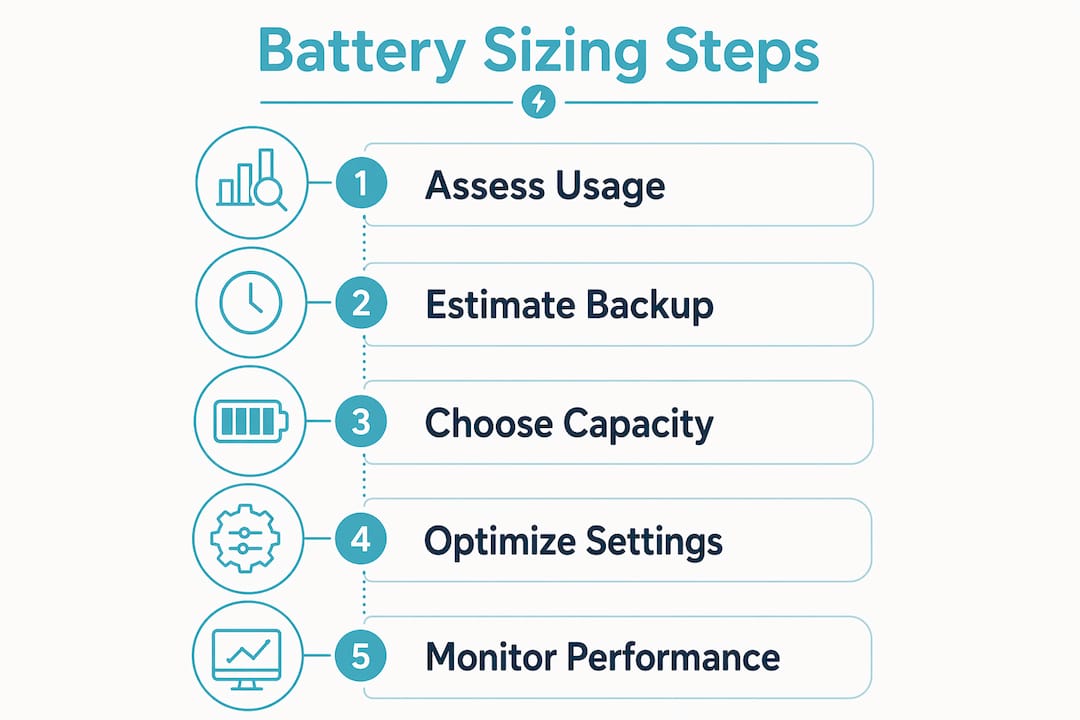
Research shows that 20% of daily demand captures roughly two-thirds of available cost savings, with diminishing returns setting in sharply above 60% of daily demand. Buying a battery sized for your entire daily load is rarely the most cost-effective decision. A well-chosen partial backup system protects what matters most and pays back faster.
Key sizing considerations for your household:
- Identify critical loads first. Refrigerator, medical equipment, internet router, select lighting, and a phone charger typically total 5 to 10 kWh per day. One 10 kWh battery covers these for 24 hours or more.
- Account for your solar production. If you have panels, your battery recharges daily, so you need less total capacity to sustain multi-day outages.
- Check your utility’s rate structure. Households on dynamic or TOU tariffs extract more value from elastic load management and benefit from slightly larger batteries that can shift more consumption.
- Consider your climate and outage history. Northwest homeowners who lose power for two to four days during winter storms need a different sizing strategy than someone in a region with rare, short outages.
- Avoid oversizing. A battery large enough to cover full household consumption is prohibitively expensive for most budgets. Strategic partial backup is the more realistic and financially sound approach.
Pro Tip: Pull your last 12 months of utility bills and calculate your average daily usage before talking to any installer. Knowing your baseline number puts you in a much stronger position to evaluate sizing recommendations and avoid paying for capacity you will never use.
How to optimize your home battery backup for maximum savings
Getting the most from your battery system requires more than installation. The setup decisions you make at commissioning, and the habits you build afterward, directly affect your savings and backup reliability.
-
Program your charge and discharge schedule. Set the battery to charge during off-peak hours, typically late night, and discharge during the peak rate window in the late afternoon and evening. Most modern systems like the Tesla Powerwall 3 and Enphase IQ Battery 5P allow schedule programming through a smartphone app.
-
Use a critical loads panel for backup. Connecting only your most important circuits to the battery during an outage extends your runtime significantly. Running a whole home on battery drains capacity in hours; running critical loads can stretch the same battery across one to two days.
-
Monitor your state of charge regularly. Most battery systems provide real-time monitoring through an app. Checking your charge level before a forecasted storm lets you top up the battery in advance and enter the event with full capacity.
-
Explore demand response and VPP enrollment. Some utilities in Washington and Oregon offer bill credits for allowing brief, automated battery discharges during grid peak events. Enrollment is typically free and adds financial return without any effort on your part.
-
Schedule annual system checks. Battery performance degrades gradually over time. An annual review by a certified installer, like the team at A-rsolar, catches firmware updates, connection issues, and efficiency losses before they affect your savings or backup reliability. For Northwest-specific guidance, A-rsolar’s resource on PNW solar batteries covers regional considerations in detail.
Key takeaways
Home batteries deliver the most value when sized to cover 20 to 60% of daily demand, paired with solar panels, and programmed to shift load away from peak utility rates.
| Point | Details |
|---|---|
| Core function | Home batteries store electricity chemically for backup power and cost savings through load shifting. |
| Optimal sizing | Targeting 20% of daily demand captures two-thirds of savings; returns plateau near 60% of daily demand. |
| Solar pairing advantage | Solar-plus-storage recharges daily, enabling multi-day outage protection that standalone batteries cannot provide. |
| Cost range | Standard systems cost $10,000 to $25,000; whole-home backup can exceed $50,000 with additional electrical work. |
| Maximize savings | Programming TOU charge schedules and enrolling in VPP programs extracts the most financial return from your system. |
Why home batteries are more than a backup plan
By Shyerome
After working in residential energy for years, I have watched the conversation around home batteries shift from “nice to have” to “hard to ignore.” The grid is less reliable than it was a decade ago, and electricity rates in Washington and Oregon are not heading downward. Batteries are no longer a luxury purchase for early adopters.
What I find most underappreciated is the sizing question. Most homeowners assume bigger is better, but the research is clear: the financial sweet spot sits well below full-home coverage. I have seen homeowners spend twice as much as necessary chasing whole-home backup when a well-designed critical loads system would have met every practical need at half the cost.
The pairing argument is also stronger than many people realize. A battery without solar is a one-shot backup device. A battery with solar is a daily energy management tool that pays dividends every billing cycle, not just during outages. If you are considering a battery, I would strongly encourage you to evaluate the solar-plus-storage path before committing to battery-only.
Technology is moving fast. Battery costs have dropped considerably over the past five years, and system intelligence, through better BMS software and VPP integration, keeps improving. The homeowners who invest thoughtfully now, with proper sizing and solar pairing, will be best positioned as rates continue to climb and grid programs expand.
— Shyerome
Explore home battery solutions with A-rsolar
A-rsolar has spent two decades installing and supporting residential energy systems across Washington and Oregon. If you are ready to understand what a battery system would look like for your specific home, their team starts with a load assessment to match capacity to your actual needs, not a generic package.
From single-battery critical load setups to full solar-plus-storage configurations, A-rsolar designs systems that fit Northwest homes and Northwest weather. Their home battery backup solutions page outlines available options and customization paths, and their residential project portfolio shows real installations with real outcomes. As a certified B Corporation and employee-owned company, A-rsolar brings accountability to every project they complete.
FAQ
What is a home battery backup system?
A home battery backup system is a residential energy storage device that stores electricity from solar panels or the grid and releases it during outages or high-rate periods. It switches to battery power automatically within seconds when grid power is lost.
How long will a home battery power my house during an outage?
Runtime depends on battery capacity and which loads are connected. A 10 kWh battery powering only critical loads like a refrigerator, lights, and internet can last 24 hours or more, while powering an entire home drains the same battery in a few hours.
Do home batteries work without solar panels?
Yes, but with a significant limitation. A standalone battery charges from the grid and provides one backup cycle. Without solar, it cannot recharge during an outage, making it less effective for multi-day power loss events.
What size battery do I need for my home?
Research shows that sizing to 20% of daily demand captures roughly two-thirds of available cost savings, with diminishing returns above 60%. For most households, one or two 10 kWh batteries covering critical loads is the most cost-effective starting point.
Are home batteries worth the cost?
The answer depends on your utility’s rate structure and your outage risk. Households on time-of-use plans with frequent outages see the strongest financial and resilience returns. Where bill savings alone are modest, backup reliability and energy independence remain strong motivating factors for most homeowners.