


TL;DR:
- A solar inverter converts DC electricity from panels into usable AC power, managing system performance and safety. Selecting the right inverter type and quality is crucial for optimal energy yield, system longevity, and future expandability. Proper inverter choice and maintenance directly influence the efficiency and ROI of a residential solar installation.
Most homeowners planning a solar installation spend hours researching panels and largely ignore the component that actually determines how well that system performs. A solar inverter does far more than convert electricity. It monitors your system, protects your home from grid faults, tracks peak power output second by second, and, in hybrid configurations, coordinates your panels, batteries, and utility connection. Without an inverter, solar panels generate a type of electricity your appliances cannot use. Understanding what a solar inverter is and how it works puts you in a much stronger position before signing any installation contract.
Table of Contents
- Key Takeaways
- What is a solar inverter and why your system needs one
- Advanced solar inverter functions beyond DC-to-AC conversion
- Types of solar inverters and how to choose
- How solar inverters integrate with your home energy system
- Common misconceptions about solar inverters
- My take on inverters after years in solar
- See how A-rsolar puts this into practice
- FAQ
Key Takeaways
| Point | Details |
|---|---|
| Definition of solar inverter | A solar inverter converts DC electricity from panels into AC electricity that powers your home and feeds the grid. |
| More than a converter | Modern inverters perform MPPT, grid synchronization, safety shutdown, and system monitoring functions. |
| Three main types | String inverters, microinverters, and power optimizers each suit different roof layouts, budgets, and shading conditions. |
| Inverter quality drives ROI | A low-quality or mismatched inverter reduces the output of even premium solar panels, lowering your long-term return. |
| Match type to your property | The right inverter depends on your specific site conditions, not a universal ranking of best inverter brands. |
What is a solar inverter and why your system needs one
The solar inverter definition, at its most basic, is a device that takes direct current (DC) electricity produced by your solar panels and converts it into alternating current (AC) electricity. Your home appliances, lighting, and HVAC systems all run on AC power. The utility grid runs on AC power. Your solar panels produce DC power. The inverter closes that gap.
DC power flows in a single, constant direction. AC power reverses direction many times per second, which makes it far more practical for transmission over long distances and for powering standard household devices. That conversion from DC to AC is the inverter’s most visible job, but it is far from the only one.
Here is what a solar inverter does at the foundational level:
- Converts DC electricity from solar panels into usable AC electricity for your home
- Manages the flow of electricity between your panels, home, and the utility grid
- Shuts down safely when the grid experiences a fault or outage
- Tracks and reports system performance data in real time
- In hybrid configurations, coordinates between solar panels, battery storage, and the grid
The inverter is sometimes called the brain and heart of the system for good reason. Remove it, and your panels are essentially useless for powering a home. Undersize or underprice it, and your panels will never perform to their rated capacity.
Advanced solar inverter functions beyond DC-to-AC conversion
Once you understand the solar inverter function at the basic level, the more interesting question becomes what a modern inverter does beyond simple conversion. The answer is considerably more complex than most homeowners expect.
Maximum Power Point Tracking (MPPT)
Solar panels do not produce a fixed output. Cloud cover, temperature changes, and shifting sun angles constantly alter the voltage and current coming off the panels. MPPT algorithms actively adjust the operating voltage between 10 and 100 times per second to keep the system extracting the maximum available power at any given moment. Without MPPT, a significant portion of your potential energy yield is simply lost.
Grid synchronization
Grid-tied inverters must match the precise frequency and phase of the utility grid before they can push electricity onto it. This is accomplished through Phase-Locked Loop (PLL) circuits that sample the grid waveform thousands of times per second. A mismatch would damage equipment and destabilize the grid. The precision involved makes this one of the more technically demanding tasks the inverter performs continuously.
Safety shutdown
Grid-tied inverters shut down within 200 milliseconds of detecting a grid outage. This protects utility workers who may be working on the lines, under the assumption that no distributed power sources are still feeding the grid. It is a non-negotiable safety requirement in most jurisdictions, including Washington and Oregon.
Hybrid inverter coordination
A hybrid inverter goes further by acting as the central controller for your entire energy system. It manages battery charge cycles, determines when to pull from storage versus the grid, and can provide backup power during outages. If you are planning a solar-plus-storage setup, the hybrid inverter is what makes that system intelligent rather than reactive.
Pro Tip: When comparing inverters, look for the number of MPPT channels. More channels allow the inverter to independently optimize multiple strings of panels, which matters significantly on roofs with more than one orientation or partial shading.
Types of solar inverters and how to choose
Choosing the right inverter depends heavily on the specifics of your property. There are three primary inverter categories in 2026, each with a distinct set of trade-offs.
| Inverter Type | How It Works | Best For | Key Trade-off |
|---|---|---|---|
| String inverter | One central inverter handles all panels wired in a series string | Simple roofs, full sun exposure, budget-conscious installations | One shaded panel reduces output for the entire string |
| Microinverter | A small inverter attached to each individual panel | Complex roof shapes, heavy shading, panel-level monitoring needs | Higher upfront cost per watt |
| Power optimizer | DC-level optimizer at each panel, paired with a central string inverter | Mixed shading conditions, desire for panel-level data without full microinverter cost | Still requires a string inverter to complete the system |
String inverters are the most cost-effective solution for straightforward installations. A south-facing roof with minimal shading in a state like Oregon or Washington is a strong candidate. Microinverters shine when your roof has multiple pitches, dormers, or trees nearby that create shading across different sections at different times of day. Power optimizers sit between those two options, adding panel-level performance data and shade mitigation without the full cost of individual microinverters.
The advice to match inverter to site conditions rather than chase a single best type is something every experienced installer will reinforce. There is no universal winner. Homeowners can also review inverter type comparisons in detail before finalizing their system design.
Pro Tip: Always confirm that your chosen inverter is on the approved equipment list for your utility before purchasing. Some Pacific Northwest utilities have specific requirements that affect which inverters qualify for net metering programs.
How solar inverters integrate with your home energy system
A solar inverter does not operate in isolation. It sits at the intersection of four distinct components: your solar panels, your home’s electrical load, the utility grid, and, in many modern systems, a battery bank. How well the inverter manages those four relationships directly affects your energy yield, your electricity bill, and your system’s long-term reliability.
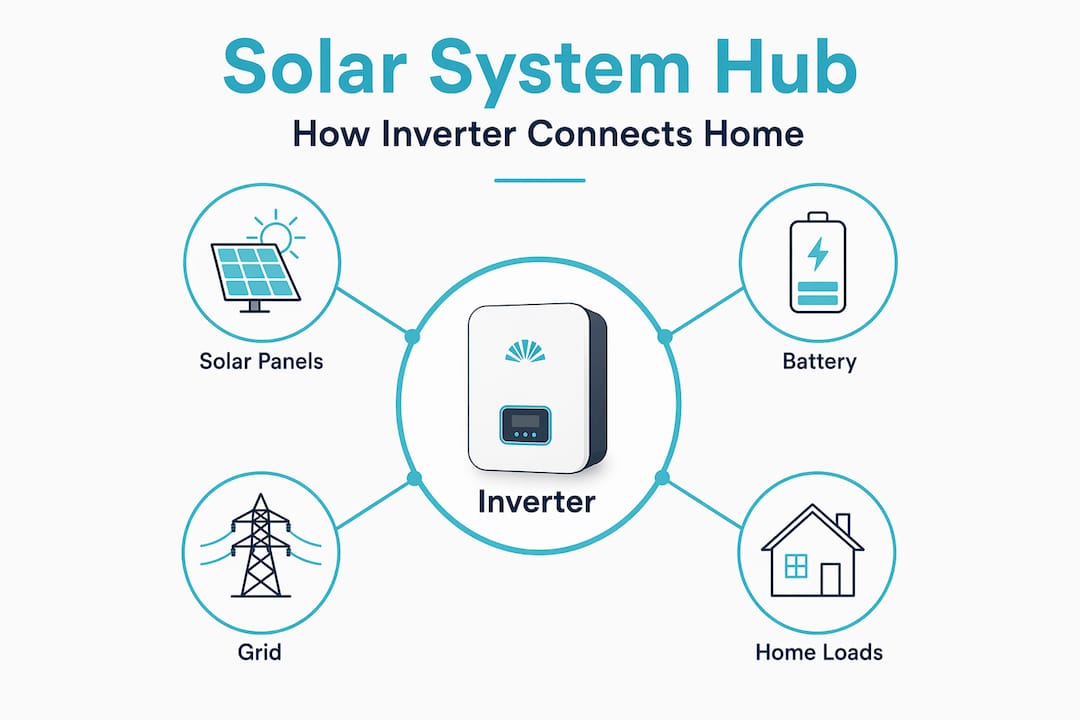
When sunlight hits your panels, the inverter converts that DC output and either routes it to power your home directly, sends surplus electricity to the grid through net metering, or charges your battery storage for later use. A well-configured inverter minimizes grid reliance during peak rate hours, which translates to real savings on your monthly utility bill.
Learning how solar works as a complete system helps homeowners understand that the inverter is the decision-maker in this chain, not just a passive converter. Here are the practical benefits homeowners gain from investing in a quality, properly sized inverter:
- Higher energy harvest from the same number of panels due to MPPT optimization
- Real-time performance data and alerts for any system faults or underperformance
- Compliance with local safety codes and utility interconnection standards
- Ability to add battery backup later through a hybrid-compatible inverter
- Longer system lifespan due to proper load management and thermal protection
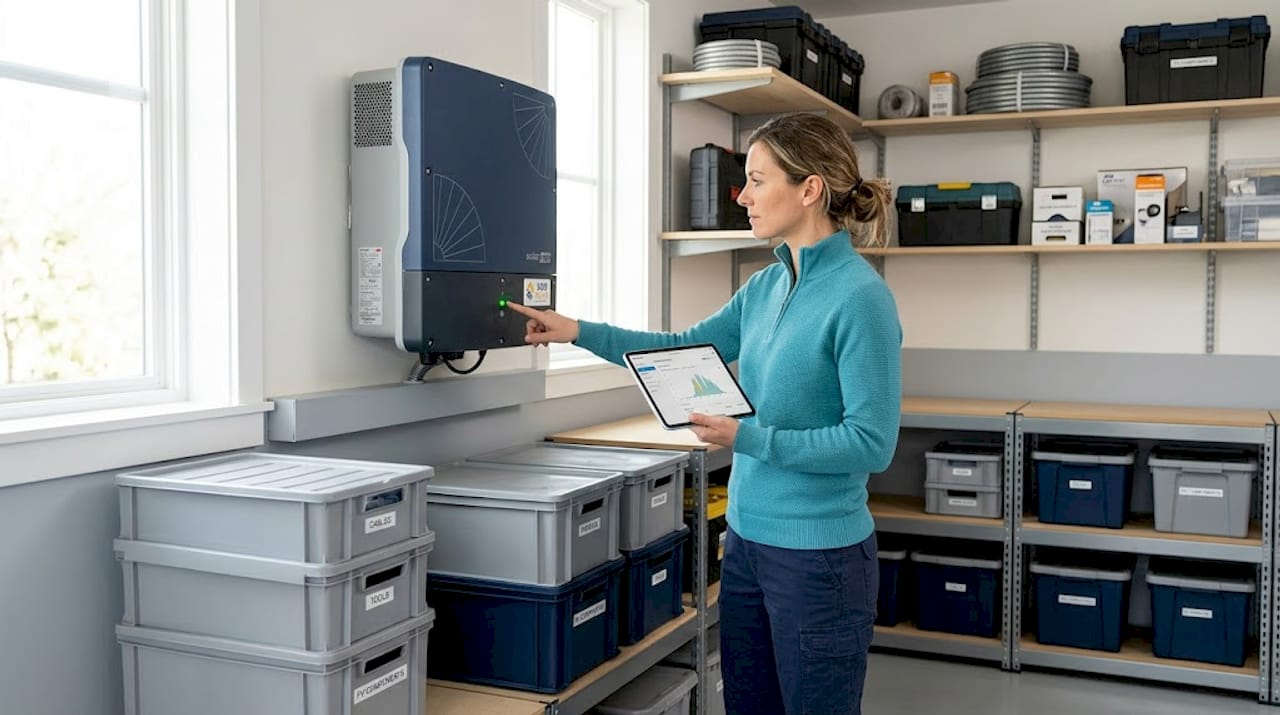
You should also monitor your inverter’s indicator lights and app-based dashboard regularly. A drop in daily output that cannot be explained by weather is often the first sign of an inverter issue. A-rsolar’s guide on checking inverter performance walks through exactly what to look for.
Common misconceptions about solar inverters
One of the most persistent points of confusion in the solar market is the difference between a solar inverter and a solar converter. A converter manages DC voltage internally, stepping it up or down as needed. It does not produce AC power. Inverters convert DC to AC, making the electricity usable for standard appliances and export-ready for the grid. These are fundamentally different devices serving different purposes.
A second common misconception involves the solar inverter vs battery comparison. A battery stores energy. An inverter converts and manages energy. The two work together but are not interchangeable. Some homeowners assume adding a battery automatically gives them backup power during outages. Without a hybrid inverter configured for islanding mode, that is not the case. The inverter controls whether battery power can flow during a grid outage.
The third and most costly misconception is that inverter quality is secondary to panel quality. A high-efficiency panel paired with an undersized or poorly designed inverter will underperform a mid-tier panel paired with a quality inverter. Quality directly impacts system ROI, which makes the inverter one of the most consequential purchasing decisions in your solar project.
Pro Tip: Before finalizing your system design, ask your installer for a detailed breakdown of which inverter they are specifying, why it suits your roof and energy goals, and what the warranty coverage includes. A confident, experienced installer should answer that question without hesitation.
My take on inverters after years in solar
I’ve seen homeowners spend months comparing panel brands and then accept whatever inverter the installer defaults to without a single question. That is consistently where the most preventable system underperformance originates.
In my experience, the inverter is where a solar investment either delivers or disappoints. Panels degrade gradually and predictably. Inverters, when poorly matched or cheaply made, can underperform from day one. I’ve reviewed systems where the panels were excellent and the inverter was undersized by 15 percent relative to peak panel output. The homeowner never knew, and they left meaningful energy yield on the table for years.
What I’ve also learned is that the technology gap between a quality inverter from an established brand and a budget option has widened considerably over the last five years. Modern inverters from reputable manufacturers include remote diagnostics, automatic firmware updates, and consumption monitoring that help homeowners catch problems before they become expensive. That functionality is worth paying for.
My practical advice: treat the inverter selection with the same care you give panel selection. Ask about MPPT performance data. Confirm hybrid compatibility if you plan to add storage. Check that the warranty covers both parts and labor. And get that answer from your installer in writing.
— Shyerome
See how A-rsolar puts this into practice
A-rsolar has spent more than two decades installing residential solar systems across Washington and Oregon, and inverter selection is a detailed, site-specific process on every project.
A-rsolar’s team evaluates roof orientation, shading patterns, utility interconnection requirements, and future battery plans before specifying any inverter. You can browse the residential case studies to see how those decisions play out across a range of real homes. If home battery backup is part of your plan, the home battery backup page covers how hybrid inverters manage storage for Pacific Northwest homeowners specifically. For systems already installed, A-rsolar also provides ongoing solar service and repair across all major inverter brands. Reach out to the A-rsolar team to get a system design that treats the inverter as seriously as the panels.
FAQ
What is a solar inverter in simple terms?
A solar inverter converts DC electricity from solar panels into AC electricity that powers your home appliances and feeds the utility grid. Without one, a solar system cannot deliver usable power.
What is the difference between a solar inverter and a battery?
A solar inverter converts and manages electricity flow, while a battery stores electricity for later use. The two serve different functions, and a hybrid inverter is needed to coordinate them effectively during grid outages.
Which type of solar inverter is best for residential use?
There is no single best type. String inverters suit simple, unshaded roofs at lower cost; microinverters are better for complex or shaded roofs; power optimizers offer a middle ground. Site conditions determine the right fit.
How does MPPT improve solar inverter performance?
Maximum Power Point Tracking algorithms adjust operating voltage up to 100 times per second to extract the highest possible power output from panels as sunlight and temperature change throughout the day.
How do I know if my solar inverter is working correctly?
Check your inverter’s status lights and monitoring app for daily output figures. A consistent drop in production that weather alone does not explain is usually the first sign of an inverter issue worth investigating.