

TL;DR:
- Monocrystalline panels are most efficient and perform best in cloudy Northwest climates.
- Installation quality and site assessment are more important than panel type for optimal long-term results.
- Choice depends on roof size, budget, and regional weather, with local expertise crucial for success.
Selecting the right solar panels for your home in Washington or Oregon involves more than picking the cheapest option. Small differences in panel technology, efficiency ratings, and installation quality can add up to thousands of dollars over a 25-year system lifespan. The Pacific Northwest’s rainy, overcast climate adds another layer to the decision. Panels that perform well in Arizona may not deliver the same results in Seattle or Portland. This guide walks you through the main solar panel types, the key differences between them, and a practical framework for matching the right technology to your specific home and goals.
Table of Contents
- How to evaluate solar panel options
- Monocrystalline solar panels: pros and cons
- Polycrystalline solar panels: pros and cons
- Thin-film solar panels: emerging technology and best uses
- Compare solar panel types: head-to-head summary
- Our perspective: What most guides miss about solar in the Northwest
- Next steps: Get expert guidance for your solar project
- Frequently asked questions
Key Takeaways
| Point | Details |
|---|---|
| Panel type matters | Your choice of solar panel affects both efficiency and long-term savings. |
| Match to climate | Rainy Northwest weather means higher efficiency panels should be prioritized. |
| Balance budget and space | Consider your roof size and upfront costs before deciding on panel type. |
| Installation quality | Proper installation is more important to performance than picking the most expensive panel. |
| Sustainable options | Look for panels with recyclability and strong warranties for the best long-term results. |
How to evaluate solar panel options
Before comparing specific panel types, it helps to understand what criteria actually matter for homeowners in this region. Not every spec on a product sheet translates to real-world value in a cloudy climate. Here are the key factors to weigh:
- Cost vs. efficiency: A higher-efficiency panel costs more upfront but generates more electricity per square foot. For smaller rooftops, that tradeoff often favors efficiency.
- Performance in low-light conditions: Washington and Oregon see significant cloud cover from October through April. Panels rated for solar basics in the Northwest conditions will outperform standard panels during those months.
- Durability and warranty: Look for panels with at least a 25-year performance warranty and a product warranty covering defects. Warranties reflect manufacturer confidence in long-term reliability.
- Eco-friendliness: Some panels use more energy-intensive manufacturing processes. If sustainability is a priority, review solar panel manufacturing energy data before choosing.
- Roof compatibility: Panel weight, size, and mounting systems vary. Older roofs or unusual shapes may limit which products work best.
Different environmental conditions affect solar panel performance and longevity, which is why a one-size-fits-all approach rarely works in this region. The solar panel types overview from the U.S. Department of Energy provides a solid starting point for understanding how each technology responds to real-world conditions.
Pro Tip: Ask any installer for site-specific production estimates based on your roof’s orientation and local weather data, not just national averages. A south-facing roof in Portland performs very differently from a west-facing roof in Olympia.
Once you have these criteria in mind, comparing the three main panel types becomes much more straightforward.
Monocrystalline solar panels: pros and cons
Monocrystalline panels are the most widely installed panel type for residential projects in Washington and Oregon. They are made from a single continuous crystal of silicon, which gives them a uniform dark appearance and a higher level of electron mobility. That translates directly into better energy conversion.
Key characteristics of monocrystalline panels:
- Efficiency typically ranges from 15% to 22%, with premium models pushing higher
- Perform better than other types in low-light and overcast conditions
- Longer lifespan, often rated for 25 to 30 years
- Smaller physical footprint per watt of output
- Higher upfront cost compared to polycrystalline options
“Monocrystalline panels deliver high efficiency and better performance in limited sunlight,” making them a strong match for the Pacific Northwest’s frequent overcast days.
For homeowners with limited roof space, monocrystalline panels are often the only practical choice. If your usable roof area is under 400 square feet, squeezing more watts out of every panel matters. The higher price per panel is usually offset by needing fewer of them to meet your energy goals.
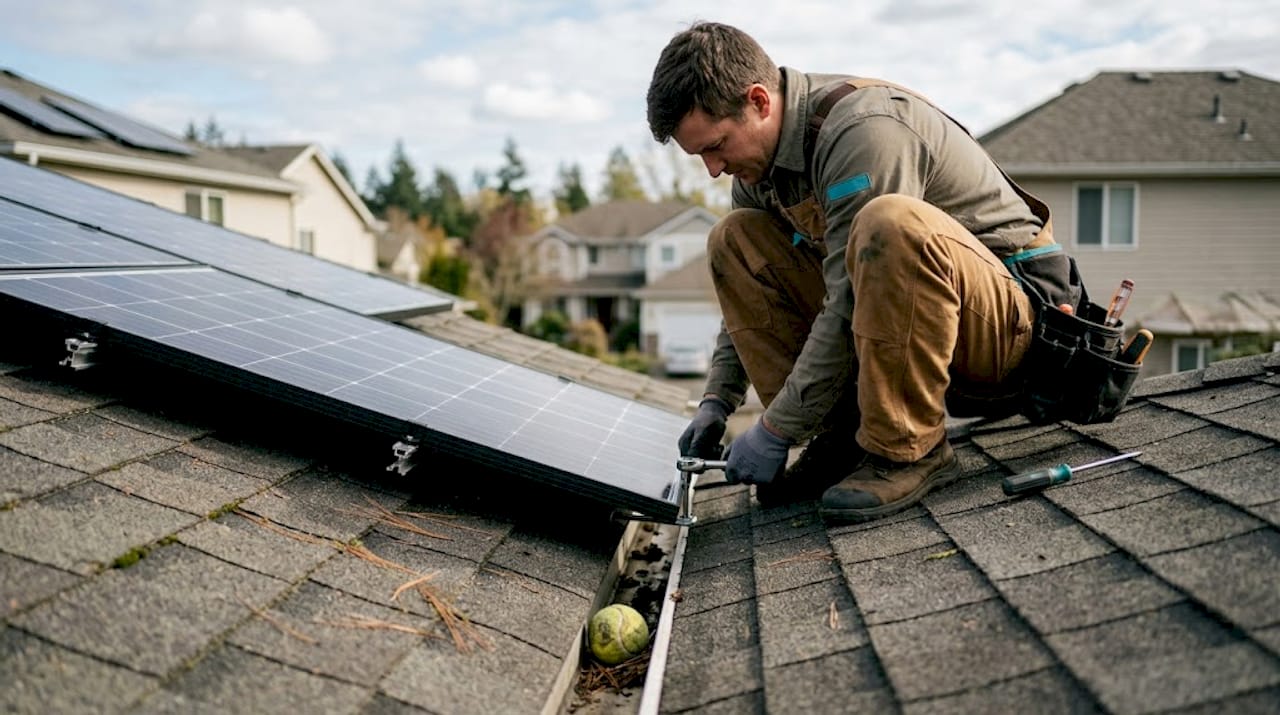
The durability factor is also significant. Monocrystalline panels tend to degrade more slowly over time, meaning they retain a higher percentage of their original output at year 20 or 25. That consistency matters when you’re calculating long-term return on investment.
For a closer look at how these panels work within a full residential system, monocrystalline panels for home installations are covered in detail on the A&R Solar website. The detailed panel comparison from the Department of Energy also provides useful technical context.
Pro Tip: If your roof gets partial shade from trees or neighboring structures, pair monocrystalline panels with microinverters or power optimizers. This setup minimizes the impact of shading on your total system output.
Polycrystalline solar panels: pros and cons
Polycrystalline panels are made by melting multiple silicon fragments together, which creates a speckled blue appearance. The manufacturing process is less precise than monocrystalline production, which reduces cost but also lowers efficiency.
Key characteristics of polycrystalline panels:
- Efficiency typically ranges from 13% to 17%
- Lower cost per watt compared to monocrystalline options
- Slightly less effective in low-light conditions
- Best suited for larger roof areas where space is not a constraint
- Manufacturing process produces less silicon waste
Statistic: Polycrystalline panels generally cost between $0.90 and $1.10 per watt for the panel itself, compared to $1.00 to $1.50 per watt for monocrystalline, depending on brand and market conditions.
Polycrystalline panels offer cost-effective solutions for moderate efficiency needs, which makes them a reasonable fit for homeowners in Oregon or Washington with larger, unshaded south-facing roofs. If you have the space to install more panels, the lower efficiency per panel becomes less of a concern.
The environmental angle is worth noting. Polycrystalline manufacturing produces less silicon waste because the process uses leftover silicon fragments rather than growing a single crystal. For homeowners prioritizing sustainability alongside savings, that distinction can matter.
However, in the Pacific Northwest’s overcast winters, the efficiency gap between polycrystalline and monocrystalline panels becomes more noticeable. During months with limited sun hours, every percentage point of efficiency has a measurable impact on your monthly output. The solar investment benefits of choosing the right panel type are most visible over a full annual cycle, including those gray winter months. Additional technical detail on polycrystalline panel info is available from the Department of Energy.
Thin-film solar panels: emerging technology and best uses
Thin-film panels take a fundamentally different approach. Instead of silicon wafers, they use a thin layer of photovoltaic material applied to glass, plastic, or metal. This makes them lightweight, flexible, and adaptable to surfaces where rigid panels won’t work.
Key characteristics of thin-film panels:
- Efficiency typically ranges from 10% to 13%
- Flexible and lightweight, suitable for curved or irregular surfaces
- Lower upfront cost per panel
- Shorter lifespan, generally 10 to 20 years
- Easier to recycle at end of life
| Panel type | Efficiency range | Typical lifespan | Relative cost | Best use |
|---|---|---|---|---|
| Monocrystalline | 15–22% | 25–30 years | Higher | Small roofs, low-light climates |
| Polycrystalline | 13–17% | 25–30 years | Moderate | Large roofs, budget-focused |
| Thin-film | 10–13% | 10–20 years | Lower | Specialty or irregular surfaces |
Thin-film panels excel in space-limited or specialty installations but typically have lower efficiency, which limits their appeal for standard residential rooftops. They are more commonly found in commercial flat-roof applications, portable solar setups, or homes with unusual architectural features.
For most Washington and Oregon homeowners, thin-film is not the primary recommendation. The lower efficiency means you need significantly more surface area to generate the same output as monocrystalline panels. On a standard residential roof, that tradeoff rarely works in your favor.
That said, thin-film technology is advancing quickly. If you’re curious about how solar panel operation basics apply to newer thin-film formats, it’s worth following developments in this space. More detail on thin-film solar panels is available from the Department of Energy.
Compare solar panel types: head-to-head summary
Having explored each option, here’s a direct comparison to help you choose based on your specific situation.
| Feature | Monocrystalline | Polycrystalline | Thin-film |
|---|---|---|---|
| Efficiency | 15–22% | 13–17% | 10–13% |
| Cost per watt | Higher | Moderate | Lower |
| Lifespan | 25–30 years | 25–30 years | 10–20 years |
| Low-light performance | Excellent | Good | Fair |
| Ideal roof size | Small to medium | Medium to large | Specialty only |
| Eco-manufacturing | Moderate | Better | Varies |
Panel choice should be based on space, budget, and regional climate, which is why a local assessment matters more than any generic recommendation.
Here is a simple three-step decision framework:
- Assess your roof space. Measure usable square footage and note any shading from trees, chimneys, or neighboring buildings. Limited space favors monocrystalline.
- Set a realistic budget. Include installation, permitting, and any battery storage costs. If upfront cost is the main constraint and your roof is large, polycrystalline may be the better fit.
- Factor in your climate zone. Homes in wetter, cloudier areas of Washington and Oregon benefit most from the higher low-light performance of monocrystalline panels.
For larger properties or commercial panels comparison, the calculus shifts toward cost-per-watt efficiency at scale. Residential decisions, however, almost always come back to roof size, budget, and local weather. The panel comparison guide from the Department of Energy offers additional context for homeowners who want to go deeper on the technical side.
Our perspective: What most guides miss about solar in the Northwest
Most comparison articles stop at efficiency ratings and price per watt. That’s useful, but it misses the bigger picture for homeowners in this region.
After two decades of installations across Washington and Oregon, we’ve seen one pattern repeat: the homeowners who get the best long-term results are not always the ones who chose the highest-efficiency panels. They’re the ones who worked with an experienced local installer, got a thorough site assessment, and chose a system designed for their specific roof and usage patterns.
Local conditions and installation quality often matter more than panel brand or basic specs. A well-installed polycrystalline system on a well-oriented roof will outperform a premium monocrystalline system that was poorly sited or rushed through permitting.
The other thing most guides skip: managing expectations for winter output. Solar systems in the Northwest do work year-round, but production in December and January will be lower than in July. That’s normal and expected. A good installer will show you monthly production estimates so there are no surprises. Prioritize warranty terms, post-installation support, and installer track record. Those factors determine your real-world solar performance in rainy climates more than any spec sheet.
Next steps: Get expert guidance for your solar project
You now have a solid foundation for evaluating solar panel types. The next step is applying that knowledge to your specific home, roof, and energy goals.
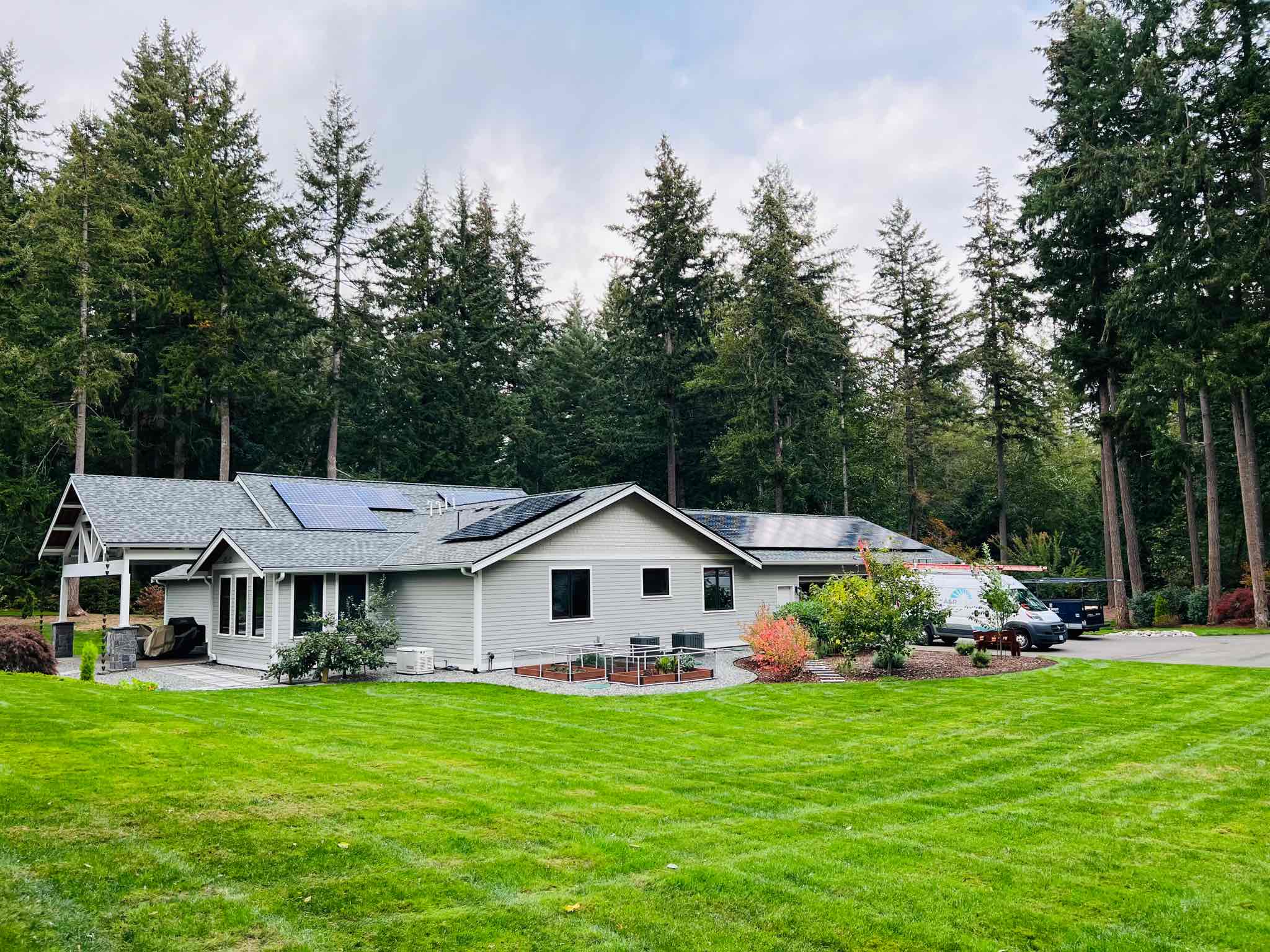
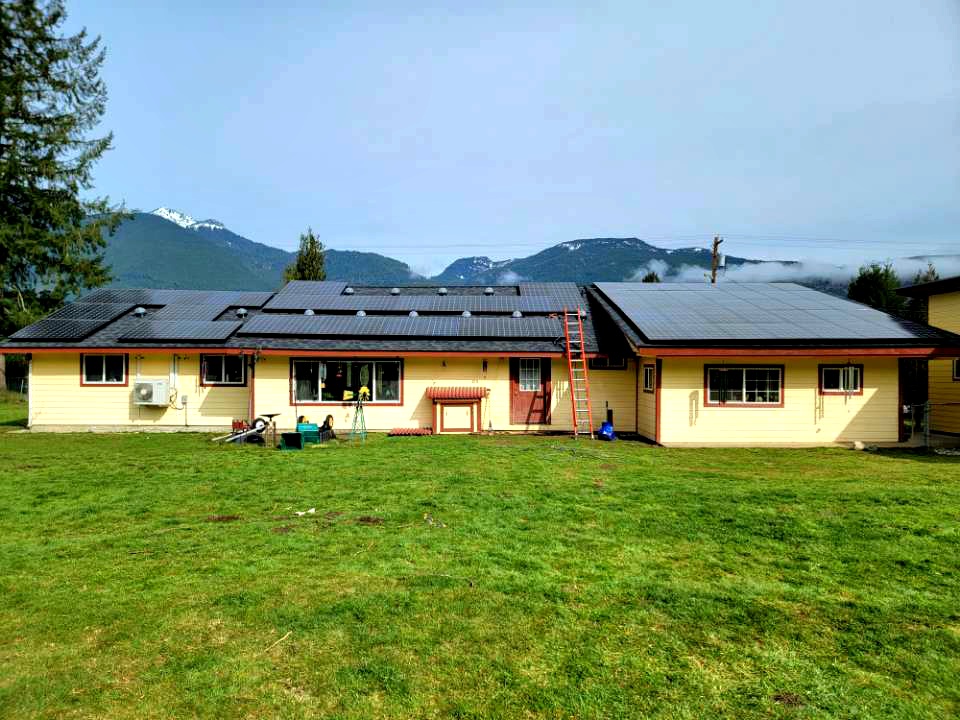
A&R Solar has been helping Washington and Oregon homeowners make these decisions for over 20 years. Browse our residential solar projects to see real installations from homes like yours. When you’re ready to explore options, our team can walk you through solar panels for your home and help you understand which panel type fits your situation. We also offer home battery backup options for homeowners who want reliable power through outages and cloudy stretches. Every recommendation we make is based on your actual site, not a national average.
Frequently asked questions
Which type of solar panel is most efficient for cloudy climates?
Monocrystalline panels are generally the best choice for homes in cloudy regions like Washington and Oregon. Higher efficiency in low sunlight conditions means more consistent output during the region’s long overcast seasons.
How long does a typical solar panel last?
Most solar panels last 25 to 30 years, with warranties often covering at least two decades of consistent performance. Long-term warranties and durability guarantees are standard among reputable manufacturers.
Can thin-film solar panels be used on residential rooftops?
Thin-film panels can be installed on homes, but they work best on unusual surfaces or specialty projects. Thin-film technology adapts to non-standard installations but is less practical for typical residential roofs due to lower efficiency.
What factors impact solar panel performance in the Pacific Northwest?
Key factors include roof direction, local cloud cover, panel quality, and installation expertise. Regional climate and installation quality are both critical for maximizing annual output in Washington and Oregon.