


TL;DR:
- Verify state licensing, insurance, and bonding to ensure legal and financial protection.
- Prioritize NABCEP-certified installers with proven experience and reputable credentials.
- Compare detailed bids, focusing on equipment quality, warranties, and incentive eligibility.
Choosing a solar installer is one of the most important financial decisions you’ll make as a homeowner. Too many people in Washington and Oregon have been burned by high-pressure sales tactics, unlicensed contractors, and vague contracts that left them without promised incentives. The good news is that a clear, repeatable process exists for finding a trustworthy installer. This guide walks you through licensing requirements, credentials to look for, how to compare bids, and how to spot scams before they cost you money.
Table of Contents
- Understand state requirements and licensing
- Prioritize professional credentials and experience
- Compare bids, equipment, and financing options
- Verify reputation, references, and avoid scams
- Why expert vetting beats price shopping every time
- Take the next step with proven local expertise
- Frequently asked questions
Key Takeaways
| Point | Details |
|---|---|
| Verify credentials | Choose only installers licensed in your state and carrying NABCEP certification for added trust. |
| Get multiple bids | Always compare detailed quotes on pricing, warranties, and equipment before deciding. |
| Check incentives eligibility | Only approved and certified contractors can help you qualify for top state or utility solar incentives. |
| Watch for red flags | Beware of high-pressure tactics, ‘free’ offers, or missing licenses to avoid scams. |
Understand state requirements and licensing
Before you invite any installer onto your property, you need to know what legally qualifies them to do the work. Both Washington and Oregon have specific rules that protect homeowners, and knowing those rules puts you in a much stronger position.
In Oregon, CCB license and registry listing are required for any solar contractor. The CCB (Construction Contractors Board) license confirms the company has met state standards, carries proper insurance, and is bonded. Contractors must also be listed in the Oregon Business Registry. If you want to qualify for Energy Trust of Oregon cash incentives, your installer must be an approved trade ally, which means they are licensed, bonded, and insured.
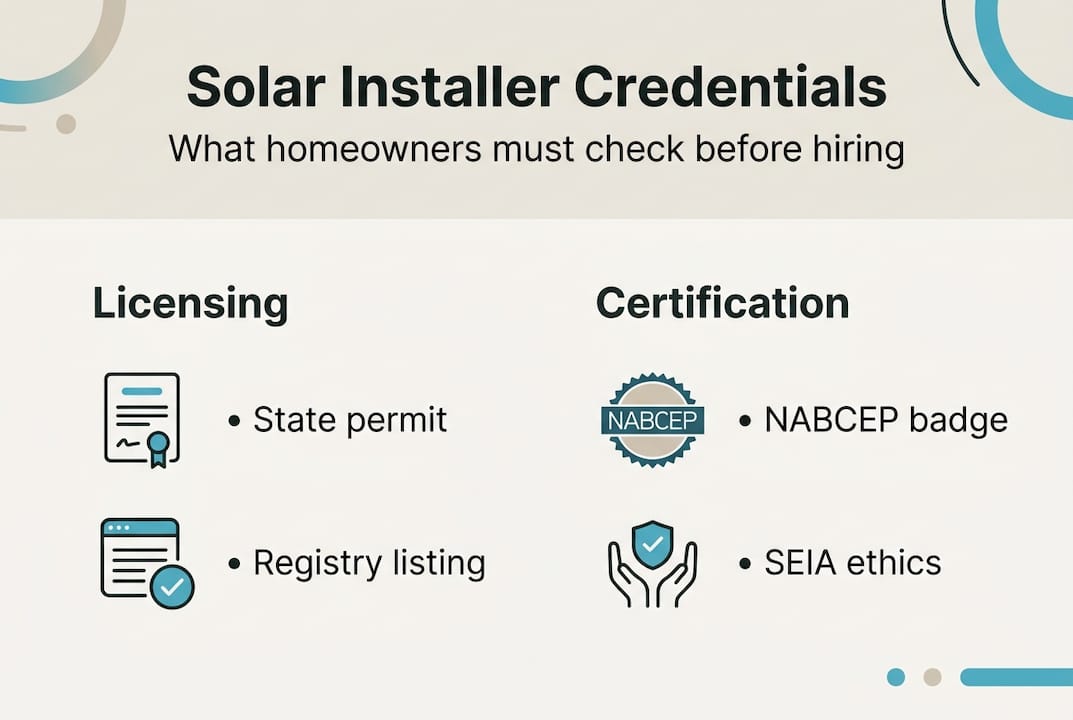
Washington has taken additional steps to protect consumers. New 2024 accountability laws were passed in response to a wave of consumer complaints about solar installers. These reforms raised the bar for who can legally operate in the state. You can read more about WA consumer protections to understand your rights under these rules.
Here is a quick comparison of what each state requires:
| Requirement | Oregon | Washington |
|---|---|---|
| State contractor license | CCB license | Contractor registration |
| Business registry | Oregon Business Registry | WA Secretary of State |
| Bonding and insurance | Required | Required |
| Incentive program approval | Energy Trust trade ally | Utility program approval |
| 2024 reform laws | No | Yes |
When vetting any installer, confirm these items before moving forward:
- Active CCB license (Oregon) or contractor registration (Washington)
- Proof of general liability insurance and worker’s compensation
- Current bonding certificate
- Listing on the Energy Trust trade ally directory (if you want Oregon incentives)
- No unresolved complaints on state licensing boards
Pro Tip: You can verify an Oregon contractor’s CCB status directly at the Oregon CCB website. For Washington, check the L&I contractor lookup tool. Both are free and take under two minutes.
“Choosing an unlicensed installer doesn’t just risk poor workmanship. It can disqualify you from thousands of dollars in state and utility incentives that are only available through approved contractors.”
Licensing is the floor, not the ceiling. Once you confirm legal standing, look at installer licensing in OR to understand which approvals actually unlock the best incentive programs.
Prioritize professional credentials and experience
Once you understand licensing, the next step is to look for proof of advanced expertise and trustworthy reputation. A license tells you a company is legally allowed to operate. Credentials tell you they actually know what they’re doing.
The most respected industry credential is NABCEP certification. NABCEP (North American Board of Certified Energy Practitioners) is the gold standard for solar installation professionals. NABCEP certified installers are preferred by Energy Trust of Oregon and SEIA (Solar Energy Industries Association) because they have passed rigorous exams and demonstrated real-world competence. You can verify a company’s NABCEP status at nabcep.org. Learn more about NABCEP certification details and what the credential actually requires.
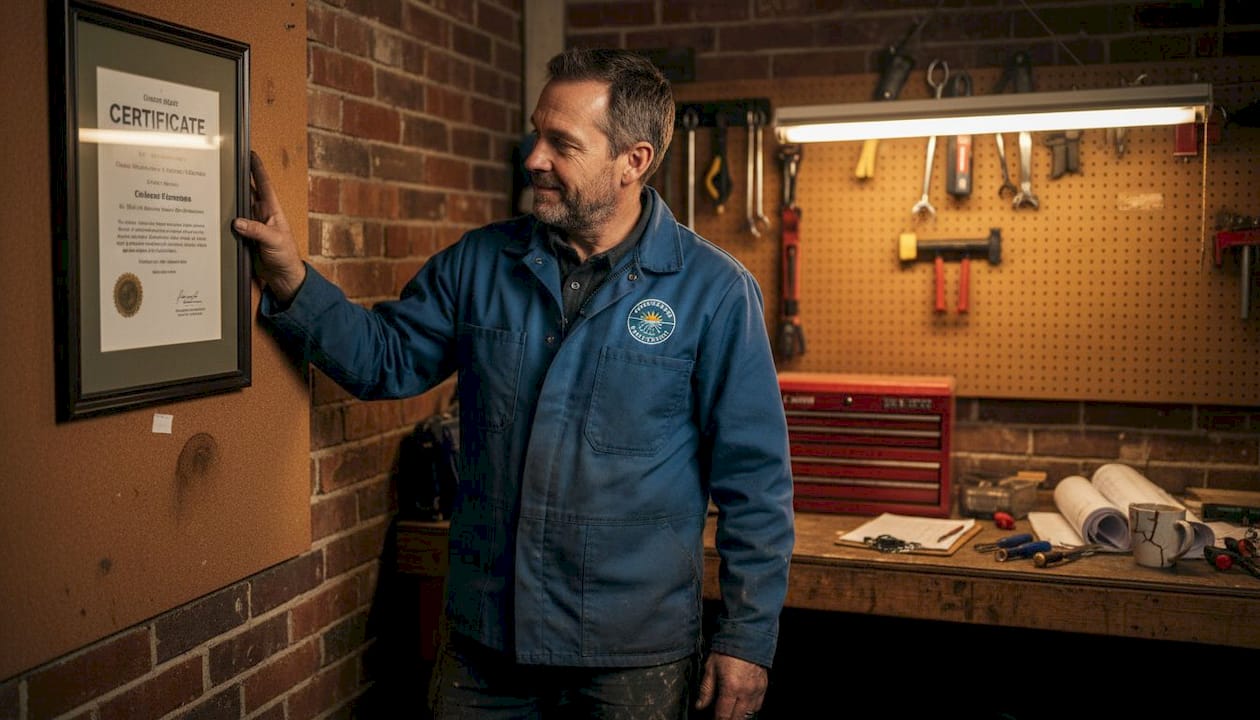
Beyond certification, professional ethics matter. SEIA member companies agree to a code of conduct that includes transparent pricing, honest contracts, and fair sales practices. Membership is not a guarantee, but it signals a company takes its professional standing seriously.
Here is a comparison of what to look for in installer qualifications:
| Credential | What it means | How to verify |
|---|---|---|
| NABCEP certification | Advanced technical competency | nabcep.org lookup |
| CCB or WA license | Legal authorization to operate | State licensing boards |
| SEIA membership | Ethics code commitment | seia.org member directory |
| Energy Trust trade ally | Approved for OR incentives | energytrust.org directory |
| Years in business | Stability and track record | BBB, Google, company website |
When you contact an installer, ask these questions directly:
- How many residential solar systems have you installed in the past three years?
- Do you use in-house crews or subcontractors for installation?
- Can you provide three local references from projects completed in the last 12 months?
- Who handles permits, inspections, and utility interconnection?
- What happens if there is a problem after installation?
In-house crews generally produce more consistent results than subcontracted labor. Companies that manage permits and inspections themselves tend to have fewer delays and fewer surprises. Understanding why hire NABCEP-certified professionals gives you a clearer picture of how certification translates into better outcomes for your home.
Pro Tip: Ask specifically whether the person who designs your system holds NABCEP certification, not just the company in general. Some companies advertise NABCEP status but only one employee holds the credential.
Compare bids, equipment, and financing options
With credentials and trust established, it’s time to collect and compare customized offers. Getting multiple bids is not just about finding the lowest price. It is about understanding what you are actually buying.
Get 2 to 3 bids from vetted contractors and compare them side by side. Each bid should include the cost per watt, projected annual energy output in kilowatt-hours, equipment brands and model numbers, warranty terms, and a full breakdown of available incentives.
Every bid you receive should include these items:
- Total system cost and cost per watt
- Projected annual kWh production
- Panel brand, model, and efficiency rating
- Inverter brand and type (string, microinverter, or power optimizer)
- Workmanship warranty length and terms
- Equipment warranty details (panels, inverters, racking)
- Estimated incentive amounts
- Timeline from contract to permission to operate
Equipment quality varies significantly. Tier 1 panel manufacturers have a proven track record of honoring warranties and maintaining production quality over time. Ask each installer to explain why they chose the equipment in their proposal.
Financing is where many homeowners make costly mistakes. Cash or loan purchases give you full ownership of the system, which means you qualify for state incentives. Leases and PPAs (power purchase agreements) transfer ownership to a third party, which often disqualifies you from those same incentives.
| Financing type | You own the system | Qualifies for tax credit | Best for |
|---|---|---|---|
| Cash purchase | Yes | Yes | Maximum long-term savings |
| Solar loan | Yes | Yes | Ownership without upfront cost |
| Lease | No | No | Low upfront, less savings |
| PPA | No | No | Predictable monthly payments |
For Oregon homeowners, only Energy Trust trade allies can provide access to cash incentives. Explore solar incentives and financing to understand which programs apply to your situation.
Pro Tip: Divide the total system cost by the estimated annual kWh output. This gives you a cost-per-kWh figure that makes comparing bids much easier, regardless of system size.
Verify reputation, references, and avoid scams
Finally, make sure your top choice is genuinely reliable by digging into their reputation and screening for risk signals. A company can look great on paper and still have a history of problems.
Start with third-party review platforms. BBB, Yelp, and ConsumerAffairs ratings give you an outside view of how a company treats customers after the sale. Look for patterns in negative reviews, not just the overall score. A few complaints about communication delays are different from repeated complaints about broken promises or billing disputes.
When you call references, ask these specific questions:
- Did the final cost match the original estimate?
- Were permits and inspections handled without issues?
- How long did the process take from contract to system activation?
- Has the system performed as projected?
- How did the company respond when problems came up?
Solar scams are a real and growing problem in both states. Common red flags include high-pressure door-to-door sales, promises of “free” solar panels, vague or unsigned contracts, requests for large upfront deposits, and contractors who cannot produce a license number on the spot.
Key warning signs to watch for:
- Unsolicited door-to-door visits with urgent “limited time” offers
- Claims that your utility company sent them or endorsed them
- Offers that sound too good to be true, like zero-cost systems
- Pressure to sign a contract the same day
- Inability or refusal to provide a license number or proof of insurance
“In Oregon, a company called Prolectric Solar collected deposits from homeowners and then ceased operations, leaving customers without installations or refunds. Complaints like this prompted state regulators to strengthen contractor oversight rules.”
If you are approached with a suspicious offer, ask for the contractor’s CCB or Washington license number and verify it before engaging further. Read more about solar scam warning signs and how to protect yourself with consumer solar scam protection resources.
Why expert vetting beats price shopping every time
After examining all the practical steps, it is worth considering what truly matters most for long-term solar satisfaction. We have seen a consistent pattern over two decades of work in Washington and Oregon: the homeowners who focus primarily on getting the lowest bid are the ones who call us years later with problems.
A lower-priced installer might skip permits, use off-brand equipment with weak warranty support, or subcontract the work to crews with no local accountability. The result is often a system that underperforms, a warranty that is difficult to enforce, or lost incentives that would have offset the price difference entirely. Some homeowners have lost access to thousands of dollars in Energy Trust incentives simply because their installer was not an approved trade ally.
The math almost always favors quality. A slightly higher upfront investment with a certified, licensed, and reputable installer produces better energy output, cleaner documentation for future home sales, and far fewer headaches. Our residential case studies show what that difference looks like in practice, with real numbers from real homes across the Northwest.
Vetting thoroughly is not about being overly cautious. It is about protecting an investment that should last 25 to 30 years.
Take the next step with proven local expertise
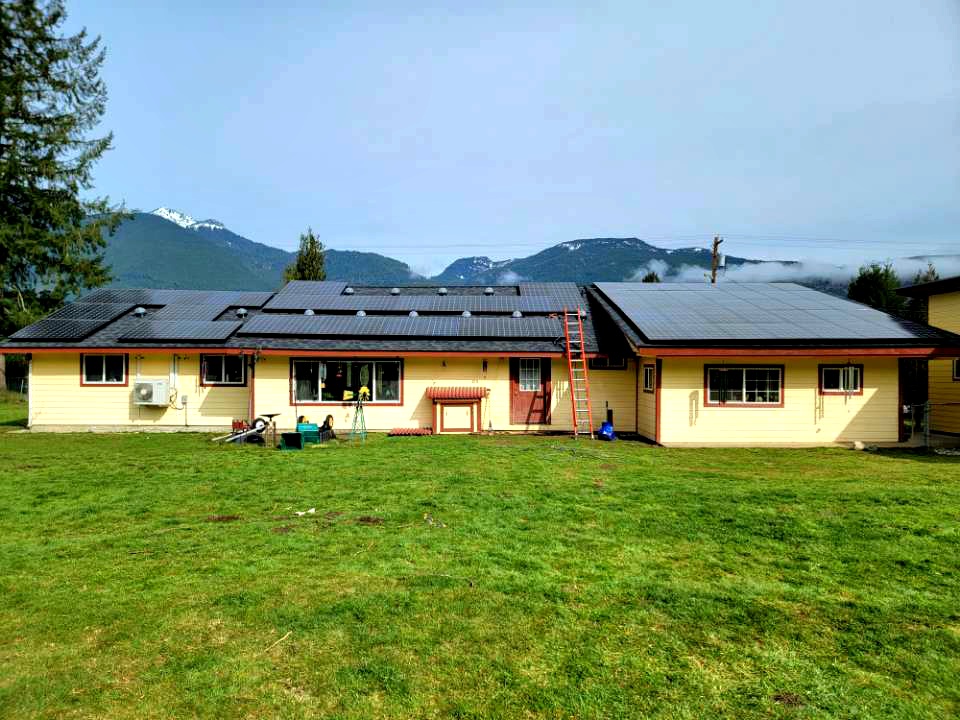
Ready to apply these steps? A&R Solar has spent over 20 years helping homeowners in Washington and Oregon navigate exactly this process.
We are employee-owned, B Corporation certified, and every installer on our team meets the licensing and certification standards covered in this guide. Whether you want to review local solar project examples from homes similar to yours or learn more about whether solar works in the Northwest for your specific situation, we have the resources to help. Reach out for a personalized assessment and get a clear, honest picture of what solar can do for your home.
Frequently asked questions
What certifications should a solar installer in Washington or Oregon have?
Installers should hold a state license (CCB for Oregon, updated contractor registration for Washington) along with NABCEP certification, which confirms advanced technical competency beyond the legal minimum.
How do I compare solar installer bids properly?
Request detailed estimates from 2 to 3 licensed contractors and compare the cost per watt, projected annual output, equipment brands, warranty terms, and incentive eligibility side by side rather than looking at total price alone.
What are major warning signs of a solar scam?
Avoid any company that uses high-pressure tactics, promises free solar panels, refuses to provide a license number, or pressures you to sign a contract the same day they approach you.
Are there incentives for choosing a specific installer?
Yes. Only Energy Trust trade allies can provide access to Oregon cash incentives, which means your choice of installer directly affects whether you qualify for significant rebates.
Should I avoid solar leases in Washington or Oregon?
Homeowners who want full ownership and access to the federal tax credit should favor cash or loan options over leases or PPAs, since third-party ownership arrangements typically disqualify you from the most valuable incentives.