

TL;DR:
- Pacific Northwest solar systems must prioritize water infiltration protection, moss resistance, and snow load ratings.
- Panel tilt angles of 30 to 45 degrees improve snow shedding and winter performance.
- Proper regional installation practices and maintenance extend system lifespan and ensure resilience against local climate challenges.
The Pacific Northwest offers compelling reasons to go solar: strong state incentives, rising utility rates, and a genuine culture of environmental stewardship. But Washington and Oregon homeowners face a specific set of challenges that most solar guides simply ignore. Heavy rainfall, seasonal moss growth, pollen buildup, and real snow loads all shape which solutions hold up over time and which ones fail quietly and expensively. This article walks through what actually works for PNW homes, from panel selection and tilt angles to battery storage and long-term maintenance, so you can make a well-informed decision that pays off for decades.
Table of Contents
- Setting criteria: What matters for PNW homeowners
- Solar energy solutions: Panels, installation, and maintenance
- Home battery storage: Adding resilience and savings
- Comparing solutions: Which renewable energy options fit your home?
- A seasoned perspective: What most PNW homeowners overlook
- Connect with local experts for your renewable energy project
- Frequently asked questions
Key Takeaways
| Point | Details |
|---|---|
| Regional criteria matter | Heavy rain, moss, and snow loads require specialized solutions for PNW homes. |
| Panel specs impact performance | Choose solar panels with high snow load and engineered flashing for durability and efficiency. |
| Maintenance is essential | Safe cleaning methods—like using a soft brush—extend solar system lifespan and prevent moss buildup. |
| Battery backup boosts resilience | Home battery storage adds reliable power during outages and supports grid sustainability. |
| Local expertise accelerates success | Consult regional professionals for proven installation, maintenance, and cost savings. |
Setting criteria: What matters for PNW homeowners
Before comparing products or pricing, you need to understand the regional conditions that filter your options. Choosing solar in the Northwest is not the same as choosing solar in Arizona or Texas. The criteria are genuinely different here.
Rain resilience comes first. The Pacific Northwest averages 37 to 60 inches of rainfall per year in many parts of Washington and Oregon. That sustained moisture exposure means standard caulk-based panel sealing fails over time. Water finds gaps, migrates under roofing material, and creates rot or leak paths that are costly to repair. The right approach uses engineered flashing designed for high-rainfall climates rather than generic sealants. This is not a minor installation detail. It is the difference between a system that lasts 25 years and one that causes roof damage within five.
Moss and pollen management matter more than most installers admit. Moss thrives in the shaded, damp conditions common to many PNW rooftops, and pollen from Douglas fir, alder, and other regional trees coats panels every spring. Both reduce panel output by blocking sunlight and holding moisture against glass surfaces. Your selection criteria should include ease of access for cleaning and panel surface coatings that resist biological growth.
Here are the core criteria to evaluate for any PNW renewable energy installation:
- Water infiltration protection: Engineered flashing, not caulk, at every panel mounting point
- Moss and pollen resistance: Panel surface texture and coating that sheds organic material
- Snow load rating: Panels rated to withstand structural weight from wet, heavy PNW snow
- Tilt angle compatibility: Roof pitch that supports a 30 to 45 degree panel angle for snow shedding
- Foundation and frost depth: Ground-mount systems need foundations set below regional frost lines
- Local permitting alignment: Washington and Oregon have specific electrical and building codes that affect system design
- Incentive eligibility: State rebates, and net metering policies that affect your actual return on investment
Regional note: Washington and Oregon both offer net metering programs, meaning excess power your system generates flows back to the grid and credits your utility bill. The specifics vary by utility, so confirming eligibility before system sizing is essential.
Following solar installation best practices developed specifically for Pacific Northwest conditions can prevent the most common and costly installation errors.
Pro Tip: Ask any installer whether they use engineered flashing at penetration points or rely on caulk. That single question tells you a great deal about their regional experience.
Solar energy solutions: Panels, installation, and maintenance
With clear criteria in hand, the next step is selecting the right panels and installation approach. Not all panels perform equally in PNW conditions, and installation geometry matters significantly for year-round output.
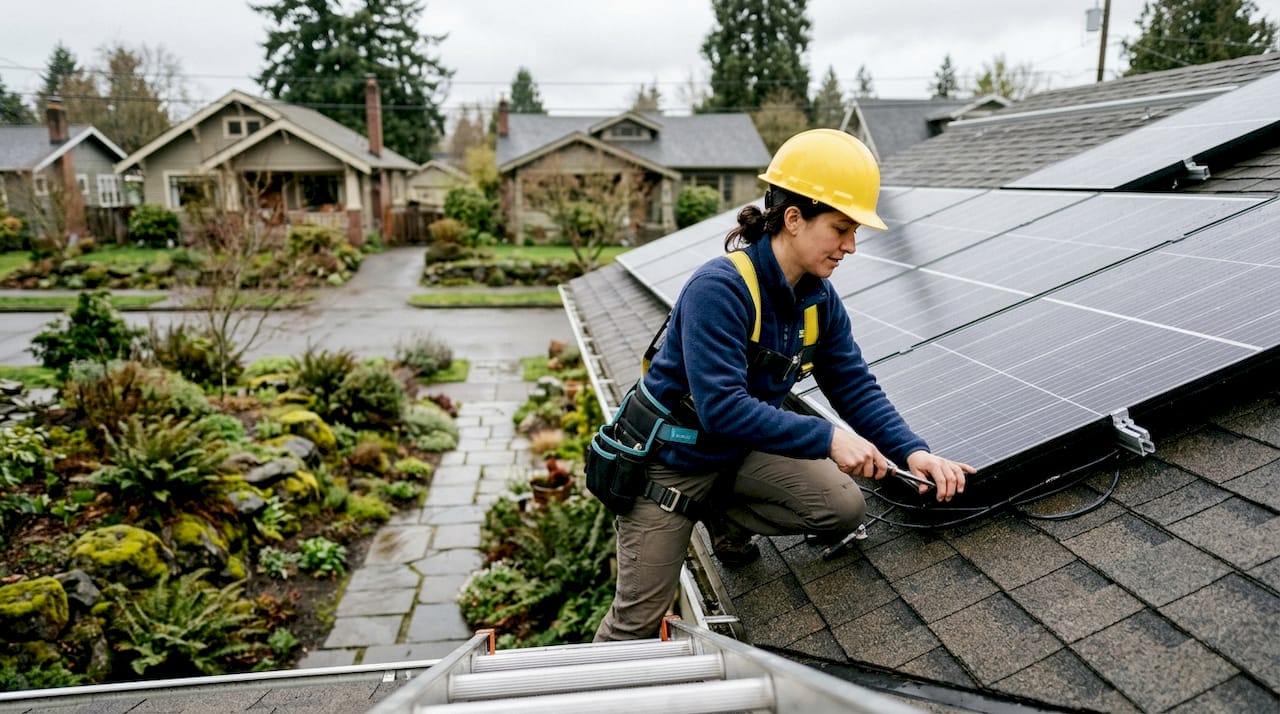
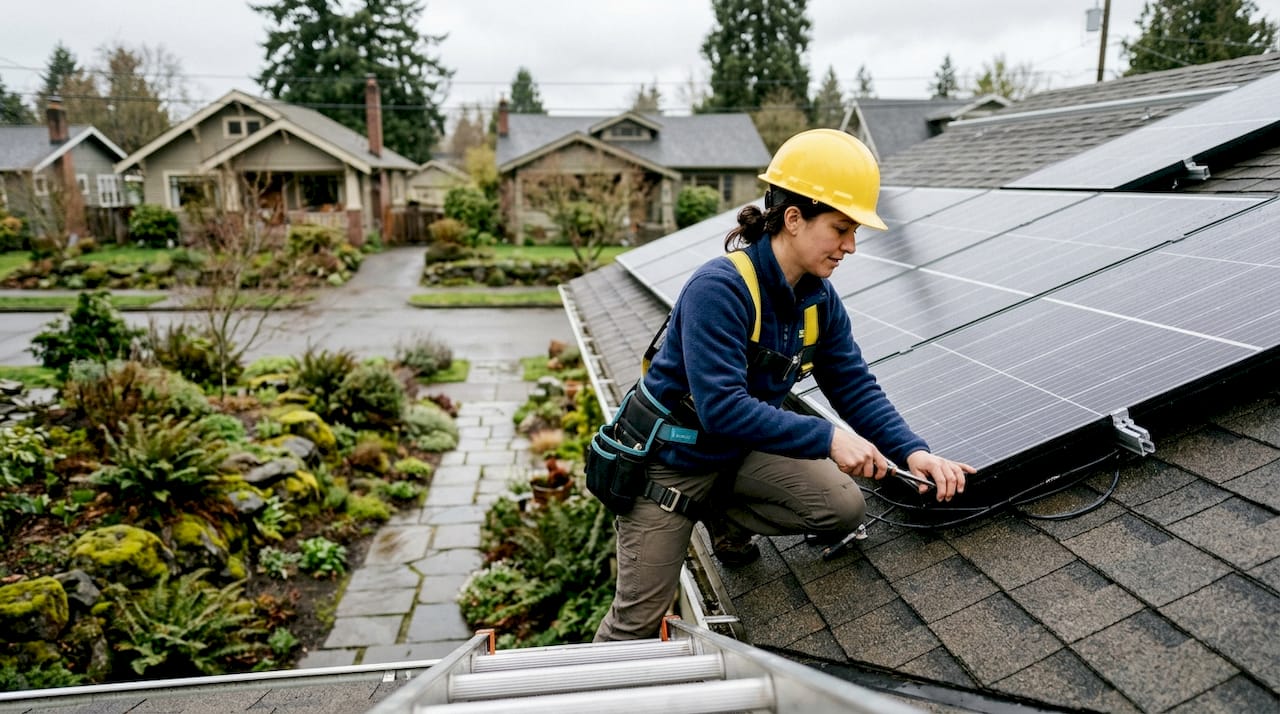
Panel selection for snow and rain. In regions that experience snow, panels must carry the weight of wet, dense accumulation without flexing or cracking. The standard for high-snow-load environments calls for panels rated to at least 5,000 Pa, which refers to pascals of mechanical load resistance. Many entry-level panels are rated to 2,400 Pa or less. That gap matters when several inches of wet Pacific Northwest snow sits on your roof for days at a time.
Tilt angle and orientation. A 30 to 45 degree tilt angle does two things: it maximizes solar exposure during low-sun winter months, and it allows snow and debris to slide off rather than accumulate. Flatter installations common in dry-climate markets simply do not shed material effectively in Washington or Oregon. If your roof pitch is too shallow, a ground-mount system with proper angling may outperform a roof installation.
Here is a practical step-by-step approach to evaluating your home solar panels for PNW conditions:
- Confirm snow load rating on any panel you consider. Look for 5,000 Pa minimum on the spec sheet.
- Assess your roof pitch. A pitch below 4:12 may require a ground mount or racking adjustment to achieve adequate tilt.
- Evaluate shading from trees. Many PNW lots have significant tree canopy; a shading analysis before installation prevents chronic output loss.
- Verify flashing specifications with your installer. Every roof penetration should use purpose-built flashing, not sealant.
- Plan your maintenance schedule. Spring cleaning after pollen season and fall clearing before wet months are both necessary in this climate.
Comparing panel options for PNW homes:
| Feature | Standard panel | High-performance PNW panel |
|---|---|---|
| Snow load rating | 2,400 Pa | 5,000 Pa or higher |
| Efficiency in low light | Moderate | Higher (monocrystalline) |
| Anti-reflective coating | Basic | Enhanced for diffuse light |
| Warranty period | 10 to 12 years | 25 years |
| Moss resistance | Low | Higher with textured coating |
Monocrystalline panels are generally the best match for PNW conditions because they maintain higher efficiency in the diffuse, overcast light that is common throughout winter months. You can explore solar basics for PNW homeowners to understand how panel type affects your annual output estimates.
Maintenance realities. Cleaning panels twice a year is the practical minimum for most PNW locations. Spring pollen and fall debris are the two primary accumulation events. Never use a pressure washer. The force damages anti-reflective coatings and can dislodge mounting hardware. A soft brush with clean water is the correct tool. Scheduling a professional inspection every two to three years also catches early signs of moss establishing at panel edges before it spreads and begins lifting seals.
Pro Tip: Panels installed with a slightly steeper tilt than the minimum recommended for your latitude will self-clean better during the heavy rain months, reducing your annual maintenance time and cost.
Home battery storage: Adding resilience and savings
Solar panels generate power when the sun shines. Battery storage determines what happens when it does not. For PNW homeowners, that distinction is significant. Winter storms, grid outages, and extended cloudy periods are all real scenarios that a well-sized battery system addresses directly.
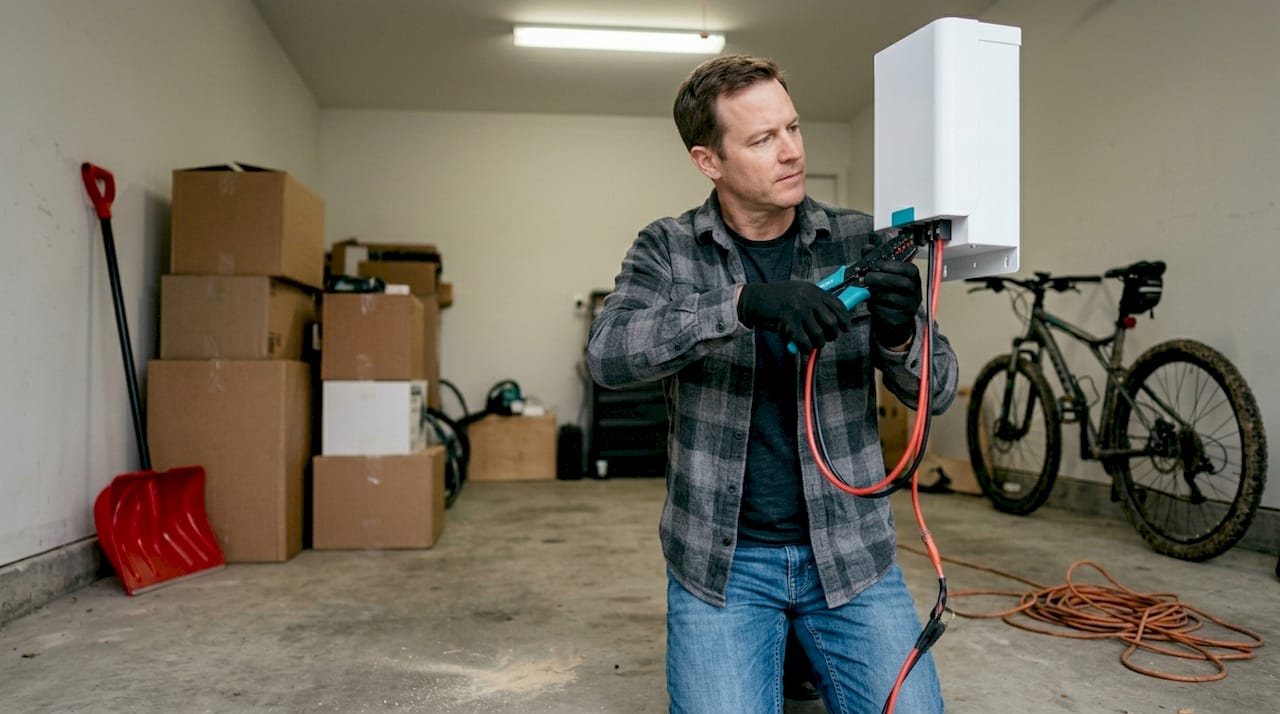
How battery backup integrates with solar. A home battery system charges during peak production hours and discharges during evening hours or outages. This reduces your dependence on utility power during peak rate periods and provides backup when the grid goes down. In Washington and Oregon, where windstorms and ice storms cause outages every winter, that backup capability has real practical value. Reviewing your battery storage options before finalizing a solar system size helps ensure your total energy solution is coordinated rather than piecemeal.
Types of home battery storage. The two dominant chemistries currently available for residential use are lithium iron phosphate (LFP) and nickel manganese cobalt (NMC). LFP batteries are generally safer, tolerate a wider temperature range, and have longer cycle lives. NMC batteries offer slightly higher energy density, meaning more storage capacity per unit of physical space.
Key features to compare when selecting a battery:
- Capacity (kWh): How much energy the battery holds, affecting how long backup power lasts
- Power output (kW): How many appliances can run simultaneously from battery power
- Operating temperature range: Critical for homes in colder PNW inland areas
- Cycle life: How many charge/discharge cycles before significant capacity degradation
- Warranty: Most quality systems carry 10-year warranties with capacity guarantees
Battery system data for PNW homeowners:
| Battery system | Capacity | Power output | Cold temp rating | Warranty |
|---|---|---|---|---|
| Standard LFP unit | 10 kWh | 5 kW | Down to 14°F | 10 years |
| Premium LFP unit | 13.5 kWh | 7.6 kW | Down to 32°F | 10 years |
| Stackable LFP system | Up to 40 kWh | 10 kW | Down to 5°F | 10 years |
For homes in colder inland areas of Washington or at higher elevations in Oregon, cold-temperature ratings are particularly relevant. Ground-mounted systems in these zones also require frost-depth foundations to prevent shifting that could stress conduit and wiring over time. Exploring residential backup batteries with a local installer helps you match system sizing to your actual usage patterns.
Pro Tip: Size your battery system based on your critical loads, not your total home energy use. Prioritizing refrigeration, lighting, and medical equipment typically costs far less than whole-home backup and still covers most outage scenarios.
Comparing solutions: Which renewable energy options fit your home?
After exploring individual solutions in depth, a direct comparison helps clarify which combination fits your home, budget, and energy goals.
Solar only vs. solar plus battery vs. alternatives. A solar-only system reduces your utility bill and may earn net metering credits, but it does not protect you from outages. A solar-plus-battery system adds that resilience at higher upfront cost. Both outperform standalone generator solutions on long-term cost and environmental impact.
Regional suitability comparison:
| Solution | Upfront cost | Maintenance | Outage protection | PNW suitability |
|---|---|---|---|---|
| Solar only | Moderate | Low to moderate | None | Strong with right panel specs |
| Solar plus battery | Higher | Low to moderate | Yes | Very strong |
| Generator backup | Lower | High | Yes (limited) | Moderate |
| Grid-tied only | Lowest | None | None | Weak for resilience goals |
Key factors to weigh for PNW homes specifically:
- Snow load: Any roof-mounted solution requires verified 5,000 Pa panel ratings
- Moss and pollen: All roof systems need accessible cleaning pathways and appropriate tilt
- Grid reliability: Washington and Oregon homeowners in rural or storm-prone areas benefit most from battery backup
- Incentive stacking: Washington sales tax exemption, and Oregon incentive programs can meaningfully reduce net system cost
Regional solar challenges like snow accumulation, sustained moisture, and biological growth on panels apply to all roof-mounted solutions regardless of brand or system type.
Statistic: Homes with solar plus battery storage report an average of 70 to 90 percent reduction in grid energy draw during summer months, with meaningful backup capacity extending into winter when systems are properly sized.
Reviewing actual PNW project examples from completed installations in Washington and Oregon gives you grounded expectations for real-world system performance. The solar project portfolio shows system types, sizes, and locations across the region.
A seasoned perspective: What most PNW homeowners overlook
After working with homeowners across Washington and Oregon for nearly two decades, we have seen the same oversights repeat. The most damaging is underestimating biological maintenance. Moss does not just reduce panel output. When it establishes at panel edges, it lifts seals, holds moisture, and accelerates the exact flashing failures that proper installation was designed to prevent. Catching it early is straightforward. Letting it run for three or four years is expensive.
The second most common mistake is pressure washing. It feels like the obvious solution when panels look dirty after a wet spring, but panel cleaning with a pressure washer strips anti-reflective coatings, voids warranties, and can introduce water into mounting hardware. Soft brush, clean water, and patience are the correct approach.
Installation shortcuts are the third category. We have assessed systems installed by out-of-region contractors who applied desert-climate methods in PNW conditions. Caulk over engineered flashing. Shallow tilt angles that pool debris. Undersized batteries for actual winter usage patterns. Following regionally validated best practices for solar is not optional in this climate. It is what separates a 25-year performing system from one that requires remediation within a decade. Local expertise is not a premium. It is a requirement.
Connect with local experts for your renewable energy project
The insights in this article reflect real decisions that Washington and Oregon homeowners face. Understanding criteria, panel specs, and battery options is the foundation. But applying that knowledge to your specific home, roof, and utility situation requires local experience.

Browse residential project case studies to see how PNW homeowners have navigated these exact decisions and what their systems have delivered in practice. The completed residential projects section shows real installations across Washington and Oregon, including system sizes and configurations. If battery backup is a priority for your home, reviewing detailed battery backup solutions helps you understand what to ask for when you connect with our team. We are employee-owned, B Corporation certified, and have spent two decades building systems that hold up in this climate.
Frequently asked questions
What makes solar panel installation different in Washington and Oregon?
Regional factors like heavy rain, moss growth, and snow loads require specialized flashing, panel tilts between 30 and 45 degrees, and frost-depth foundations that are simply not necessary in drier climates.
How should panels be cleaned to avoid damage?
Solar panels should be cleaned with a soft brush and water; pressure washers strip anti-reflective coatings, can dislodge hardware, and frequently void panel warranties.
Do home battery backup systems work during winter storms?
Yes, quality battery systems are rated for cold temperatures and provide reliable backup during winter outages, though extreme-cold installations in inland Washington or high-elevation Oregon areas may require additional thermal considerations.
Are renewable energy solutions affordable in the Pacific Northwest?
Washington’s solar sales tax exemption, Oregon state incentives, and high-performance panels designed for low-light conditions combine to make PNW solar systems competitive with, and often cheaper than, long-term grid utility costs.