



TL;DR:
- Choosing local verified installers ensures homeowners maximize incentives and avoid costly mistakes.
- Certified local professionals have the expertise to navigate permits, inspections, and utility programs effectively.
- Supporting local solar companies benefits the community’s economy and ensures ongoing system support.
Not all solar installers deliver the same results, and that gap can cost Northwest homeowners thousands of dollars. Choosing the right installer affects which rebates you qualify for, how smoothly your permits get approved, and whether your system performs as promised. Oregon’s Energy Trust requires Trade Ally status for rebates reaching up to $5,000, meaning only verified local installers can unlock that money for you. This article breaks down the financial, technical, and community reasons why working with a local solar professional in Washington or Oregon is the smarter, safer choice.
Table of Contents
- Local knowledge unlocks incentives and rebates
- Certification and reliability: How locals avoid costly mistakes
- Community impact: Supporting local sustainability and businesses
- How to vet and choose the right local installer
- The uncomfortable truth most homeowners miss about solar installation
- Connect with trusted Northwest solar experts
- Frequently asked questions
Key Takeaways
| Point | Details |
|---|---|
| Unlock local incentives | Local installers know how to secure rebates and tax exemptions for Washington and Oregon homeowners. |
| Prevent costly errors | Certified, community-reviewed installers help avoid expensive mistakes like failed inspections. |
| Support sustainability | Choosing local strengthens the Northwest economy and promotes energy independence. |
| Vetting is critical | Look for certifications and local reviews to ensure trusted solar installation partners. |
Local knowledge unlocks incentives and rebates
Solar incentives in Washington and Oregon are layered, time-sensitive, and highly specific to local utility programs. A national installer operating out of a distant call center rarely keeps up with the details. Local pros who work in these states every day do.
The biggest example is Oregon’s Energy Trust of Oregon program. Trade Ally status is required for installers to submit rebate applications on your behalf, and rebates can reach up to $5,000 for qualifying systems. If your installer isn’t a verified Trade Ally, you lose that money entirely, regardless of how good your panels are.
Washington homeowners benefit from sales and property tax exemptions that local installers know how to apply correctly. Oregon has similar property tax benefits for solar installations. Local professionals handle the paperwork, know which forms to file, and submit applications on time. Errors in these filings can delay or disqualify your rebate.
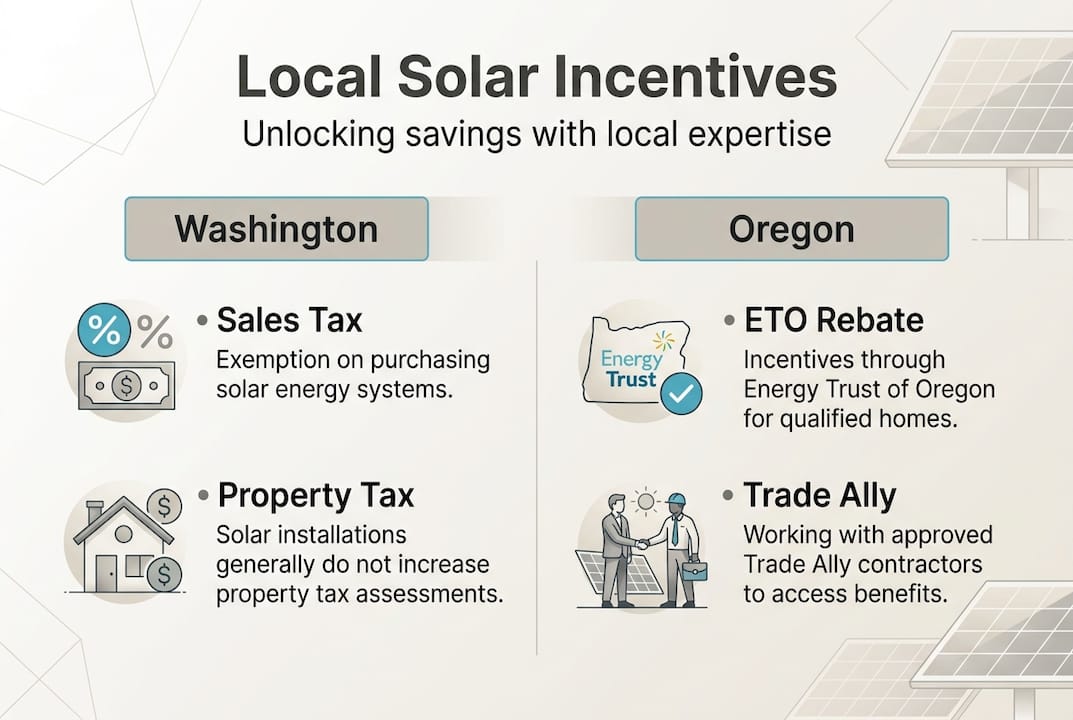
Here’s a quick look at key incentives available to Northwest homeowners in 2026:
| Incentive | State | Who qualifies | Estimated value |
|---|---|---|---|
| Energy Trust rebate | Oregon | ETO Trade Ally required | Up to $5,000 |
| Sales tax exemption | Washington | All solar buyers | Varies by system size |
| Property tax exemption | Oregon and Washington | Residential solar owners | Ongoing annual savings |
Local installers who specialize in local solar project incentives also track changes in utility net metering policies, which affect how much credit you earn for sending power back to the grid.
Key reasons local expertise matters for your incentives:
- They know which utility programs are active right now
- They maintain verified Trade Ally or similar status with state agencies
- They handle permit and rebate filing directly, reducing your workload
- They know the WA sales tax exemption process and Oregon’s separate property tax rules
- They flag program deadlines before you miss them
Pro Tip: Before signing any contract, ask your installer directly whether they are an ETO Trade Ally and whether they have handled rebate filings for your specific utility. A qualified local pro will answer confidently and show proof.
Exploring Oregon solar incentives with a local expert is often the difference between recovering $5,000 on your investment or walking away with nothing.
Certification and reliability: How locals avoid costly mistakes
Solar installation looks straightforward until something goes wrong. Roof damage from improper mounting, failed municipal inspections, or wiring errors that void equipment warranties are all real risks when unqualified contractors do the work.
Labor represents 10 to 15% of your total cost, but errors made during installation can generate repair bills exceeding $10,000. A failed inspection alone can require full system teardowns and reinstalls.
Local, certified installers prevent these problems before they start. A certified solar installer with NABCEP credentials has passed rigorous industry exams and demonstrated real-world competency. NABCEP, the North American Board of Certified Energy Practitioners, is the gold standard for solar installation quality.
“Choosing an installer without verified credentials is one of the most common ways homeowners lose money on solar. Once a roof is damaged or an inspection fails, the costs fall on you.”
Here’s how local certified installers compare to national sales operations:
| Factor | Local certified installer | National sales operation |
|---|---|---|
| NABCEP certification | Standard | Rare or unverified |
| Municipal code knowledge | Current and local | Often generic |
| ETO Trade Ally status | Verified | Frequently missing |
| Post-install support | Ongoing local presence | Remote or unavailable |
| Inspection pass rate | High | Inconsistent |
| Community accountability | Strong | Minimal |
How to verify a local installer’s qualifications:
- Search the NABCEP directory to confirm NABCEP certification is current
- Ask for their ETO Trade Ally number if you are in Oregon
- Check Google and Yelp for recent, locally verified reviews
- Request references from projects completed in your city or county
- Confirm they pull permits directly rather than asking you to do it yourself
Researching avoiding solar scams is a critical step before you sign anything. National pop-up companies often use high-pressure tactics, make verbal promises not included in contracts, and disappear after installation.
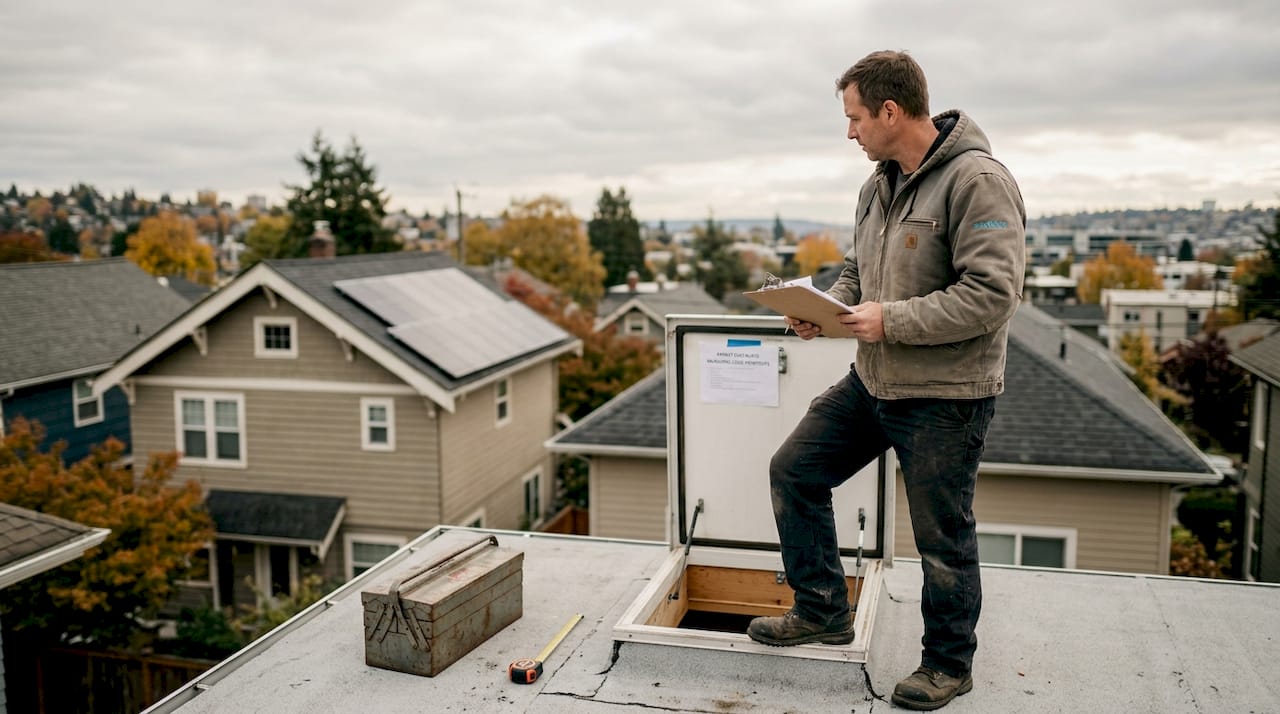
Municipal codes in cities like Seattle, Portland, and Bellevue have specific requirements that change periodically. Local installers attend regional training updates and maintain relationships with local permit offices, which speeds up your approval timeline and reduces back-and-forth delays.
Community impact: Supporting local sustainability and businesses
Hiring a local solar installer isn’t only about your household finances. It also shapes the economic and environmental health of the broader Northwest community.
Local companies reinvest their revenue locally. They hire regional workers, pay local taxes, and use vendors and suppliers based in Washington and Oregon. That economic circulation strengthens the communities you and your neighbors live in.
Beyond economics, local installers take a long-term view of their work because their reputation depends on it. They’re not closing a deal and moving to the next city. They’re building a track record in the same neighborhoods where they live and work.
Locals provide ongoing service, maintenance, and compliance guidance that national companies rarely offer after installation is complete. If your inverter underperforms two years from now, a local team can dispatch quickly. A national company may route you through a call center with no real resolution path.
Benefits of supporting local solar businesses:
- Regional jobs stay in Washington and Oregon
- Local companies track changing state and utility regulations on your behalf
- Faster response times for maintenance and repairs
- Higher accountability because their reputation is locally visible
- Shared investment in Northwest sustainability goals
$5,000. That’s the maximum rebate available through Energy Trust of Oregon for homeowners who work with verified local Trade Ally firms. It’s a number that reflects exactly how much the state values local expertise and accountability in solar installation.
Browsing local project examples from Northwest homeowners shows the range of systems and outcomes that local expertise delivers. Real projects, real results, and real neighbors who went through the same process you’re considering.
Energy independence also becomes a community asset when local installers build and maintain the systems. Neighborhoods with well-designed, maintained solar arrays are more resilient during grid outages and more prepared for rising utility rates.
How to vet and choose the right local installer
Knowing why local installers matter is the first step. Knowing how to identify the right one protects you from well-marketed but unqualified contractors.
Steps to evaluate any solar installer before signing:
- Confirm NABCEP certification by searching the public directory
- Ask for their ETO Trade Ally number if you’re in Oregon
- Request a written list of all incentives they will apply for on your behalf
- Review at least 10 recent local reviews across two or more platforms
- Get itemized quotes from at least two or three local companies
- Ask specifically who pulls permits and how long the inspection process typically takes in your municipality
- Confirm the warranty covers both equipment and workmanship separately
Watch for red flags that signal predatory or unqualified contractors:
- High-pressure same-day signing demands
- Promises of incentives they cannot document in writing
- No physical local office or local phone number
- Salespeople who cannot name local permits or utility programs by name
- Contracts that exclude workmanship warranties
Pro Tip: Use state agency directories and the ETO Trade Ally search tool to confirm installer status independently. Never rely solely on the company’s own claims about their certifications.
Prefer ETO Trade Allies and NABCEP pros over national companies that use high-pressure sales tactics. The difference in outcome is measurable in both dollars and system reliability.
If something feels off during the sales process, trust that instinct. Resources on guarding against solar scams and protecting consumers from solar panel fraud are available and worth reviewing before you commit.
The uncomfortable truth most homeowners miss about solar installation
Most installation regrets we hear about follow the same pattern. A homeowner chose based on price or a persuasive national brand, skipped the verification steps, and ended up with a failed inspection, a missing rebate, or no one to call when something went wrong.
Local expertise isn’t a soft benefit. It’s a financial safeguard. The installers who know your utility, your city’s permit office, and your state’s incentive programs are the ones who consistently deliver full rebates, clean inspections, and systems that actually perform as projected.
We’ve seen this play out across hundreds of real residential case studies in Washington and Oregon. The homeowners who vet carefully, choose locally, and insist on verified credentials walk away with the best outcomes. Those who prioritize a low bid from an out-of-state team often end up spending more to fix the problems that follow.
The solar market has matured enough that quality and accountability are now clearly measurable. Certifications exist. Directories exist. Local reviews exist. Use them.
Connect with trusted Northwest solar experts
A&R Solar has spent two decades installing, maintaining, and optimizing solar systems for homeowners across Washington and Oregon. Our team holds NABCEP certifications, maintains ETO Trade Ally status, and has the regional expertise to navigate permits, rebates, and utility programs on your behalf.
Explore local residential projects to see the range of systems we’ve built for Northwest homeowners. Whether you need a new installation, a battery backup upgrade, or ongoing system maintenance, we’re here to help. Learn more about solar service in Washington or find out how a home battery backup keeps your home powered through outages. Reach out to our team and let’s find the right solution for your home.
Frequently asked questions
What incentives are available for solar in Washington and Oregon?
Homeowners can access rebates, sales tax exemptions, and property tax incentives through state programs and utility-backed initiatives. ETO rebates up to $5,000 are available exclusively through verified Trade Ally local installers.
Why is local expertise important compared to national solar companies?
Local installers hold the certifications, community reputation, and incentive knowledge to prevent costly errors and secure maximum savings. Labor costs 10 to 15% of your total, but errors from unqualified contractors can add $10,000 or more in repair costs.
How can I verify a solar installer’s qualifications?
Check for NABCEP certification through the public directory, confirm ETO Trade Ally status for Oregon projects, and read recent local reviews across multiple platforms. Choosing certified local pros over high-pressure national sales teams consistently delivers better outcomes.
What risks come from hiring non-local or unqualified installers?
Non-local contractors can cause inspection failures, void incentives, and provide no meaningful post-install support. Errors cost homeowners $10,000+ and often include lost rebates that cannot be recovered after the fact.
Recommended
- Does Solar Work in the Northwest? | A&R Solar
- Why Hire A NABCEP Certified Solar Installer | A&R Solar
- Solar panels for your home – A&R Solar
- Solar 101 for Pacific Northwest Homeowners