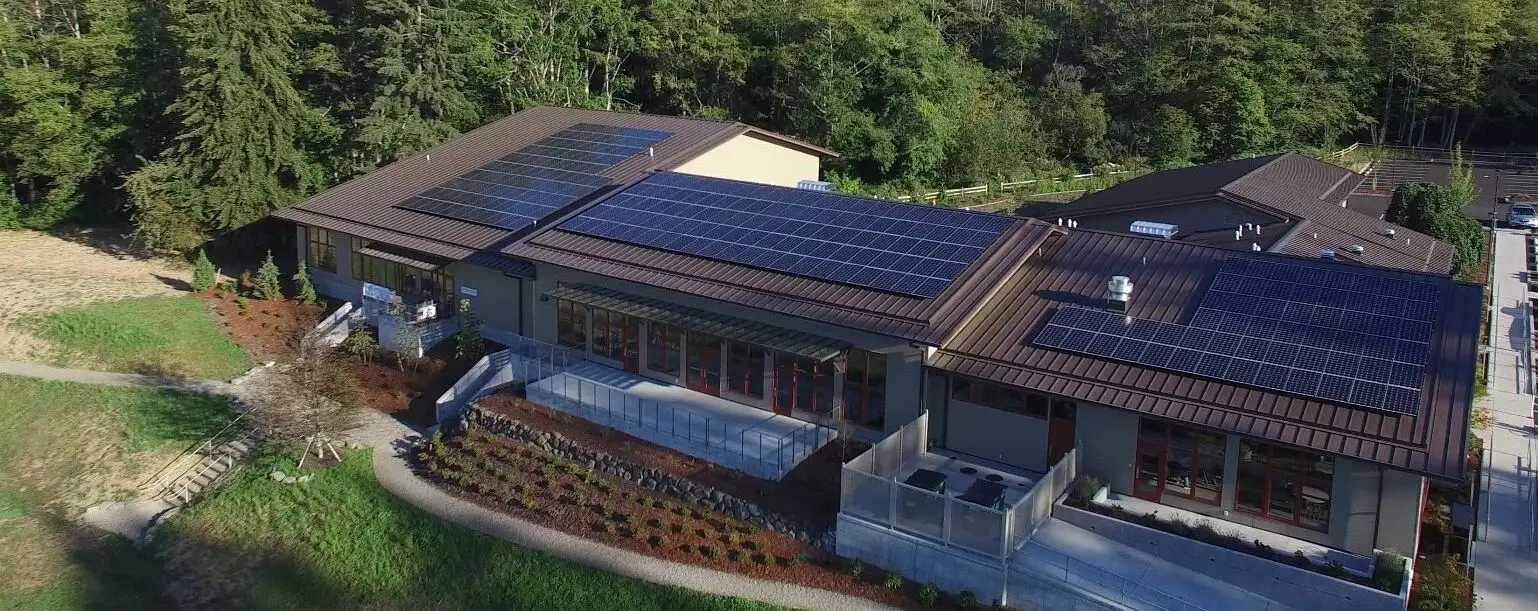
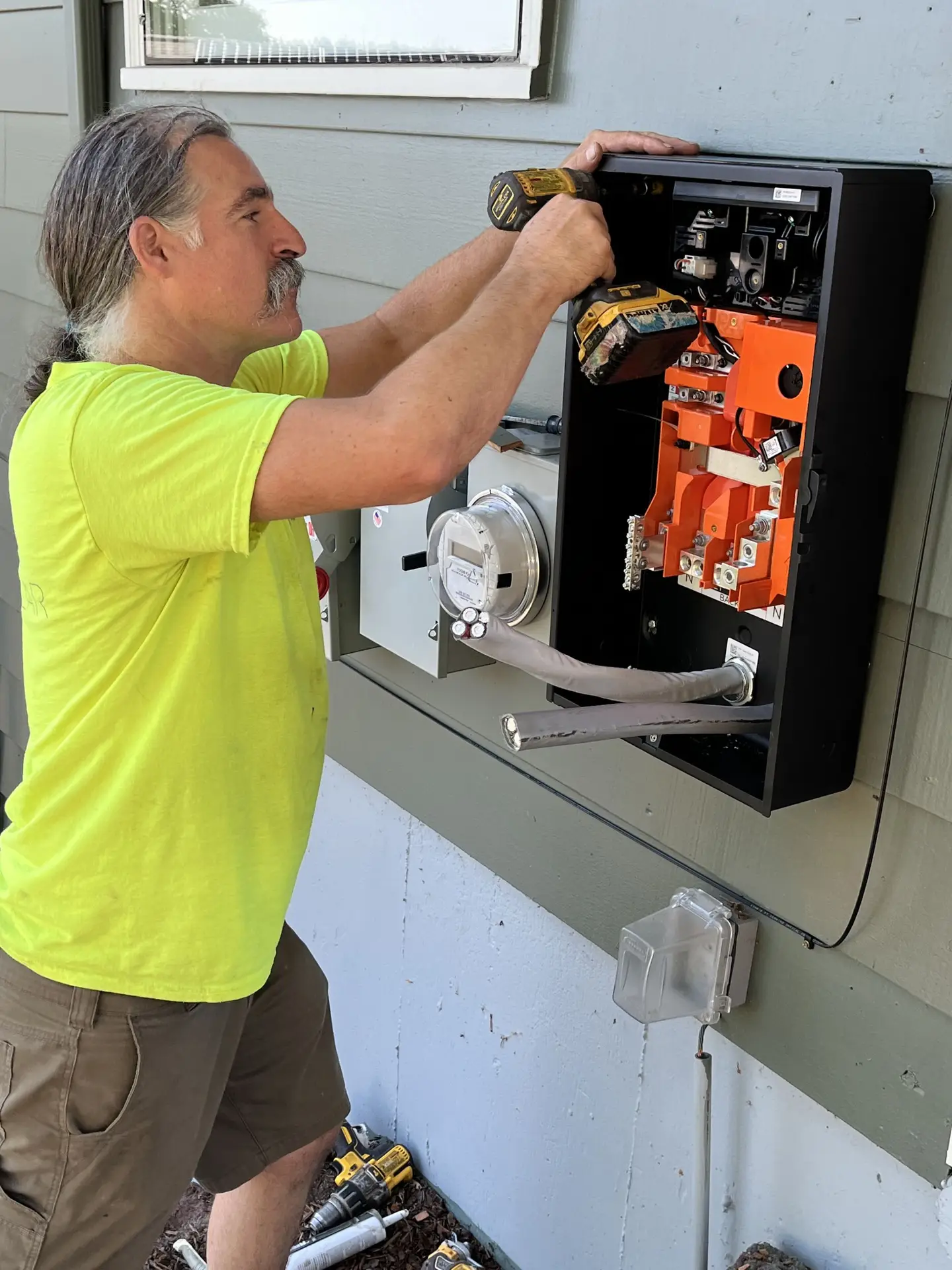
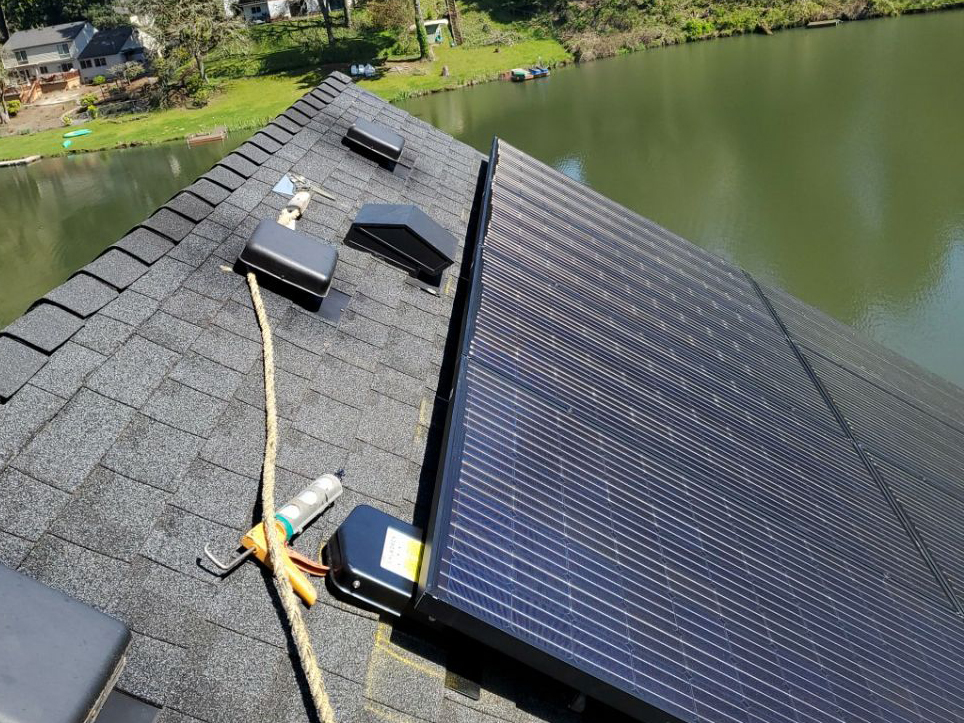
A&R Solar residential install in Milwaukie, OR
Solar panels are remarkably low-maintenance, but they aren’t “set it and forget it.” If your solar system is five years old or more, a few quick checks can help you catch small issues early and keep your savings on track.
Key takeaways
- A quick monthly check of your inverter and production app is the easiest way to confirm your system is healthy.
- Physical issues like debris buildup or discolored cells can often be spotted from the ground without a ladder.
- Comparing your current monthly kilowatt-hour (kWh) production to previous years helps identify gradual performance dips.
- Safety first: Always call a professional for electrical testing or if you notice frayed wiring or loose mounting hardware.
What to look for during a visual inspection
You do not need to climb onto your roof to get a good sense of your system’s health. For most residential 7 kW to 10 kW systems, a pair of binoculars or a clear view from a second-story window is enough.
Start by looking for “hot spots” or discoloration. Brownish tints on the blue or black cells can indicate internal electrical issues. Those discolored areas are places where one part of the panel is getting much hotter than it should be, which can quietly rob you of energy production and, over time, permanently damage that panel. If you see what may be a hot spot on your panel(s) please call A&R directly for assistance.
Then check for physical obstructions. In the Pacific Northwest, it is common for fallen leaves, pine needles or even bird nesting materials to collect on top of or around arrays. While rain helps wash these off the panels, if you see a heavy layer of grime, this may be reducing the production of your system. Call A&R to gather a quote for panel cleaning. Or if you are able, you can use a soft bristle brush and water to scrub the panels in the morning or evening when the panels are not too hot. Remember, the panels have a glass cover and hot glass + cold water could cause them to shatter.
Also keep an eye out for cracks in the glass. While rare, hail or a stray branch can cause damage that lets moisture into the laminate over time.
If you observe any of the above, A&R has a dedicated in house service team who is able to help!
How to know if your solar system is working correctly
Your inverter is the “brain” of your solar array. It converts DC power from your roof into the AC power your home uses.
One of the easiest and most important things you can do as a solar homeowner is to check your solar monitoring app (e.g. Sunvoy) regularly. Your app gives you a real-time window into how your system is performing — showing you how much energy each panel is producing, flagging any alerts, and helping you catch small issues before they become costly problems. Think of it like a check engine light for your solar system; ignoring it means you could be losing energy production — and money — without even knowing it.
If your app shows everything in green with normal production numbers for the time of year, you’re in great shape. However, it’s time to give us a call if you notice any red error alerts that don’t clear within 24 hours, if one or more panels show as “not producing” during daylight hours, if your overall system production has dropped noticeably compared to the same time last month or last year, or if your gateway has been offline for more than a day and a basic router reset hasn’t resolved it. When in doubt, don’t wait — a quick call to our team can save you weeks of lost production and help protect the long-term value of your investment.
Pro Tip:
Many wall-mounted inverters have simple LED indicators:
- A solid green light usually means everything is functioning normally.
- A blinking red or orange light often indicates a fault code.
If you see an error message, write it down. Sometimes a simple “power cycle” (following the manufacturer’s instructions) can clear a glitch. If the error returns, it is best to give us a call (Seattle / Portland) and schedule a technician to review the internal circuitry or string voltages.
Comparing Solar Production with Your Electricity Consumption
Solar production naturally changes wit the seasons. A cloudy March in the PNW will yield less solar production than a clear July. So how can you tell if your solar system’s level of production is healthy? The best way is to look at your solar monitoring app and check annual production year over year. Compare the annual production from your solar year over year to your annual electricity consumption from your utility bill to help confirm if your solar is producing as expected or if you are consuming more energy at home.
The most useful comparison is year-over-year. Compare your current month to the same month last year. For example, if your 8 kW system produced 900 kWh last June but only 600 kWh this June with similar weather, you will want to check your monitoring app to confirm there are no production alerts
Beyond the numbers, take a quick look at the hardware holding the system together. Solar racking is designed to last 25+ years, but things can loosen or shift.
Call a professional if you notice:
- Wires hanging down and touching the roof surface.
- Loose mounting hardware.
- Frequent animal activity under the array (animals chewing wires is a major cause of residential faults).
Keeping your investment secure
Maintaining your solar system is mostly about being an observant homeowner. If you spend ten minutes once a month reviewing your production app and walking your property perimeter to look at the roofline, you will protect the ROI of your investment.
Next step: Open your monitoring app today and compare last month’s total production to the same month last year. If you see a dip of more than 15% that is not explained by the weather, it may be time for a professional solar “health check.”