

TL;DR:
- Solar in the Pacific Northwest is cost-competitive and supported by strong incentives.
- Adding batteries enhances energy independence and power during outages.
- Cloud cover does not significantly hinder solar generation in Washington and Oregon.
Many Washington and Oregon homeowners assume their region is too cloudy for solar to make financial sense. That assumption is costing them money. The Pacific Northwest actually has more in common with Germany, the world’s solar leader by installed capacity per capita, than most people realize. Utility rates in both states continue to climb, grid reliability concerns persist after major storm events, and the financial case for residential solar has never been stronger. This article compares solar and traditional energy across cost, reliability, incentives, and environmental impact so you can make a fully informed decision for your household.
Table of Contents
- How solar and traditional energy actually work
- Cost breakdown: Solar vs. traditional energy in the Northwest
- Reliability, backup power, and energy independence
- WA and OR incentives: Maximizing your solar benefits
- What most Northwest homeowners miss about the solar vs. traditional energy debate
- Ready to take control of your energy future?
- Frequently asked questions
Key Takeaways
| Point | Details |
|---|---|
| Solar cost advantage | Modern solar is now cost-competitive with traditional energy in Washington and Oregon, especially after incentives. |
| Strong regional incentives | Both states offer generous solar and battery programs in 2026, lowering the financial barrier to adoption. |
| Grid and battery backup | Pairing solar with batteries boosts energy independence and keeps your home powered during outages. |
| Environmental impact | Switching to solar dramatically cuts your home’s carbon footprint compared to fossil fuels. |
| Energy independence | Solar gives you more control over future energy costs and reduces reliance on external power providers. |
How solar and traditional energy actually work
Solar panels convert sunlight into direct current (DC) electricity. An inverter then converts that into alternating current (AC), which powers your home just like electricity from the utility grid. Most residential systems are grid-tied, meaning they send excess power back to the utility and draw from the grid when production is low. This is what makes net metering so valuable. Storage batteries, when added to the system, capture surplus energy for use at night or during outages.
Traditional energy means electricity generated by burning fossil fuels such as coal and natural gas, or sourced from large hydroelectric dams. In Washington, the grid runs heavily on hydropower. Oregon’s mix includes natural gas, wind, and some coal. Either way, your home receives power through a centralized grid managed by utilities, with rates set by state regulators and influenced by fuel costs, infrastructure spending, and clean energy mandates.
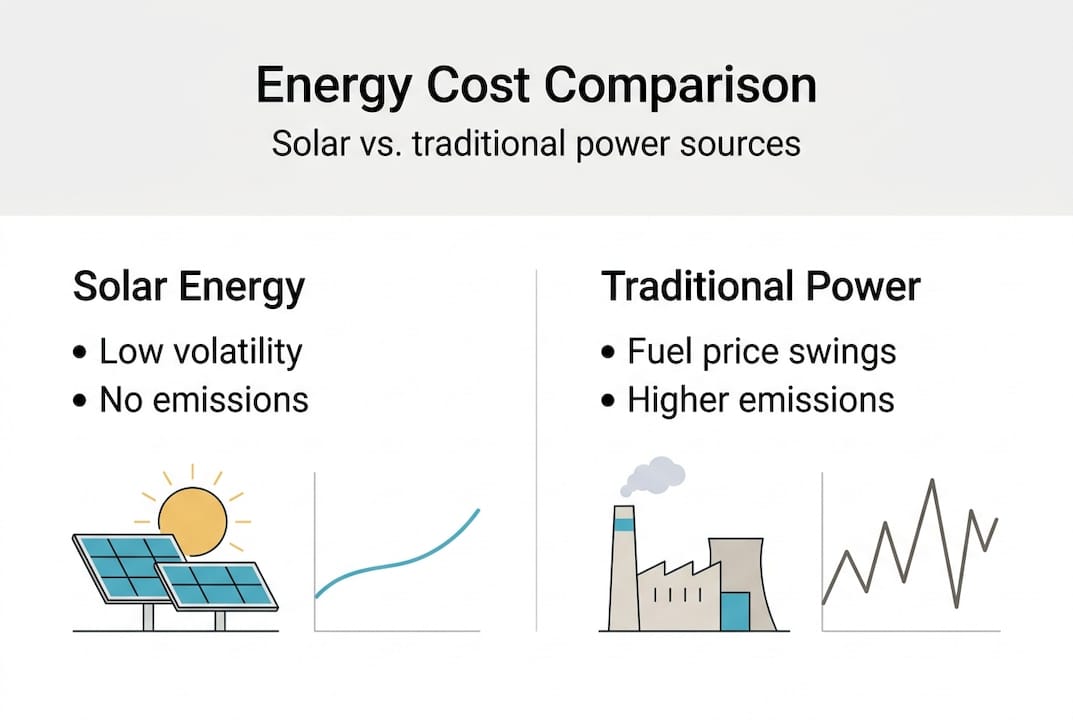
One number that often surprises homeowners is the capacity factor, which measures how often a power source actually generates electricity relative to its maximum possible output. Solar typically runs at a 10 to 25 percent capacity factor, while fossil fuel plants operate near 100 percent. That sounds like a major disadvantage, but it does not tell the full story. Solar generates power during peak demand hours, and when paired with storage, it can deliver reliable electricity around the clock.
The environmental contrast is significant. Solar lifecycle emissions are under 50 grams of CO2 equivalent per kilowatt-hour, while coal exceeds 800. This difference reduces air pollution and associated health costs substantially.
Here is what this means practically for a Northwest home:
- Solar panels produce electricity even on overcast days, just at reduced output
- Grid-tied systems provide seamless backup from the utility when solar is insufficient
- Hydropower on the Northwest grid is relatively clean, but rates still rise with infrastructure costs
- Understanding how solar panels work helps you size and plan a system correctly
Pro Tip: Adding a battery to your solar system means you can keep critical appliances running during grid outages, which is a real concern in the Pacific Northwest during ice storms and wildfire-related shutoffs.
Cost breakdown: Solar vs. traditional energy in the Northwest
The most practical way to compare these two energy sources is through the Levelized Cost of Energy, or LCOE. This metric represents the average cost per unit of electricity generated over a system’s entire lifetime, accounting for installation, fuel, maintenance, and financing. It puts solar and fossil fuels on an even playing field.

According to Lazard’s 2025 analysis, utility-scale solar PV now costs $24 to $96 per megawatt-hour unsubsidized, directly competitive with combined-cycle natural gas at $48 to $109 per megawatt-hour. Residential solar is higher per unit than utility-scale, but the comparison that matters most for homeowners is solar’s cost versus what your utility actually charges.
| Energy source | LCOE (per MWh) | Fuel cost volatility | Emissions (gCO2e/kWh) |
|---|---|---|---|
| Utility-scale solar PV | $24 to $96 | None after install | Under 50 |
| Natural gas (combined cycle) | $48 to $109 | High | 400 to 500 |
| Coal | $65 to $160 | Moderate | Over 800 |
| Residential solar (installed) | $80 to $150 | None after install | Under 50 |
For Washington homeowners, the financial picture includes net metering at the full retail rate, a state sales tax exemption on solar equipment, and a payback period of 10 to 14 years in Seattle, with shorter timelines in sunnier eastern Washington. Homes with solar also see an average property value increase of 4.1 percent, which compounds the return.
Oregon homeowners benefit from a separate incentive structure. You can review the details for your state through our pages covering Oregon solar incentives and Washington solar incentives.
The federal Investment Tax Credit (ITC) expired at the end of 2025 for residential systems, which makes it more important than ever to take full advantage of current state and utility programs. Net metering alone can reduce your annual electricity bill by hundreds of dollars, as excess generation flows back to the grid and offsets future charges at retail rates.
Reliability, backup power, and energy independence
After cost, reliability is the question we hear most often. Will solar keep the lights on? The honest answer depends on how your system is configured.
Grid-tied solar without a battery shuts down automatically during a grid outage. This is a safety requirement, not a flaw. It prevents energy from flowing back into power lines where utility workers may be making repairs. If outage protection matters to you, a battery backup system is the solution.
Here is how solar and traditional grid power compare on reliability:
- Grid power: Consistent and available 24 hours a day, but entirely dependent on infrastructure outside your control. Rate hikes, storm damage, and utility decisions affect your access and cost.
- Solar without battery: Reduces bills and carbon footprint significantly, but provides no power during outages.
- Solar with battery: Offers the highest level of independence. Your home can run on stored solar energy during grid failures, sometimes for an entire day or more depending on system size and usage.
Solar’s capacity factor of 10 to 25 percent means it requires more nameplate capacity than a fossil fuel plant to deliver the same amount of firm power. In regional grid planning, solar’s effective load-carrying capacity sits around 39 percent in comparable markets. This is why a battery matters for true independence.
“Energy independence is not just about saving money. It is about knowing your home will have power when your neighborhood does not.” This is something our customers in western Washington tell us repeatedly after their first major storm outage.
For common solar reliability answers, including what size battery makes sense for different household loads, our FAQ covers the most frequent questions we receive.
Pro Tip: Many battery backup systems qualify for separate utility and state incentives on top of solar credits. In some cases, the battery incentive alone can offset a significant portion of the storage cost.
WA and OR incentives: Maximizing your solar benefits
Incentive programs are updated regularly, and 2026 is an active year for both states. Here is a current summary of the major programs available:
| Incentive | State | Amount | Notes |
|---|---|---|---|
| Solar for Homes (ETO) | Oregon | $2,500 flat | PGE and Pacific Power, minimum 2 kW system |
| Battery storage (ETO) | Oregon | $400/kWh up to $5,000 | Minimum 3 kWh, must pair with solar |
| Net metering | WA and OR | Retail rate credit | Credit applied to monthly utility bill |
| Sales tax exemption | Washington | Full exemption | Applies to solar equipment purchase |
| State rebates and programs | Both | Varies | Check with local utility |
Oregon’s Energy Trust has confirmed the 2026 Solar for Homes incentive at $2,500 flat through PGE and Pacific Power for qualifying systems. The battery incentive pays $400 per kilowatt-hour of storage capacity up to $5,000, which can make a meaningful dent in battery costs for homeowners who install both together.
Washington sales tax exemption and net metering at retail rates remain in place for 2026, though the federal ITC for residential systems expired in 2025.
Here is how to claim these incentives step by step:
- Get a quote and confirm your system qualifies for state and utility programs
- Choose a certified installer who handles permit coordination
- Submit documentation to your utility for net metering enrollment
- Apply for the Energy Trust incentive (Oregon) or verify the sales tax exemption with your installer (Washington)
- Keep records of system cost and installation date for any state tax filings
Detailed eligibility rules for each program are available on our Oregon state solar incentives and Washington solar perks pages.
What most Northwest homeowners miss about the solar vs. traditional energy debate
The payback period gets most of the attention in these comparisons, and that focus can be misleading. A 10 to 14 year payback does not mean solar is slow to deliver value. It means you are locking in your electricity price for 25 or more years while utility rates continue to rise. That is a hedge, not just a purchase.
The clouds argument is similarly overblown. Seattle receives roughly the same solar irradiance as Frankfurt, Germany, where solar is mainstream and financially proven. The combination of strong state incentives, retail net metering, and falling equipment costs makes the Pacific Northwest one of the better markets in the country right now, not despite the clouds but alongside them.
What we have seen over nearly two decades of installations is that the homeowners who feel best about their solar decision are those who factored in all three dimensions: cost certainty, energy independence, and peace of mind. The numbers matter, but so does not worrying about your next utility bill or what happens when the grid goes down. Reviewing solar’s environmental impact can also shift how you think about the full value of going solar.
Pro Tip: When evaluating proposals, ask for a 25-year cash flow model. It shows the total value of solar over its lifetime, not just the break-even point.
Ready to take control of your energy future?
The facts are clear. Solar in the Pacific Northwest is cost-competitive, well-supported by incentives, and increasingly practical for energy independence. The next step is seeing how these numbers apply to your specific home, roof, and energy usage.
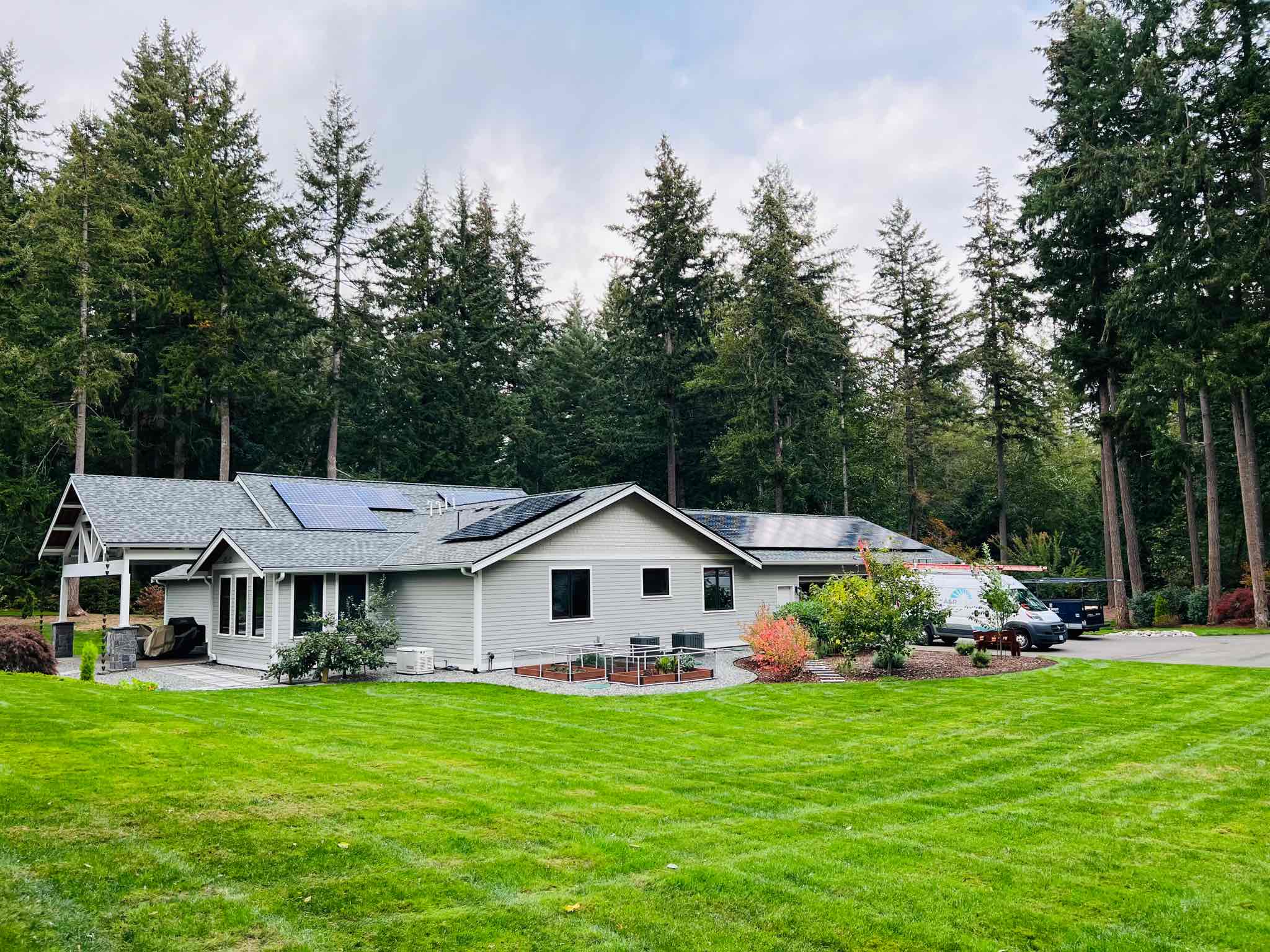
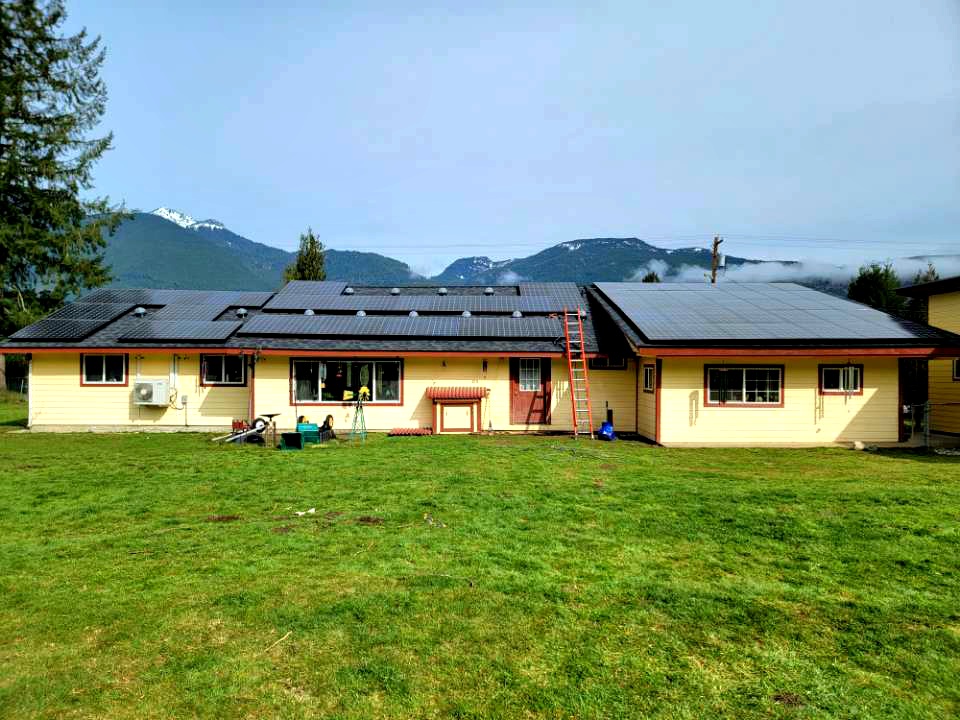
At A&R Solar, we have spent nearly two decades helping Washington and Oregon homeowners design systems that fit their lives and budgets. Browse our real residential solar projects to see actual installations across the region. If backup power is a priority, explore our battery backup solutions designed for Northwest conditions. And if you still have questions, our solar FAQs cover the most common homeowner concerns in plain language.
Frequently asked questions
Does solar really work in cloudy areas like Washington and Oregon?
Yes, solar panels generate electricity even on cloudy days, and both states offer strong incentives and net metering policies that significantly improve the financial return regardless of cloud cover.
How long does it take to pay off a solar investment in this region?
The payback period averages 10 to 14 years in Seattle and can be shorter in eastern Washington, where higher sun hours and local utility rates accelerate the return.
What happens when the power goes out—will my solar keep running?
Grid-tied solar systems shut off during outages for safety, but adding a battery allows you to power your home during blackouts using stored energy from your panels.
Are there new incentives for solar and batteries in 2026?
Yes, in Oregon the 2026 Solar for Homes incentive offers $2,500 plus up to $5,000 for battery storage through PGE, with additional state and utility programs available in both Washington and Oregon.