

TL;DR:
- Choosing a home energy upgrade begins with a professional assessment to identify priority needs and cost-effective solutions.
- Combining solar panels with battery storage and electrification upgrades like heat pumps maximizes resilience, savings, and incentive benefits.
Knowing which renewable energy upgrade will make the biggest difference for your budget, comfort, and resilience is genuinely difficult right now. Washington and Oregon homeowners face a fast-changing landscape of incentive programs, eligible equipment lists, utility rebates, and interconnection rules that can shift from one year to the next. This guide walks through the most impactful upgrade paths available today, explains how they work together, and highlights exactly what local homeowners need to know before signing a contract or applying for a rebate.
Table of Contents
- How to choose the right renewable energy upgrade for your home
- Solar panels plus battery storage
- Heat pumps and efficient electrification
- Quick comparison: Which upgrade makes the biggest impact?
- A NW energy expert’s take: Why pairing upgrades trumps solo moves
- Ready to upgrade? Unlock more from your NW home energy system
- Frequently asked questions
Key Takeaways
| Point | Details |
|---|---|
| Layer upgrades for more value | Combining solar, batteries, and heat pumps boosts efficiency, savings, and reliability. |
| Check incentive eligibility early | Apply for state and utility rebates before starting your project to maximize savings and avoid missing out. |
| Grid constraints may affect timing | Transmission bottlenecks can delay renewable upgrades even if you’re fully prepared. |
| Approved installers are a must | To earn most rebates and incentives, your installer must meet utility or state requirements. |
| Heat pumps drive efficiency | Electrifying your heating with a modern heat pump can cut energy use and qualify for rebates. |
How to choose the right renewable energy upgrade for your home
The single biggest mistake homeowners make is jumping straight to equipment selection without first understanding what their home actually needs. A heat pump installed in a poorly insulated house still underperforms. Solar panels on a roof with shading problems still produce less than expected. The U.S. DOE recommends starting with a home performance prioritization step, which typically means scheduling a professional home energy assessment before layering in generation and electrification upgrades.
Here is a practical, ordered approach for NW homeowners:
- Schedule a home energy assessment. A certified auditor will identify air leaks, insulation gaps, inefficient equipment, and other drains on your system. This step reveals your highest-priority fixes and gives you a baseline to measure savings against.
- Review your utility bills for the last 12 months. Look at both your total consumption and your peak usage months. This tells you how large a solar array you actually need and whether a battery makes financial sense for your usage patterns.
- Map your outage resilience needs. Oregon and Washington experience wildfires, ice storms, and windstorms that can cut power for hours or days. If you work from home, have medical equipment, or have a well pump, battery backup moves from a nice-to-have to a necessity.
- Identify which upgrades compound well together. Solar paired with battery storage, or a heat pump installed after a solar array is generating, creates stacked savings and often pushes a project over the threshold for additional incentive tiers.
- Confirm incentive eligibility before you plan your budget. Both Oregon solar incentives and Washington solar incentives come with specific eligibility requirements, income thresholds, and approved equipment lists that can significantly affect your out-of-pocket cost.
Pro Tip: Utility and state programs in Oregon and Washington frequently require that upgrades be installed by pre-approved providers. Choosing an installer who is not on the approved list can disqualify your rebate application entirely, even if the equipment itself is eligible.
Now that you know why a deliberate evaluation matters, let’s break down each major upgrade for NW homes.
Solar panels plus battery storage
Solar generation combined with battery backup is the highest-impact upgrade path for most homeowners in the Pacific Northwest. A properly sized solar array can dramatically reduce your annual utility bill, and in many cases it can eliminate most of your grid dependence during the sunny months from April through September. The Energy Trust of Oregon highlights solar plus home battery storage as a proven resilience upgrade in real-world residential projects, with homeowners reducing both their carbon footprint and their exposure to grid outages.
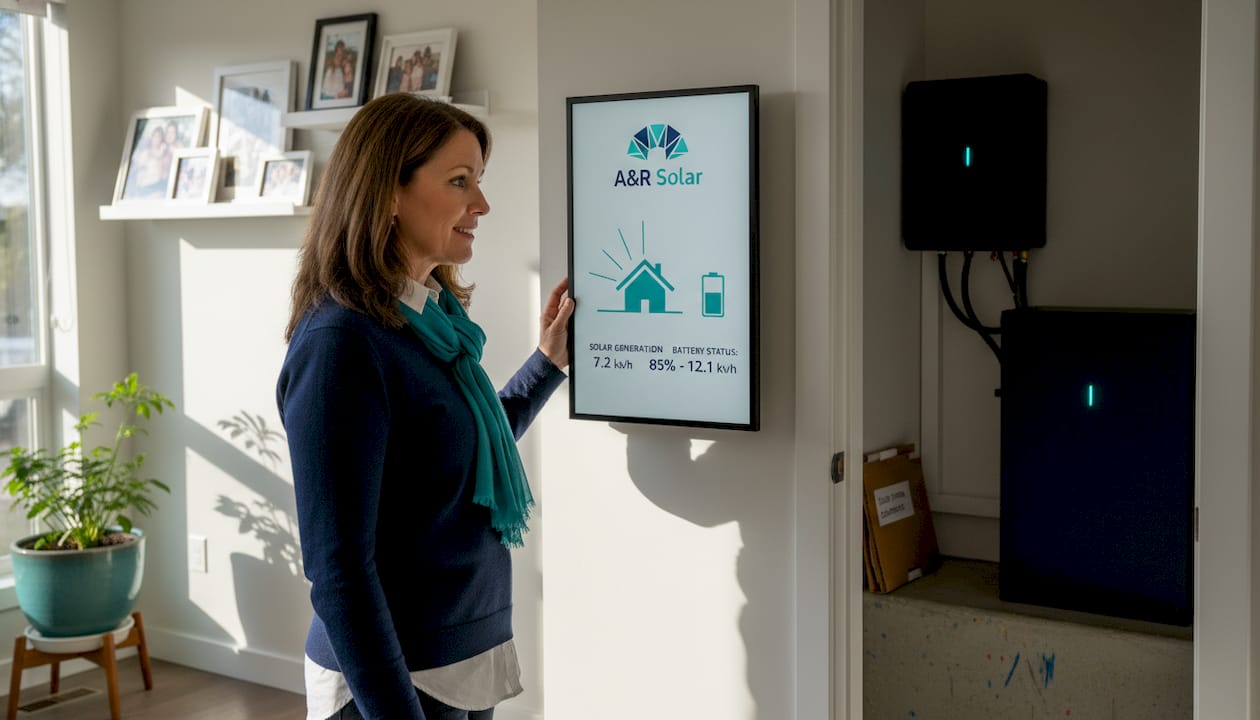
Adding battery storage to a solar installation changes the value proposition significantly. Without storage, the solar energy your home doesn’t use in real time is sent to the grid, and you receive a net metering credit. With a battery, that same energy is stored and available to power your home during evening hours, cloudy days, or outages. Energy Trust of Oregon actively promotes solar plus storage as a resilience upgrade specifically for Oregon homeowners, not just a billing optimization tool.
Benefits of solar plus battery:
- Backup power during outages, including wildfire-related grid shutoffs
- Greater control over when you draw from the grid, which matters during peak rate hours
- Access to utility battery incentive programs that pay rebates upfront
- Reduced dependence on net metering policy changes, which can shift over time
Considerations before you commit:
- Your roof must have adequate structural strength and minimal shading
- Installer eligibility matters for rebate programs
- Local net metering policies vary by utility and can affect your bill credits
- Battery capacity needs to match your actual backup load, not just your total consumption
Statistic to know: Pacific Power’s Wattsmart Battery program offers up to $3,000 per battery, structured as an upfront rebate, making battery storage more financially accessible than many homeowners expect.
The resilience angle here is not just marketing language. It reflects a real and growing concern in the Pacific Northwest, where grid reliability issues are increasingly common due to extreme weather. Pairing solar panels for your home with one of the available PNW solar battery options creates a system that works for you even when the grid does not. For a broader look at how these systems fit into regional energy planning, the renewable solutions for PNW homes resource is worth reviewing.
With solar and batteries leading the pack, how do other upgrades fit into an efficient NW home?
Heat pumps and efficient electrification
A heat pump is an all-electric heating and cooling system that moves heat rather than generating it, making it significantly more efficient than a traditional furnace or electric resistance heater. For most Oregon and Washington homes that still rely on natural gas or older electric systems, switching to a heat pump represents one of the largest opportunities to cut both energy costs and carbon emissions in a single project.
Columbia River PUD and similar utilities offer rebates specifically for heat pump installation and replacement, recognizing the upgrade as a major efficiency improvement for regional homes. The rebate structures vary by utility, so checking with your specific provider is essential before budgeting.
Pros of heat pump adoption:
- Year-round comfort from a single system that heats in winter and cools in summer
- High efficiency ratings that can cut heating costs by 30 to 50 percent compared to older systems
- Qualifies for multiple rebate programs, including federal tax credits under the Inflation Reduction Act
- Works extremely well when paired with solar, since your panels generate the electricity the heat pump runs on
Cons and practical considerations:
- Higher upfront cost than replacing like-for-like HVAC equipment
- May require an electrical panel upgrade to handle the additional load
- Installer approval is often required for utility rebate eligibility
- Cold-climate heat pumps perform better in the Pacific Northwest than older models did, but performance in extreme cold still varies by product line
The U.S. DOE’s home upgrade guidance specifically identifies heat pumps and electrical panel upgrades as part of bundled home energy makeovers, noting that combining them with solar or battery projects often unlocks higher incentive tiers from state and utility programs.
Pro Tip: Some rebates are only available when multiple upgrades are completed as part of a single coordinated project. If you plan to add a heat pump and solar in the same year, coordinating the timing and the contractor can make a real difference in your total rebate eligibility.
Next, let’s compare how the major upgrade options stack up against each other for reliability, cost, and eligibility.
Quick comparison: Which upgrade makes the biggest impact?
The table below summarizes the four main upgrade options for NW homeowners, covering upfront cost ranges, available incentives, outage resilience, and return on investment timelines.
| Upgrade | Estimated upfront cost | Eligible incentives | Outage resilience | Typical ROI period | Key notes |
|---|---|---|---|---|---|
| Solar only | $15,000 to $25,000 | Federal ITC, state credits, net metering | None without battery | 7 to 10 years | Strong base; limited resilience |
| Solar + battery | $22,000 to $40,000 | Federal ITC, utility rebates (up to $3,000/battery), state programs | High | 8 to 12 years | Best combination for resilience and savings |
| Heat pump | $5,000 to $18,000 | Utility rebates, federal tax credits | None | 5 to 8 years | Best when bundled with solar |
| Electrical panel upgrade | $2,000 to $6,000 | Often required to unlock other rebates | Indirect | Varies | Enables all other upgrades |
Pacific Power’s Wattsmart Battery program structures battery rebates as upfront payments with ongoing bill credits, and it specifies eligible battery models, so not every product on the market qualifies. Similarly, Washington’s UTC Renewable Energy System Incentive Program provides programmatic pathways for homeowners pursuing renewables, with requirements that vary depending on your utility and project type.
To use this table effectively, start with your primary goal. If outage resilience is the priority, solar plus battery is the clear choice. If you want the fastest payback and currently have a gas furnace, a heat pump installed before or alongside a solar system often delivers the shortest return timeline. For broader information on available funding, the NW incentives and financing resource covers what’s currently accessible to Washington and Oregon homeowners.
These upgrades all hold value, but the regional grid creates an often-overlooked constraint you should know about before planning any big project.
Grid interconnection: An upgrade bottleneck every homeowner should check
Even when your equipment is selected, your installer is approved, and your rebate application is complete, your project may still face delays before it generates a single kilowatt-hour. Grid interconnection is the process of connecting your renewable system to the local utility grid, and it requires utility approval that can take weeks or months depending on local grid conditions.
This bottleneck is particularly relevant in Oregon and Washington, where transmission infrastructure is under strain from both growing renewable capacity and aging grid hardware. OPB’s reporting on the regional grid found that out of 469 large renewable projects submitted since 2015, only one reached full approval because of transmission wiring limitations. While large commercial projects face the most acute delays, residential interconnection timelines are also being affected in some areas.
“The bottleneck is the wiring. You can have projects ready to go and incentives in place, but if the local grid can’t absorb the new capacity, the connection is delayed.” — Regional energy analyst, as cited in OPB’s Bonneville grid report.
Before finalizing your upgrade plan, ask your installer for an honest estimate of interconnection timelines in your specific service territory. Some areas have much faster approval processes than others, and knowing this upfront lets you plan your project budget and savings expectations accurately.
With all these examples, which approach actually delivers the most for NW homeowners in 2026?
A NW energy expert’s take: Why pairing upgrades trumps solo moves
After years of working with homeowners across Washington and Oregon, the pattern that stands out most clearly is this: the homeowners who see the best long-term outcomes are the ones who think in systems, not single products.
Solo solar is a solid first step. It reduces bills, earns net metering credits, and cuts emissions. But it leaves real vulnerabilities on the table. Your home still has no power during a grid outage. You are still dependent on whatever net metering policy your utility is offering at the moment, which can change. And you miss the compounding incentive tiers that come from bundling projects together.
When solar is paired with battery storage, the picture changes. Now you have a system that works independently of the grid when needed, qualifies for additional utility rebates, and positions you to add electrification upgrades like a heat pump that run largely on energy you’re already generating. Each layer strengthens the others.
The incentive landscape in both states currently favors whole-home thinking. Rebate programs are increasingly structured to reward multi-upgrade projects. Installers with approved status for WA and OR incentives understand how to sequence projects to maximize what you receive. The homeowners who verify eligibility before signing contracts, rather than after, consistently outperform those who don’t.
Pro Tip: Always confirm your installer’s approved status with your state or utility program before committing to a project. An installer who is not on the approved list can cost you thousands of dollars in foregone rebates, regardless of how good their installation work is.
The single most valuable thing we see long-term winners do is treat their home energy system as a platform, not a one-time purchase. Solar is the foundation. Battery storage adds resilience. Electrification upgrades reduce operating costs. And a well-insulated, efficient home envelope makes every other upgrade perform better. That combination, applied strategically, consistently produces the best outcomes.
Ready to upgrade? Unlock more from your NW home energy system
Understanding your options is the first step. The next step is seeing how these upgrades translate into real results for homes like yours.
At A&R Solar, we’ve spent two decades helping Washington and Oregon homeowners navigate incentive programs, choose the right equipment, and build energy systems that hold up over time. Whether you want to browse NW residential solar project highlights for inspiration or review client case studies that show actual savings and timelines, the evidence is there. If you’re ready to talk specifics about your home, our team can walk you through your incentive eligibility, timeline expectations, and upgrade sequencing at no cost. Explore your home battery backup options and take the next step toward a more resilient, efficient home.
Frequently asked questions
Which renewable energy upgrade offers the fastest payback for NW homeowners?
Solar paired with battery storage typically delivers the most immediate resilience and the strongest long-term savings, especially when local utility rebates and state incentives are applied to reduce upfront costs.
Can I stack multiple home energy upgrade rebates?
Yes, many programs allow you to combine incentives for heat pumps, solar, batteries, and panel upgrades, but eligibility varies by project type, utility service territory, and whether you use an approved installer.
What is the main roadblock when trying to add renewables in Oregon and Washington?
Grid interconnection and transmission constraints can delay or limit how soon your renewable project is connected and generating power, even when equipment is ready and permits are in hand.
Are residential battery incentive amounts fixed, or do they vary by area?
Incentive amounts vary by utility. Pacific Power’s Wattsmart Battery program offers $600 per kilowatt up to $3,000 per battery, with a maximum of two batteries per household, but other utilities use entirely different structures.
Do I need a special installer to qualify for NW home energy rebates?
Yes, using an approved installer is typically required to access state and utility incentives for solar, battery storage, and related upgrades in both Oregon and Washington.