

TL;DR:
A solar array is a group of interconnected solar panels working together to produce sufficient energy for a home. The entire photovoltaic system includes panels, mounting hardware, an inverter, wiring, and monitoring equipment to ensure reliable power. Understanding these components and proper design choices, especially inverter type and shading considerations, maximizes long-term solar savings.
Most homeowners can spot solar panels on a neighbor’s roof, but far fewer understand how those panels actually work together to cut electricity bills and move a home toward energy independence. The difference between a single panel and a complete solar array is significant, and that distinction directly affects how much power your home produces, how reliable that production is, and how well your system holds up through gray Pacific Northwest winters. This guide breaks down what a solar array actually is, what each component does, and what you need to know before making a decision for your Washington or Oregon home.
Table of Contents
- What is a solar array?
- Core components of a residential solar array
- Types of solar arrays: Residential vs. utility scale
- How wiring and inverter choices impact performance
- Key considerations for Washington and Oregon homeowners
- Our take: What most solar guides miss about arrays
- Get expert help with your solar array project
- Frequently asked questions
Key Takeaways
| Point | Details |
|---|---|
| Solar arrays explained | A solar array is a system where multiple solar panels work together to generate energy for your home. |
| Component impact | Key parts like inverters and wiring play a major role in overall system performance and reliability. |
| Design matters | Proper design choices are crucial for maximizing energy yield, especially in the Pacific Northwest. |
| Consider local factors | Roof type, shade, and local weather all influence what array design is best for your home. |
| Expert guidance recommended | Working with regional specialists ensures you get the optimal solar solution for your needs. |
What is a solar array?
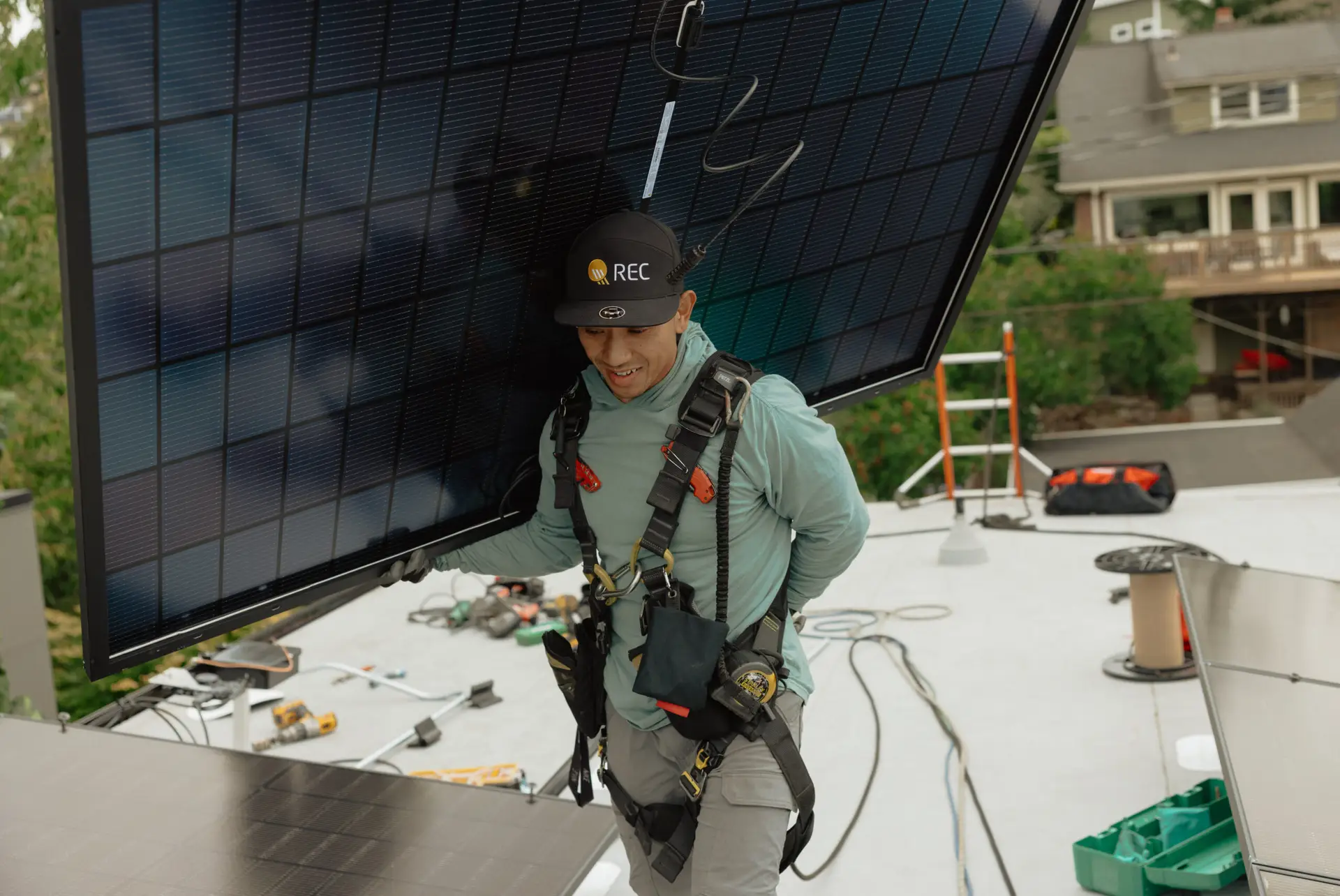
A solar array is a collection of solar panels connected together and working as a single coordinated system. One panel on its own produces a modest amount of electricity. An array multiplies that output by linking panels in a deliberate configuration designed to meet a specific home’s energy needs.
“In a photovoltaic system, the solar panels produce DC electricity, and an inverter converts it into AC electricity used by a home or, in grid-tied cases, the electrical grid.”
— U.S. Department of Energy
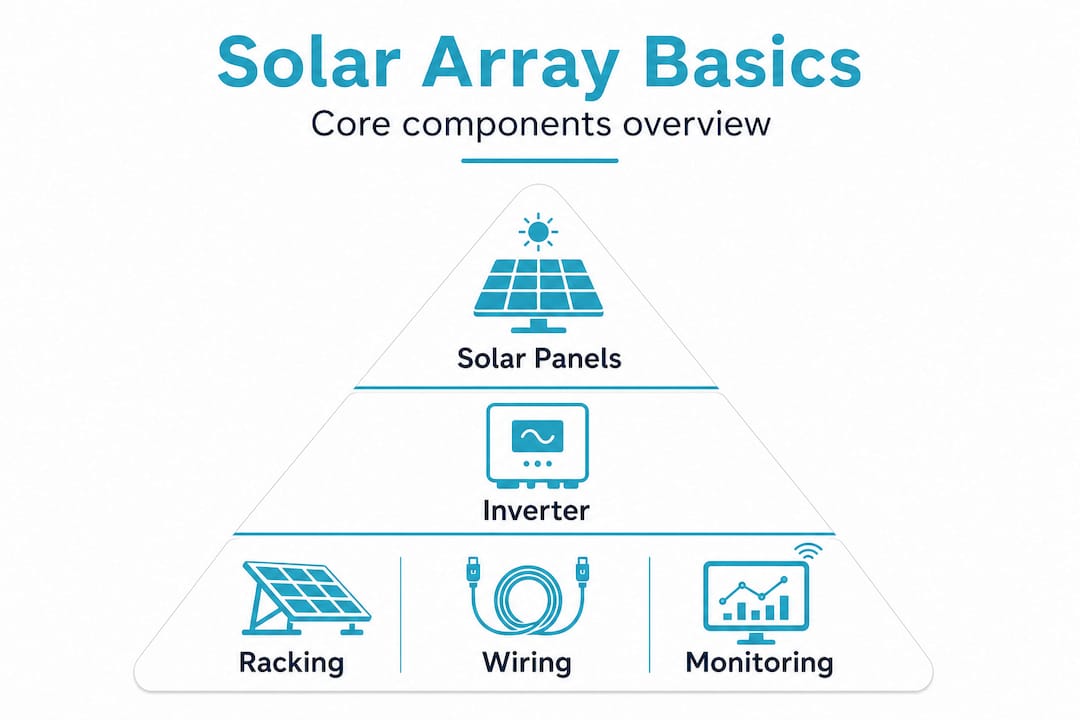
Understanding the basics of photovoltaic solar helps clarify why this matters for your home. The panels alone are not a system. A complete residential photovoltaic (PV) system includes:
- Solar panels (modules): The individual units that capture sunlight and produce direct current (DC) electricity
- Racking and mounting hardware: The structural framework that secures panels to your roof and positions them at the optimal angle
- Inverter: The device that converts DC electricity into alternating current (AC), which is what your appliances, lights, and outlets actually use
- Wiring and electrical components: The connectors, conduit, and safety hardware that tie everything together safely
- Monitoring system: Software and hardware that tracks real-time and historical energy production
The term “solar panel” refers to a single module. The term “solar array” refers to the group of panels working together. The term “PV system” refers to the entire setup, including the inverter, racking, wiring, and any battery storage. Knowing where solar energy goes within that system helps you understand the full picture before you commit to an installation.
Core components of a residential solar array
Each component in a solar array has a specific job. When all parts are chosen correctly and installed properly, they work together to deliver reliable, long-term savings. When even one component is mismatched or undersized, the entire system pays for it in lost production.
| Component | Primary function | Homeowner benefit |
|---|---|---|
| Solar panels | Convert sunlight to DC electricity | Generates free electricity from sunlight |
| Inverter | Converts DC to AC electricity | Powers all standard home appliances |
| Racking/mounting | Anchors panels to roof or ground | Withstands Pacific Northwest wind and snow loads |
| Wiring and conduit | Carries electricity safely | Prevents fire hazards and energy loss |
| Monitoring system | Tracks production in real time | Lets you verify your system is performing |
The DOE explains that modules form arrays, and that a complete PV system includes mounting hardware plus all components that convert DC electricity from the modules into AC power for home appliances. That full system view is what matters when you’re evaluating installer proposals.
Here is how to think about the components in order of installation:
- Roof assessment and racking installation: Installers evaluate your roof’s structure, age, and orientation before mounting any hardware. The racking goes on first.
- Panel placement: Panels are secured to the racking in the configuration designed during the planning phase.
- Wiring and DC connections: Panels are wired together in strings or individually, depending on the inverter architecture chosen.
- Inverter installation: The inverter is typically installed near your main electrical panel, either inside or in a protected outdoor location.
- Grid connection and monitoring setup: The system is tied to the utility grid and a monitoring app is configured so you can track production from your phone.
Understanding how a solar array works step by step makes it easier to ask the right questions when you’re evaluating proposals from installers.
Pro Tip: For Pacific Northwest homes with complex roof lines, multiple roof faces, or nearby trees, inverter selection is one of the most consequential choices you’ll make. A standard string inverter may underperform significantly on roofs that are not perfectly oriented to the south. Ask your installer to walk you through why they’re recommending a specific inverter type for your specific roof.
Types of solar arrays: Residential vs. utility scale
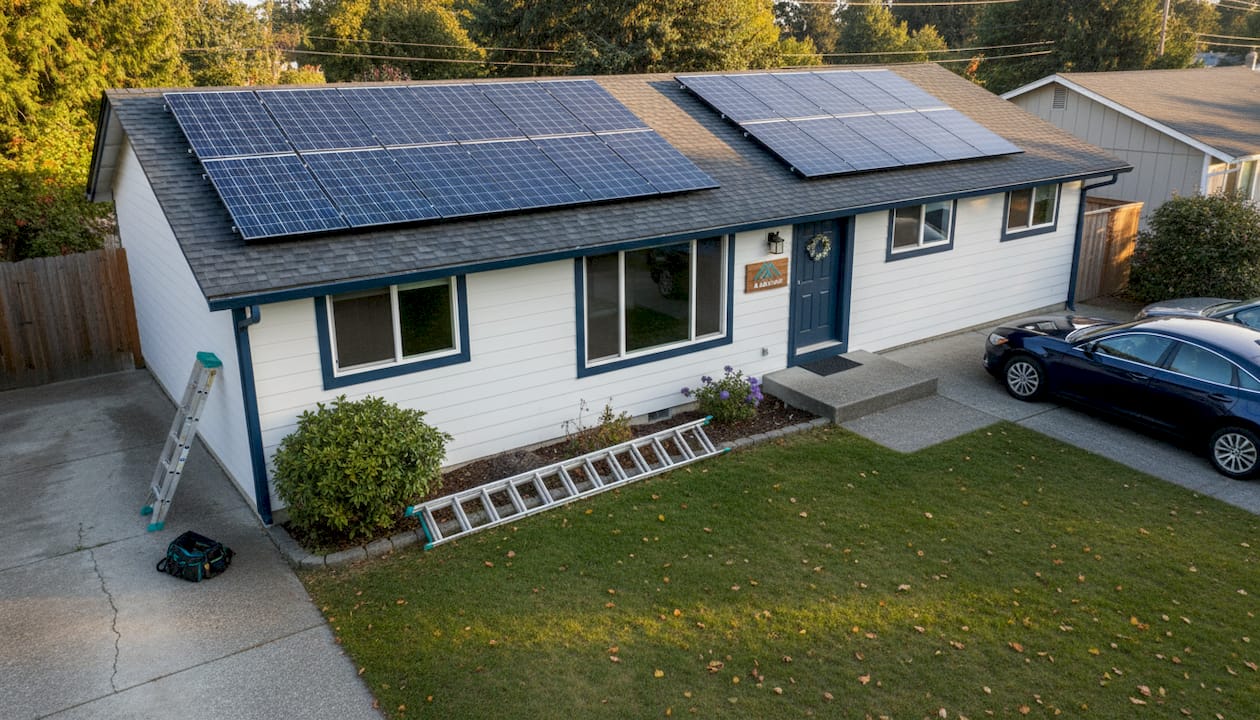
Solar arrays are not one-size-fits-all. They range from small rooftop systems powering a single family home to enormous utility-scale installations covering hundreds of acres. The underlying physics is the same across all of them, and residential and utility-scale systems both use panels that form arrays whose DC output is integrated via inverters for grid compatibility.
| Feature | Residential array | Community solar | Utility-scale farm |
|---|---|---|---|
| Typical panel count | 12 to 30 panels | Hundreds | Thousands |
| Power output | 5 to 15 kilowatts | 100 kW to 1 MW | 1 MW to 500+ MW |
| Location | Rooftop or ground mount at home | Shared off-site location | Rural land or large commercial sites |
| Ownership | Homeowner-owned | Subscription-based | Utility or developer-owned |
For Washington and Oregon homeowners, the three most common scenarios are:
- Rooftop residential arrays: Installed directly on your home, producing electricity that offsets your utility bill through net metering
- Community solar subscriptions: You subscribe to a share of a larger nearby array and receive bill credits without installing anything on your roof
- Ground-mounted residential arrays: Installed on your property when roof conditions are not ideal, often at a better angle and without roof penetration concerns
Understanding how energy from arrays feeds the home or grid explains why all three options can provide real savings, even when the array is not physically on your property. The key insight is that your home’s system operates on exactly the same principles as a massive solar farm. Scale differs. The core concept does not.
How wiring and inverter choices impact performance
This is where most homeowner guides fall short. They explain what panels do but skip over wiring architecture and inverter types, even though those decisions determine how much electricity your specific roof will actually produce year after year.
Performance and energy yield depend heavily on electrical topology and inverter architecture, especially under partial shading conditions. The three main inverter types are:
- String inverters: All panels in a series string connect to one central inverter. Cost-effective and reliable, but one shaded or underperforming panel reduces output for the entire string.
- Power optimizers with a string inverter: Each panel gets a small optimizer device that allows it to work independently. Better shade handling than a plain string inverter, while keeping centralized inversion.
- Microinverters: Each panel gets its own small inverter mounted directly behind it. Panels operate completely independently, so shading or soiling one panel does not affect the others.
Stat to know: A single shaded panel on a basic string inverter circuit can reduce total string output by a much larger percentage than just that one panel’s contribution, because the weakest panel limits current flow for all panels wired in that string.
For homes in Washington and Oregon, where Douglas firs, dormers, chimneys, and multi-directional roof planes are common, this matters enormously. Consider microinverters or power optimizers when:
- Your roof has more than one usable face pointing in different directions
- Any part of your roof is shaded by trees for even a few hours per day
- You plan to add panels later and want flexibility to expand
- You want panel-level monitoring to detect issues quickly
The solar design best practices that experienced installers follow are built around exactly these real-world variables. A well-designed system on a shaded roof with microinverters will often out-produce a larger, cheaper string-inverter system on the same roof.
Pro Tip: The single most overlooked upgrade in complex-roof homes is the inverter. Homeowners frequently focus on panel brand and wattage, then accept a basic string inverter to reduce upfront cost. That decision often costs more in lost production over a 25-year system life than the upgrade would have. If you have any shading or multiple roof orientations, ask your installer to run production estimates for both architectures before you decide. Knowing how to approach designing around shading and setbacks is key to getting an accurate picture of real-world yield.
Key considerations for Washington and Oregon homeowners
Now that you understand how the components and design choices interact, here is how to apply that knowledge to your own situation before signing with an installer.
Start with these five evaluation steps:
- Assess your roof’s shade profile: Note whether trees, chimneys, or adjacent structures shade any part of your roof, and at what times of day. A shading analysis tool or a site visit from a qualified installer will give you an objective picture.
- Confirm roof orientation and tilt: South-facing roofs at a moderate pitch perform best in the PNW. East-west split systems can work well too, especially with the right inverter architecture.
- Review your utility’s net metering policy: Both Washington and Oregon have net metering, but policies vary by utility and can change. Locking into solar now means you benefit from current favorable credit rates.
- Evaluate inverter architecture for your specific roof: Based on what you’ve read here, have a direct conversation with your installer about string vs. microinverter options and ask for side-by-side production estimates.
- Factor in local incentives: Utility rebates, and Washington’s sales tax exemption on solar equipment can reduce your upfront cost significantly.
For detailed information on solar operation and how each decision point affects your system’s long-term return, it helps to consult with a local installer who knows your utility’s specific policies and local weather patterns.
Questions to ask any prospective installer:
- Will you perform a shading analysis before designing my system?
- Why are you recommending this specific inverter type for my roof?
- How does your proposed design account for future shading as nearby trees grow?
- What warranties cover the panels, inverter, and workmanship separately?
- How do Washington’s and Oregon’s net metering policies affect my expected savings?
- What maintenance does this system require over 25 years?
The answers reveal whether an installer is offering a custom-designed solution or a generic kit. In the Pacific Northwest, the difference between those two approaches shows up clearly in real-world production numbers within the first year.
Our take: What most solar guides miss about arrays
Most solar guides for homeowners are written around two things: panel wattage and incentive dollars. Both matter. But after working on real residential installations across Washington and Oregon for nearly two decades, our experience is clear that inverter architecture and site-specific system design drive real-world yield more than panel brand or incentive timing.
Here is what that means practically. A homeowner in Seattle with a complex roof, partial tree shading, and a thoughtfully designed microinverter system will typically out-produce a homeowner in sunnier Eastern Washington who installed more panels on a simpler string system without a shading analysis. The design choices compound over 25 years. The gap in production is not small.
Most online content and many national installers push toward speed and volume. That means standardized system designs that work adequately on ideal roofs but leave real money on the table for Pacific Northwest homes, which rarely have ideal roofs. Following solar design best practices specific to this region is not optional when your goal is maximum long-term savings.
Our recommendation: ask every installer you speak with to show you the site-specific shading analysis and the production modeling for your exact roof configuration. If they cannot or will not do that before presenting a proposal, that tells you something important about how they will design your system.
Get expert help with your solar array project
Understanding what a solar array is gives you the foundation to make a confident decision. Translating that knowledge into a system that fits your specific home in Washington or Oregon requires local expertise and hands-on experience.
At A&R Solar, we design every residential system around your actual roof, your utility’s net metering policy, and your household’s energy goals. We are employee-owned, B Corporation certified, and have spent nearly 20 years completing installations across the Pacific Northwest. You can see real home solar projects from homeowners in your region, or browse residential solar case studies that show actual production results and savings. When you’re ready to talk specifics, get a free consultation with one of our local solar advisors. No pressure, just clear answers based on your home.
Frequently asked questions
How many panels are in a typical home solar array?
Most home solar arrays in the Pacific Northwest use 12 to 24 panels, but the exact count depends on your household energy use, available roof space, and sun exposure throughout the year.
Do I need a battery with my solar array?
A battery is optional but valuable if you want backup power during outages or want to maximize energy independence. Most arrays connect directly to the utility grid without any battery storage.
What happens if some panels are shaded?
With a string inverter, shading one panel can reduce output for the entire string because the weakest panel limits current flow for all panels in that circuit. Microinverters isolate each panel so one shaded module does not drag down the rest.
Are solar arrays worth it in cloudy Washington or Oregon?
Yes. Well-designed arrays generate meaningful electricity in the Pacific Northwest because long summer days more than compensate for overcast winters, and modern panel and inverter technology handles diffuse light and partial shading far better than older systems did.
What is the difference between a solar panel and a solar array?
A solar panel is a single module that converts sunlight to electricity. A solar array is a group of panels connected together forming the core of a complete photovoltaic system for your home.