

TL;DR:
- Despite assumptions, Pacific Northwest winters still provide effective solar energy due to diffuse light and cooler temperatures that enhance panel efficiency. Regional incentives, net metering policies, and rising utility rates make solar a highly cost-effective choice for homeowners in Washington and Oregon, with long-term savings up to $50,000. Proper system design, utility-specific programs, and battery options further optimize energy production and resilience in this cloudy climate.
Most homeowners in Washington and Oregon assume their rainy, overcast winters make solar a bad investment. That assumption is wrong, and it’s costing people money. Cloudy conditions reduce output by roughly 10 to 25 percent, but diffuse light still powers panels effectively, and cooler Pacific Northwest temperatures actually help solar cells operate more efficiently than they do in hot, sunny climates. Pair that with strong state incentives, rising utility rates, and favorable net metering policies, and solar energy becomes one of the most financially sound decisions a homeowner in this region can make.
Table of Contents
- The economics of solar: Costs, savings, and payback for homeowners
- Regional incentives and policies: What makes solar attractive in WA & OR
- Solar performance in the Pacific Northwest: Weather, efficiency, and batteries
- Beyond bills: Environmental and local impact of solar choices
- The real-world advantage: What most guides miss about solar in WA & OR
- Ready for solar? Next steps for Washington and Oregon homeowners
- Frequently asked questions
Key Takeaways
| Point | Details |
|---|---|
| Solar is viable in WA/OR | Local climate and net metering enable reliable energy savings despite cloudy winters. |
| Strong financial returns | Typical homeowners save $25,000–$50,000 over 25 years with state incentives and rising utility rates. |
| Robust regional incentives | Sales tax exemptions in WA and rebates in OR greatly reduce installation costs. |
| Environmental leadership | Solar adoption supports sustainability, lowers your carbon footprint, and enhances community resilience. |
| Simple path to action | Local providers offer customized solutions, project portfolios, and guidance for homeowners ready to begin. |
The economics of solar: Costs, savings, and payback for homeowners
After tackling misconceptions, let’s look at the numbers to see if solar truly makes sense financially in our region.
The upfront cost is real, and it’s worth examining clearly. A typical 7 kW residential system runs between $18,000 and $21,000 before incentives in Washington and Oregon. That number sounds significant, but available incentives cut it down considerably. Washington homeowners benefit from a 6.5% sales tax exemption, saving roughly $1,000 at purchase. Oregon residents served by PGE or Pacific Power can access a $2,500 rebate through the Energy Trust of Oregon. Both states also offer property tax exemptions, meaning your home’s assessed value won’t increase even though your home’s actual value does.

The federal Investment Tax Credit (ITC) currently allows you to deduct 30% of your total system cost from your federal taxes. On a $20,000 system, that’s a $6,000 reduction in your federal tax liability. When you combine all of these incentives, the net cost of a typical installation drops meaningfully, often into the $12,000 to $15,000 range depending on your state and utility provider.
Here’s what the financial picture looks like across the system’s lifetime:
| Metric | Washington | Oregon |
|---|---|---|
| Typical system size | 7 kW | 7 kW |
| Cost before incentives | $18,000 to $21,000 | $18,000 to $21,000 |
| State/local incentives | ~$1,000 (sales tax) | ~$2,500 (ETO rebate) |
| Federal ITC (30%) | ~$5,400 to $6,300 | ~$5,400 to $6,300 |
| Average annual savings | $850 to $1,200 | $1,000+ |
| Estimated payback period | 8 to 13 years | 8 to 12 years |
| 25-year savings estimate | $25,000 to $50,000 | $25,000 to $50,000 |
“Over a 25-year system lifespan, the total lifetime savings for a typical Pacific Northwest homeowner range from $25,000 to $50,000, with annual savings of $850 to $1,200 in Washington and $1,000 or more in Oregon.”
A few factors drive that wide range. Your current monthly electricity bill matters a lot. So does your roof’s orientation, shading, and available square footage. Washington’s average residential electricity rate sits around 12 cents per kWh, while Oregon’s is closer to 13 cents. As utility rates continue to rise, which they have done consistently over the past decade, your solar investment becomes more valuable each year because the bill you’re avoiding is getting bigger.
Key factors that affect your personal payback period:
- Monthly electricity consumption: Higher bills mean faster payback.
- Roof orientation and shading: South-facing roofs with minimal shade produce the most energy.
- Utility rate escalation: Each rate increase shortens your effective payback.
- System size and quality: Properly sized solar panels for your home maximize output and reduce waste.
- Financing approach: Cash purchases yield the fastest payback, but loan options preserve upfront capital.
For a detailed breakdown of what to expect in your area, the solar energy cost breakdown for Washington and Oregon homes offers region-specific data on real installed system prices and net costs after incentives.
Regional incentives and policies: What makes solar attractive in WA & OR
Now that you’ve seen the financial returns, let’s explore why local incentives and policies make solar even more compelling for residents.
Washington and Oregon have built policy frameworks that directly reward homeowners for generating clean energy. Understanding these policies helps you plan your system and maximize your financial return from day one.
Net metering is the most impactful policy for most homeowners. In both Washington and Oregon, net metering credits excess solar at the full retail electricity rate on a 1:1 basis. This means every kilowatt-hour your system sends back to the grid is worth exactly as much as the electricity you pull from the grid. In practical terms, your summer surplus offsets your winter deficits, smoothing your energy costs across the entire year. Oregon utilities perform an annual true-up, and any unused credits at the end of the year are donated rather than carried forward, so it’s important to size your system to match your actual annual consumption rather than over-produce.
Here’s a side-by-side look at key incentive differences between the two states:
| Incentive type | Washington | Oregon |
|---|---|---|
| Sales tax exemption | Yes, 6.5% (~$1,000 savings) | No |
| Utility rebate | Varies by utility | $2,500 via ETO (PGE/Pacific Power) |
| Property tax exemption | Yes | Yes |
| Net metering rate | Full retail (1:1) | Full retail (1:1) |
| Annual true-up | Credits carry forward | Unused credits donated |
| Federal ITC | 30% | 30% |
Additional incentives to know:
- Low-income solar programs: Both states have programs specifically designed to make solar accessible to households that may not qualify for full federal tax credits.
- Solar within reach (WA): Washington utilities are increasingly offering on-bill financing and community solar options for renters or homeowners with unsuitable roofs.
- Utility-specific bonuses: Some utilities in Oregon offer additional incentives beyond the standard ETO rebate, so it pays to check with your specific provider.
To get the complete picture for your state, the Washington solar incentives guide covers current programs in detail, and the WA incentives guide breaks down eligibility requirements by utility. You can also compare net metering programs across utilities in both Washington and Oregon to see which setup delivers the best return for your location.
Pro Tip: If you’re in Oregon and served by PGE or Pacific Power, apply for the Energy Trust rebate before your installation is complete. The rebate application must be submitted while your project is active to qualify.
Solar performance in the Pacific Northwest: Weather, efficiency, and batteries
With incentives and payback covered, it’s time to resolve performance worries about solar in our cloudy environment.

The Pacific Northwest’s reputation for gray skies is accurate, but that doesn’t tell the whole story. Solar panels don’t require direct sunlight to generate electricity. They generate power from light, including diffuse light that scatters through cloud cover. That distinction changes the performance calculation significantly.
Here’s how PNW conditions actually affect your system:
-
Winter output is lower but not zero. During November through February, expect approximately 2 to 3 peak sun hours per day rather than the 5 to 6 hours seen in the Southwest. Cloud cover can reduce production by 10 to 25% on overcast days.
-
Cooler temperatures improve efficiency. Solar panels produce more electricity at lower temperatures. A panel rated for 400 watts will actually outperform its rating on a cool, clear October morning in Seattle or Portland compared to a hot August afternoon in Arizona. High temperatures reduce electron flow and panel output.
-
Summer more than compensates. Pacific Northwest summers are long, dry, and sunny. From May through September, solar production in WA and OR can rival output in considerably sunnier regions. A properly sized system banks this surplus through net metering.
-
System design accounts for seasonal variation. Professional installers design systems to optimize annual output, not just summer production. Tilt angles, panel orientation, and system size are all calibrated to your latitude and local weather patterns.
“Summer surplus combined with net metering’s 1:1 credit system means that months of higher production effectively prepay for months of lower production, smoothing costs across the full year.”
Battery storage is a separate question from solar viability. Most PNW homeowners don’t need batteries for their daily energy budget because net metering handles the surplus and deficit balancing automatically. Where battery storage for homes makes a clear difference is during grid outages, which are more common in the Pacific Northwest due to winter storms and wildfire-related grid events. A battery backup keeps your essential circuits running when the grid goes down, even if solar production is limited that day.
Pro Tip: If your primary concern is outage protection rather than daily energy cost savings, even a single battery paired with a smaller solar array provides meaningful resilience. You don’t need to maximize your solar output to benefit from backup power.
If you’re assessing how your specific roof and location would perform, exploring options for solar panels for your home includes system modeling tools and regional performance data.
Beyond bills: Environmental and local impact of solar choices
Solar isn’t just about savings and efficiency. It’s a proactive step toward sustainability and supporting your community.
When you install solar on your home, you directly reduce the amount of electricity your utility needs to generate from fossil fuel sources. In Washington and Oregon, where coal and natural gas still contribute to the grid mix despite significant clean energy progress, your household’s shift to solar has measurable impact. The average residential solar installation offsets several tons of carbon emissions annually, accumulating to decades of meaningful environmental benefit over the system’s lifespan.
Key environmental and community benefits include:
- Reduced carbon emissions: A 7 kW system can offset 7,000 to 9,500 pounds of CO2 annually, depending on your grid’s energy mix and your system’s actual production.
- Decentralized power generation: Each home with solar reduces pressure on transmission infrastructure and lowers the risk of localized outages cascading into larger grid failures.
- Wildfire resilience: With battery backup, solar homeowners maintain power during public safety power shutoffs, which are increasingly common in parts of Oregon and Washington.
- Local economic impact: Solar installations support local contractors, electricians, and permit offices, keeping economic activity within the region rather than sending money to distant energy companies.
“Distributed solar generation strengthens grid resilience by reducing peak load demand, which is particularly important during summer heat events when grid stress in the Pacific Northwest is at its highest.”
Oregon and Washington have both set ambitious clean energy standards, with Oregon targeting 100% clean electricity by 2040. Homeowners who install solar today are contributing to that trajectory in a direct and verifiable way. When you explore solar panels for your home, you’re making a decision that aligns your personal finances with the broader regional energy transition.
The real-world advantage: What most guides miss about solar in WA & OR
Most solar buying guides treat the Pacific Northwest as a compromised market where you accept reduced performance in exchange for incentives. That framing gets it backwards.
The PNW’s climate creates a solar performance profile that is, in some ways, more predictable and consistent than markets like California or Arizona. Extreme heat degrades panels and reduces output in the summer when those markets supposedly shine. Here, cooler temperatures maintain panel efficiency year-round, and the wet season rarely produces complete cloud cover for consecutive days without interruption.
What we’ve consistently observed across installations in Washington and Oregon is that homeowners who size their systems to match annual consumption, rather than trying to maximize summer overproduction, see the most reliable returns. Net metering handles the seasonal balancing. Your goal isn’t to generate as much energy as possible in July. Your goal is to design a system that meets your full-year energy budget at the lowest total cost.
The net metering comparison between Washington and Oregon utilities also reveals something most guides skip: your specific utility matters enormously. Two homeowners in the same city but served by different utilities can have meaningfully different payback periods based solely on rate structures and net metering terms.
The other thing most guides miss is the value of working with an installer who knows regional permitting, utility interconnection timelines, and local weather patterns. A generic national installer optimizing for volume may design a system appropriate for Denver or Dallas, not Portland or Olympia. Solar panels for your home in the Pacific Northwest require designs that account for roof loading with snow, specific interconnection requirements by utility, and the seasonal production curve unique to our latitude. Those details matter for your actual payback and your system’s long-term reliability.
Ready for solar? Next steps for Washington and Oregon homeowners
If these benefits sound compelling, here’s where you can go next to see what’s possible for your home.
A&R Solar has spent two decades working with homeowners across Washington and Oregon, navigating exactly the questions this article covers: real costs, real incentives, and real performance in our climate. We’re employee-owned, B Corporation certified, and focused on long-term relationships with the communities we serve.

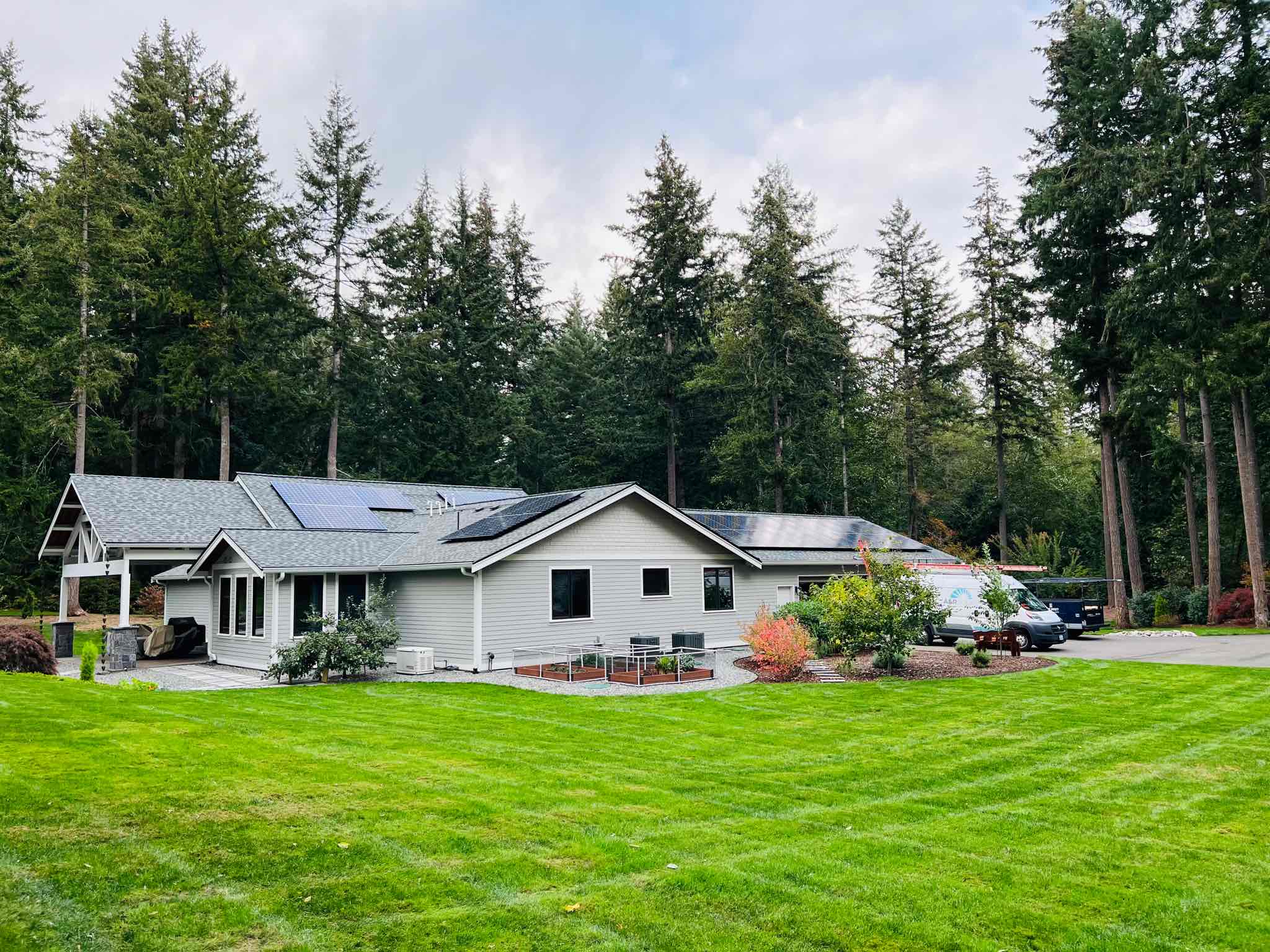
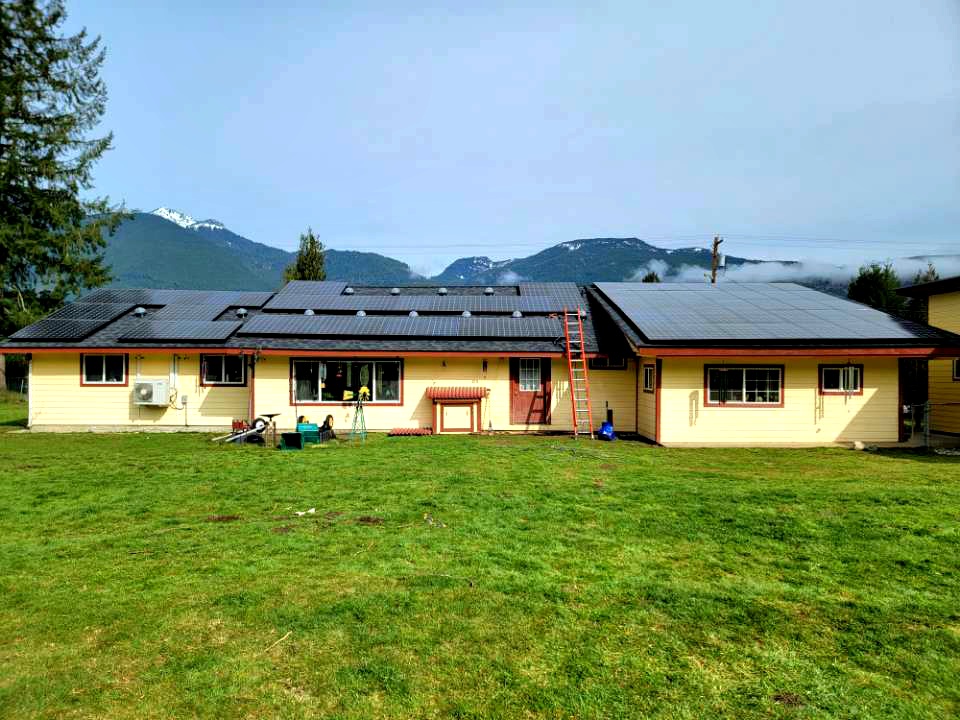
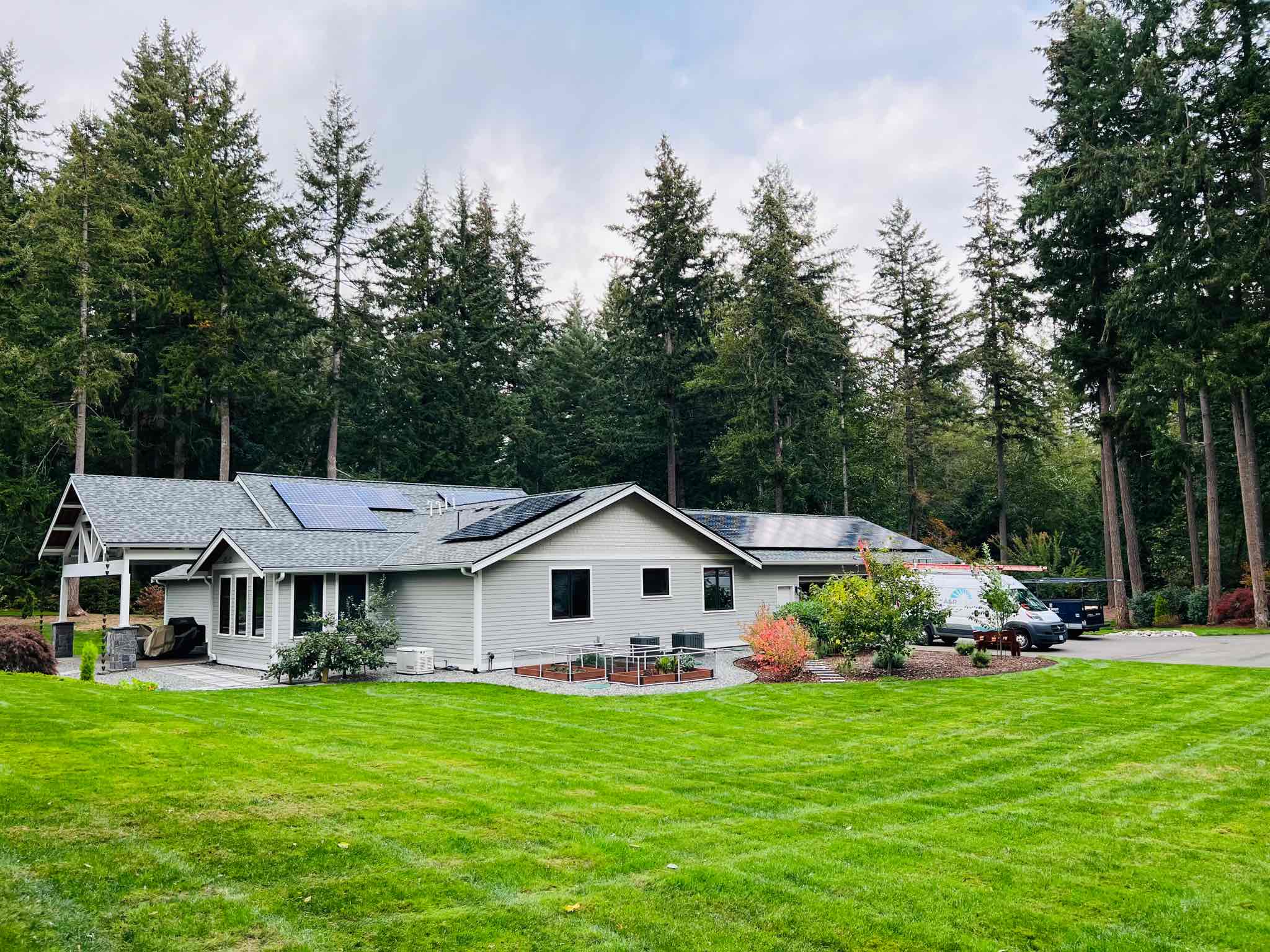
Start by reviewing local residential projects from our portfolio to see system designs and outcomes from homes similar to yours. If you want deeper context on specific outcomes, our residential case studies detail the decision process, costs, and savings homeowners experienced. Oregon residents can explore current program eligibility through our Oregon solar incentives guide, which is updated regularly as utility programs change. When you’re ready for specifics, we’ll assess your home, explain your options clearly, and give you a design that actually makes sense for where you live.
Frequently asked questions
Does solar work in the cloudy Pacific Northwest?
Yes. Solar panels generate electricity from diffuse light, and cooler temperatures boost efficiency, so the PNW climate does not prevent effective solar generation. Net metering balances lower winter output against higher summer production.
What incentives are available for solar in Washington and Oregon?
Washington offers a 6.5% sales tax exemption and property tax exemption; Oregon provides a $2,500 ETO rebate for PGE and Pacific Power customers plus a property tax exemption. Both states participate in the 30% federal Investment Tax Credit and offer 1:1 net metering.
How much can homeowners save with solar?
Annual savings range from $850 to $1,200 in Washington and $1,000 or more in Oregon, with total 25-year savings estimated between $25,000 and $50,000 depending on system size, local rates, and energy consumption.
What is net metering and how does it benefit homeowners?
Net metering credits your excess solar at full retail rate on a 1:1 basis, so summer surplus directly offsets winter electricity costs without you needing to manage or store the energy yourself.
Do I need battery backup for my solar system?
Batteries are not required for daily solar operation because net metering manages excess energy automatically. They are, however, a practical addition if your priority is maintaining power during grid outages caused by storms or wildfire-related shutoffs.