

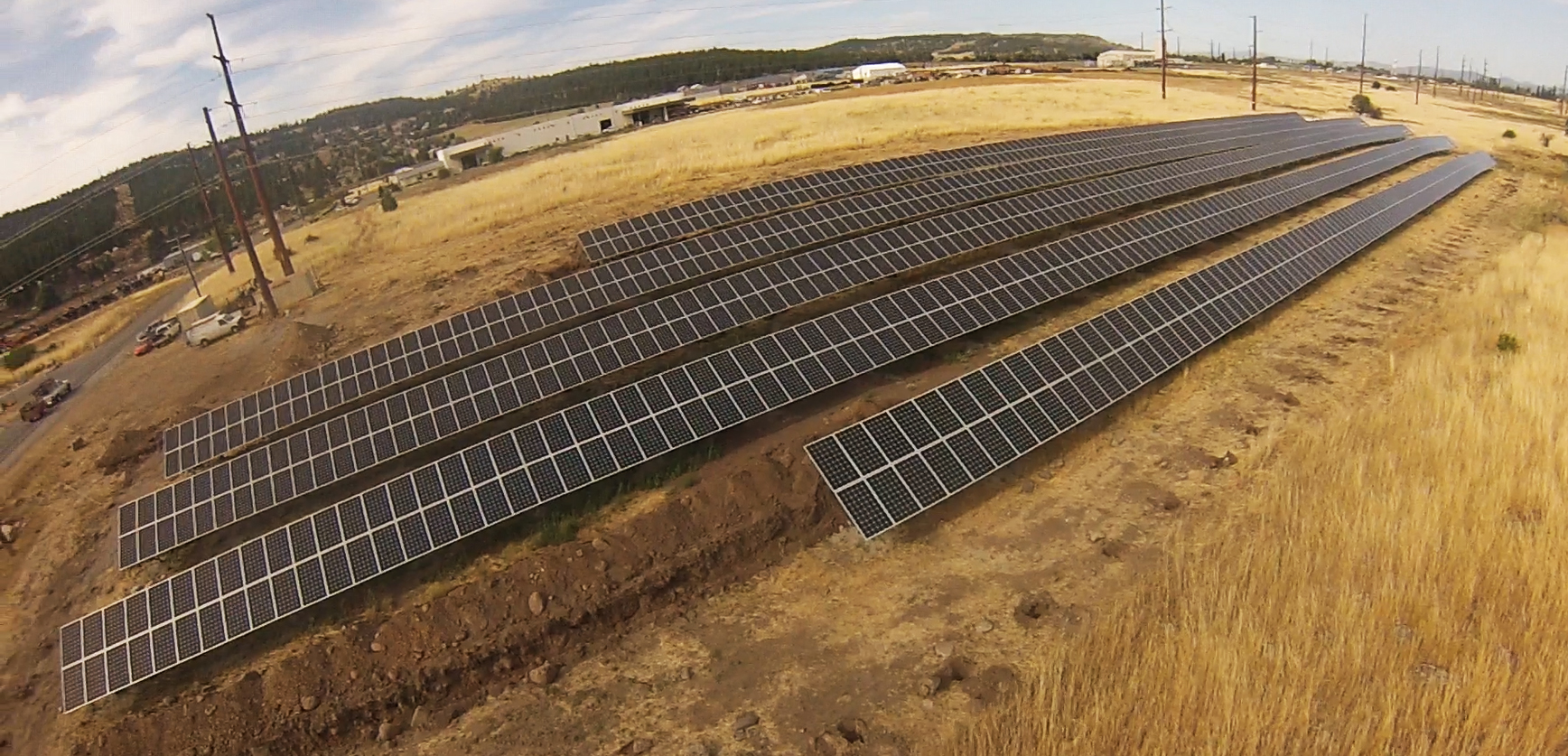
A&R Solar helped construct the largest community solar project in Washington. The Spokane Valley system went online in September 2015 and will serve more than 500 residential and commercial customers.
The 425 kW ground-mounted solar array is the biggest facility to use all Washington-made equipment. The Avista Utilities array has 1,512 panels and is large enough to power about 50 households.
During the program, the array is estimated to over offset 4.2 million pounds of carbon dioxide, equivalent to planting about 7,000 trees.
Avista customers can choose to sign up for the program and pay $1,400 for a single panel. Each participant should receive about $1,800 back over five years due to state tax incentives and receive credits on their power bills for the energy produced.
Community solar allows people to own a small stake in a large solar array, and the production is credited on their utility bills. It lets people participate in renewable energy who don’t have homes suitable for solar panels (including renters), those looking for an alternative to investing in a home system, or homeowners who can’t afford the investment.
After the tax incentive expires in June 2020, ownership of the panels will revert to Avista. The system should keep producing electricity for at least 25 years.