

TL;DR
Pacific Northwest summers now bring more than long, sunny days. Severe storms and wildfire smoke can temporarily reduce solar production, but a few low-production days usually won’t have much effect on the long-term value of a well-designed system.
Summer Weather Is Changing
Homeowners in Washington and Oregon are seeing more summer days affected by wildfire smoke, heavy cloud cover, and sudden storms. When the sky darkens during what should be peak solar season, it’s reasonable to wonder whether your system is still performing as expected.
The answer is usually yes.
Solar production naturally rises and falls with the weather. This article explains what storms and smoke can do to your system, what’s normal, and when a drop in production may be worth investigating.
Key Takeaways
- Heavy clouds and storms can cause temporary drops in solar production.
- Wildfire smoke can reduce the amount of sunlight reaching your panels.
- A few low-production days rarely have a meaningful effect on annual system performance.
- Monitoring can help you tell the difference between weather-related changes and a possible system issue.
How Summer Storms Affect Solar Production
Thunderstorms and fast-moving weather systems can bring thick clouds, heavy rain, strong winds, and occasionally hail. Solar production may drop significantly during these conditions because less sunlight reaches your panels.
In your monitoring app, these changes may appear as temporary dips or valleys in your daily production graph. That’s normal. Over a month or a full year, a few stormy days are often balanced by longer stretches of clear weather.
Severe storms can sometimes create a different problem: physical damage. Hail, falling branches, or windblown debris may damage panels or other system components.
After a major storm, check your monitoring for alerts or unusual production patterns. You can also inspect the system from the ground for visible damage.
Don’t climb onto your roof. Contact a qualified professional if anything looks wrong.
How Wildfire Smoke Affects Solar Production
Wildfire smoke can reduce solar production in two ways:
- It blocks some of the sunlight that would otherwise reach your panels.
- It can leave ash and fine particles on the panel surface.
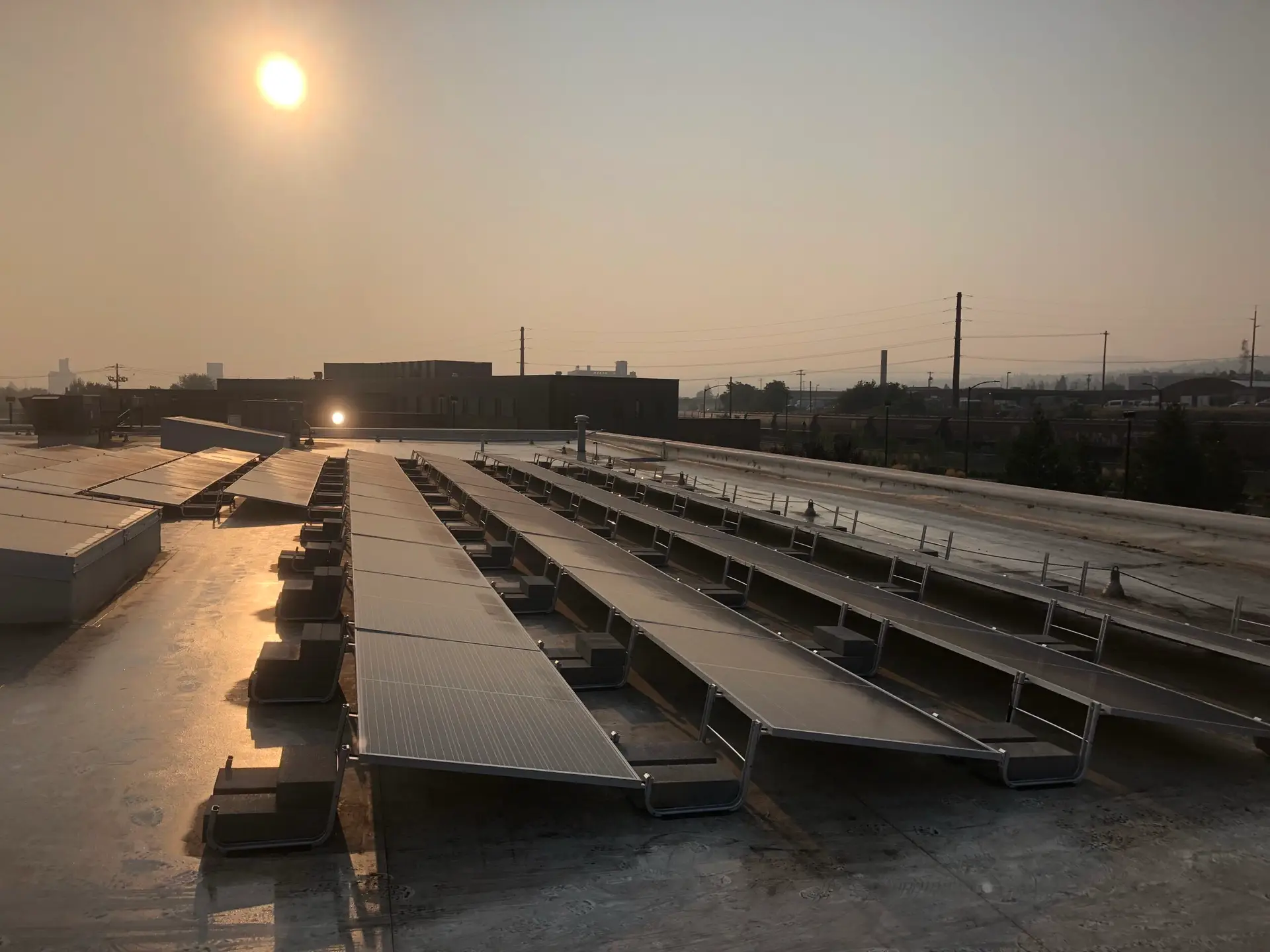
The effect depends on how thick the smoke is. A light haze may cause only a modest change. When smoke is dense enough that the sun is difficult to see, production may drop more noticeably.
Solar panels can still produce electricity from diffuse light, which is sunlight scattered by clouds, smoke, and particles in the atmosphere. But they will generally produce less than they would under clear skies.
Smoke that lasts for several days may also leave a layer of residue on your panels. Production could remain slightly lower after the sky clears until rain washes the residue away or the panels are safely cleaned.
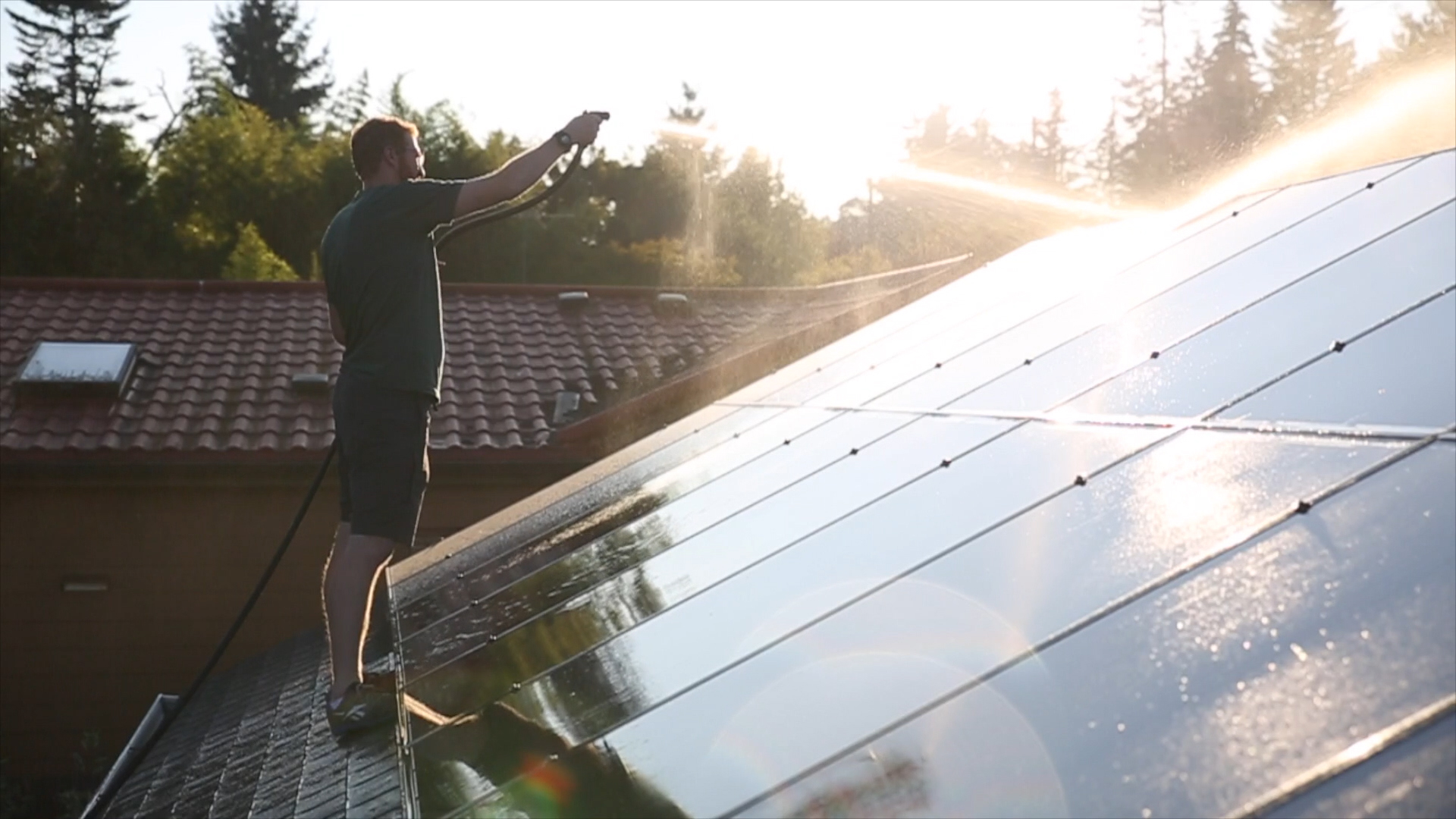
Learn how to clean your solar panels >>
When to Pay Closer Attention
A few days of lower production during a storm or smoke event usually aren’t cause for concern. Weather-related fluctuations are part of owning solar in the Pacific Northwest.
Take a closer look when:
- Production remains unusually low after the weather clears.
- Your system performs significantly worse than it did during the same season in previous years.
- Monitoring shows a persistent drop that doesn’t match current weather conditions.
- You receive an error message or system alert.
- You suspect damage from hail, branches, or storm debris.
Save screenshots from your monitoring app and note when the issue started. That information can help your installer or service provider diagnose the problem more quickly.
Focus on Long-Term Performance
Summer storms and wildfire smoke can make your daily solar production graph look uneven. They usually don’t undermine the long-term value of solar in Washington or Oregon.
Instead of focusing on one smoky afternoon or a few stormy days, look at how your system performs across the season and throughout the year.
When something seems out of line, compare current production with previous years, review your monitoring alerts, and contact us.