
Vehicle-to-Home (V2H) Backup: Power Your Home With Your EV
Vehicle-to-home (V2H) technology allows compatible electric vehicles to supply stored battery energy to your home. With the right equipment, your EV becomes another source of backup power.
AVAILABLE NOW
Tesla Powershare Home Backup
A&R Solar installs Tesla Powershare systems for eligible Model 3 and Model Y owners in Washington and Oregon.
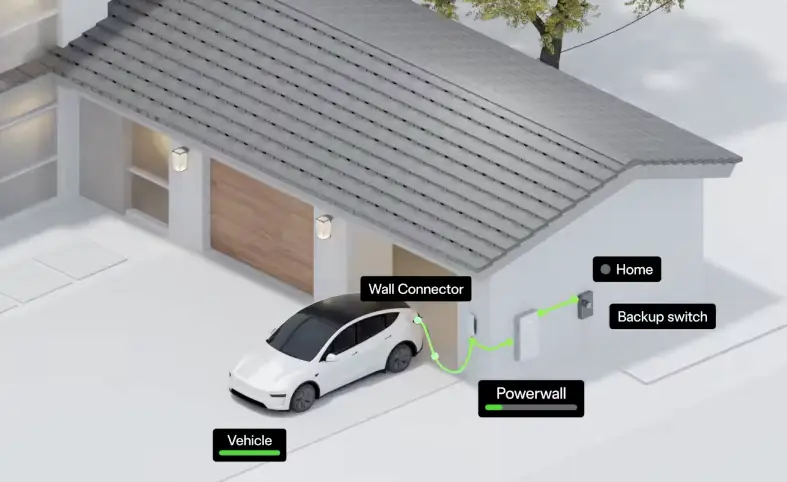
Tesla Powershare allows compatible vehicles to supply additional backup electricity during a power outage when connected to the required home energy equipment.
What You’ll Need at Home
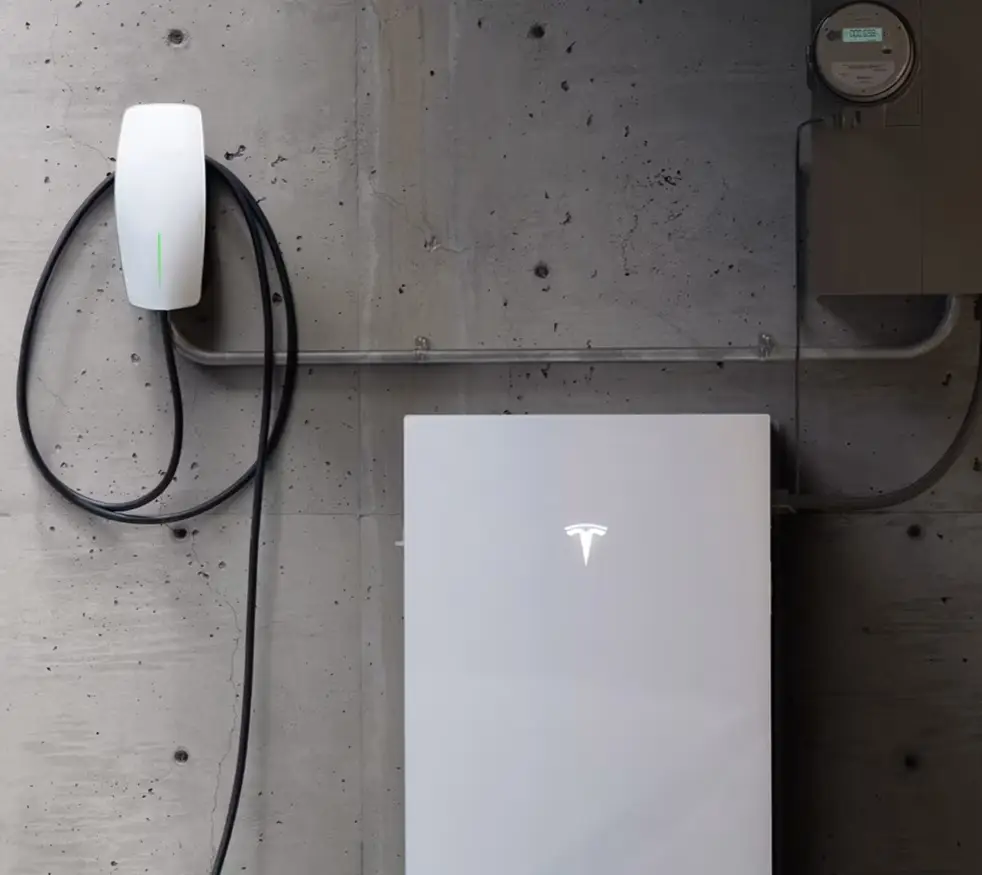
Tesla Powershare Home Backup for an eligible Model 3 or Model Y requires a compatible Powerwall system and Tesla Wall Connector. A&R Solar can evaluate your existing equipment and determine what your home needs to use your vehicle for backup power.
COMING NEXT
More Vehicle-to-Home Solutions
A&R Solar will expand V2H options in 2027.
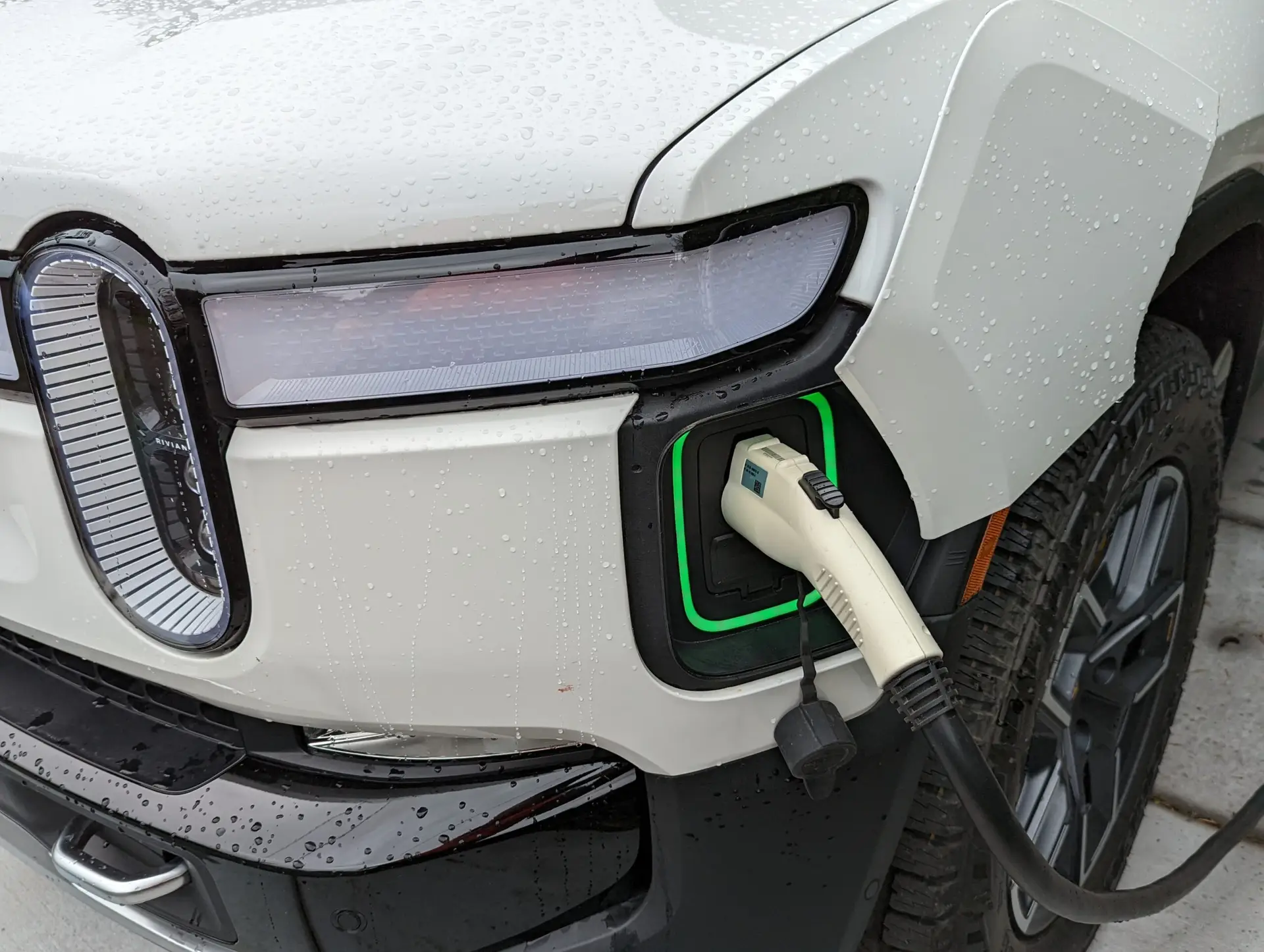
We’re working with other manufacturers to provide more options. V2H technology is evolving quickly, with additional automakers and energy equipment manufacturers developing bidirectional charging solutions.
Sign up for our V2H-only newsletter to be updated on when these non-Tesla solutions are available.
Why Trust A&R Solar with V2H?
New technology is exciting, but not every solution is ready for every home. Before offering a V2H system, A&R Solar’s cross-functional R&D team evaluates its compatibility, safety, reliability, and long-term serviceability. We only recommend technology we’re confident we can install and support in Washington and Oregon.

R&D Approved
Technology vetted by our cross-functional team.
Dedicated Service Team
Service beyond installation
Why Use Bidirectional Charging for Home Backup Power?
Make More Use of the Battery You Already Own
Your EV may spend much of its time parked at home. With compatible V2H equipment, its battery can help supply your household when utility power is unavailable.
Extend Your Home’s Backup Power
A compatible vehicle can provide additional stored electricity during an extended outage, supplementing your stationary home battery system.
Connect Your Home Energy Systems
V2H technology can work alongside solar panels and home batteries. With a properly designed system, these technologies can provide more options for managing backup power.
Frequently Asked Questions
Does my Tesla Model 3 or Model Y qualify for Powershare?
Tesla says that Model 3 and Model Y vehicles ordered in the U.S. after October 1, 2026, support Powershare. Some vehicles manufactured before that date may also qualify.
If you purchased your Tesla earlier, check your vehicle’s compatibility before planning an installation.
Here’s how to check:
Confirm your vehicle is running software version 2026.32.6 or later.
On your Tesla touchscreen, select Software.
Open Additional Vehicle Information.
Look for Powershare Support: Enabled.
Which other electric vehicles support vehicle-to-home (V2H) technology?
Vehicle-to-home technology is expanding beyond Tesla. Manufacturers including Chevrolet, GMC, and Cadillac offer select EVs with V2H capabilities when paired with compatible home energy equipment.
However, V2H compatibility doesn’t necessarily mean a system is available for installation through A&R Solar.
Our team is evaluating additional manufacturers and technologies for Washington and Oregon. Before introducing a new solution, we review its compatibility, safety, reliability, and long-term serviceability.
Interested in V2H for your vehicle? Sign up for A&R Solar’s V2H updates to hear about additional options as they become available.
Do You Need Solar Panels for V2H Charging?
No solar is not required for V2H systems to operate. For example, Tesla Powershare for eligible Model 3 and Model Y vehicles requires a compatible Powerwall battery, but solar panels are optional.
What's the Difference Between V2H, V2G, and Bidirectional Charging?
- Bidirectional charging allows electricity to flow both into and out of an electric vehicle’s battery.
- Vehicle-to-home (V2H) uses that capability to send stored energy from your EV to your home.
- Vehicle-to-grid (V2G) allows compatible vehicles and equipment to send electricity back to the utility grid (not currently available in the NW)
A&R Solar’s current residential vehicle-backup offering focuses on V2H only.
Can V2H Replace a Home Battery?
It depends on the vehicle, equipment, and backup needs. Some V2H systems require a stationary battery, while others have different equipment configurations.
With Tesla Powershare for eligible Model 3 and Model Y vehicles, a compatible Powerwall is required and remains available for backup when your car is away.
Do I need a Tesla Powerwall to use Powershare?
For Tesla Model 3 and Model Y home backup, yes. You’ll need a compatible Tesla Powerwall system and either a Universal Wall Connector or Gen 3 Wall Connector. Cybertruck offers additional Powershare configurations, including a setup that doesn’t require a Powerwall.
If you already own a Powerwall or have solar panels, A&R Solar can evaluate your existing system and recommend the appropriate equipment.
Can Tesla Powershare power my entire home during an outage?
Tesla Powershare allows a compatible vehicle to supply stored battery energy to your home during an outage.
How much of your home it can power, and for how long, depends on your vehicle’s battery capacity, available charge, household electricity use, and backup system configuration.
A&R Solar can help you determine which appliances and circuits you want to back up and whether your existing equipment can support them.
How much does Powershare with Powerwall 3 cost?
Most homes land between $18,000 and $20,000 installed for one Powerwall 3, Gateway 3, and a Universal Wall Connector. Your price depends on your electrical panel, where the equipment goes, and whether you add solar.
I already have a Powerwall. What do I need?
If you have a Powerwall 3 and a Universal Wall Connector or Wall Connector Gen 3, you may need nothing new. We pair them, then Tesla enables Powershare. If you have an older Powerwall 2 system those are also supported. Compatibility depends on your Powerwall and Gateway model, and Gateway 1 systems aren’t supported.
How long can my Model 3 or Model Y power my home?
With a Powerwall, your car adds up to two days or more of backup for an average home.
Extra backup with Powerwall:
- Model 3 / Model Y Premium or Performance: Over 2 days
- Model 3 / Model Y Standard: Up to 2 days
- Cybertruck: Over 3 days
Tesla’s estimates assume 30 kWh of use per day and a car charged to 90%. An all-electric Pacific Northwest home running a heat pump during a winter storm can use much more than that. We’ll estimate your real number from your winter bills.
Does the car switch on automatically in an outage?
Yes. If your car is plugged into the Wall Connector, the system detects the outage and powers your home automatically. You don’t need to do anything.
Ready to Explore Vehicle-to-Home Power?
Whether you have a Powershare-compatible Tesla or want updates about future V2H options, A&R Solar can help you take the next step.