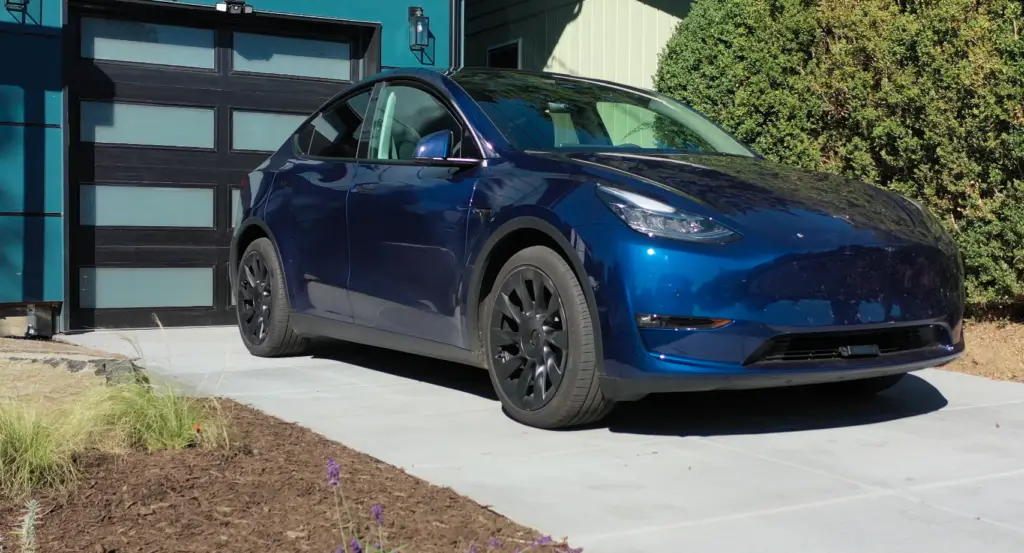
Tesla Powershare allows eligible Model 3 and Model Y vehicles to use electricity stored in their batteries to help power your home during an outage. Paired with a compatible Tesla Powerwall 3 system, your vehicle becomes an additional source of backup energy.
And now, A&R Solar offers Powershare installations in Washington and Oregon.
Does Your Tesla Model 3 or Model Y Support Powershare?
Tesla says that Model 3 and Model Y vehicles ordered in the U.S. on or after October 1, 2026, support Powershare.
If you purchased your Tesla earlier, check your vehicle’s compatibility before planning an installation.
Here’s how to check:
- On your Tesla touchscreen, select Software.
- Open Additional Vehicle Information.
- Look for Powershare Support: Enabled.
If your vehicle shows Powershare is enabled, you’re ready to explore the home equipment needed to put it to work.
How Does Tesla Powershare Work?
Powershare uses bidirectional charging, which allows electricity to flow both into and out of your electric vehicle’s battery.
This capability enables Vehicle-to-Home (V2H) technology, allowing your vehicle to supply stored electricity to your house.
For eligible Model 3 and Model Y vehicles, Powershare works alongside a compatible Powerwall 3 system.
Your Powerwall provides backup energy when your vehicle isn’t home. When your Tesla is parked and connected, its battery can extend that backup during an outage.
It’s a way to make more use of the energy storage you already own.
What Equipment Do You Need for Tesla Powershare?
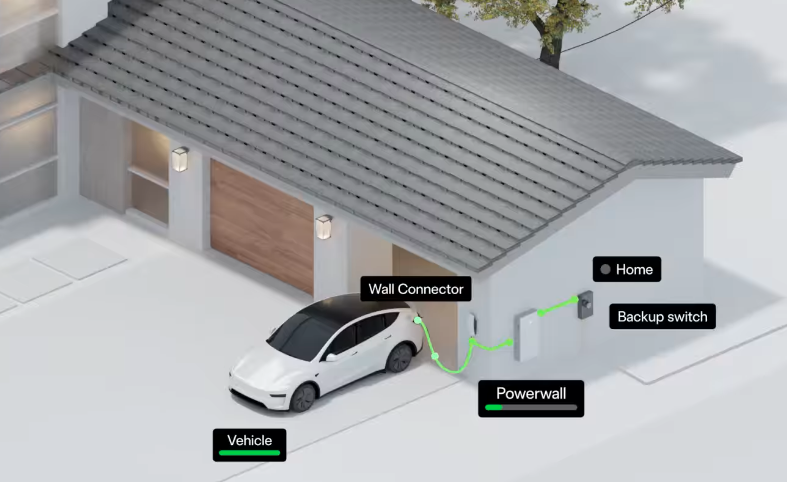
For a compatible Model 3 or Model Y, the currently supported setup includes:
- Tesla Powerwall 3: Provides stationary home battery storage and works with your vehicle.
- Tesla Wall Connector: A compatible Gen 3 or Universal Wall Connector connects your vehicle to the system.
- Gateway 3 and compatible electrical equipment: Allows the system to provide backup power safely during an outage.
You don’t need solar panels to use Powershare. However, combining solar, Powerwall, and your electric vehicle can provide additional energy during an extended outage.
If you’re considering adding a battery, explore A&R Solar’s home battery backup solutions to see how storage can support your home.
How Long Can Your Tesla Power Your House?
Tesla estimates that eligible Model 3 and Model Y vehicles can provide approximately two days or more of additional backup energy, depending on the vehicle and household electricity use.
That estimate assumes a vehicle battery charged to 90% and average home electricity consumption of 30 kilowatt-hours (kWh) per day.
But your actual backup duration will depend on how much electricity your home uses.
That’s especially important in Washington and Oregon, where electric heating during a winter outage can significantly increase household energy consumption.
A&R Solar can review your home’s electricity usage to help estimate how much backup energy you could realistically expect.
What If You Already Have Solar or a Powerwall?
If you already own a Powerwall 3 and compatible Tesla Wall Connector, adding Powershare may be relatively straightforward.
Older Powerwall 2 and Powerwall+ systems don’t currently support Model 3 and Model Y Powershare Home Backup. Tesla has indicated that additional compatibility is coming, but hasn’t confirmed a date.
If you have solar without a Powerwall, adding compatible battery storage and charging equipment may provide a path to Powershare.
One of the biggest advantages? Your Tesla’s battery could reduce the number of stationary home batteries you’d otherwise need for extended backup.
Of course, your vehicle must be parked and connected for that additional energy to be available.
How Much Does Tesla Powershare Cost?
The answer depends on what equipment you already have.
Homeowners with a compatible Powerwall 3 and Wall Connector may need little additional hardware.
If you’re starting from scratch, you’ll need to account for Powerwall, charging equipment, and installation. Existing electrical systems may require upgrades.
A&R Solar can review your equipment and provide a quote based on your home and backup power goals.
Can You Sell Electricity Back to the Grid With Powershare?
Not with the currently supported Model 3 and Model Y home backup configuration in Washington or Oregon.
Vehicle-to-Grid (V2G) technology allows compatible electric vehicles to send electricity to the utility grid. That’s different from V2H, which supplies electricity directly to your home.
Tesla Powershare Home Backup is designed to help keep your household powered during an outage, not to sell electricity back to the utility.
Is Tesla Powershare Right for Your Home?
If you own an eligible Model 3 or Model Y and want additional protection during power outages, Powershare is worth considering.
Your Tesla could become a valuable addition to your home’s backup power system, potentially reducing the need for multiple stationary batteries.
A&R Solar has helped homeowners in Washington and Oregon with solar and energy storage since 2007. Our employee-owned team can evaluate your existing equipment and help determine the right setup for your home.
Ready to put your Tesla’s battery to work at home?
Our team can review your vehicle, existing equipment, and backup power goals.